






This is the second in a series of editorials that seeks to establish a common ground of understanding among the general populace in the Pasadena Unified School District (PUSD) area. The first installment is available here.

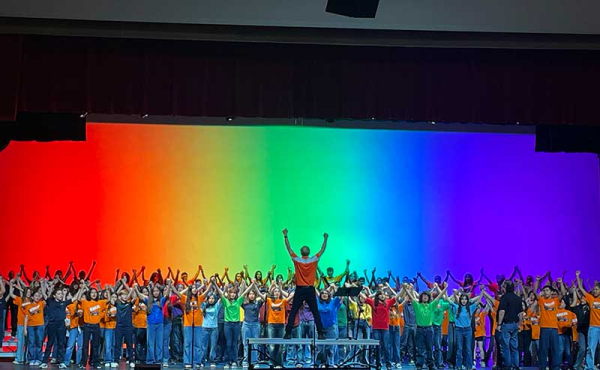
PUSD: Finding A Common Language, Part II (Photos – ColoradoBlvd.net, needpix.com, penfamilies.org, pasedfoundation.org)
In this second installment, we’re looking more locally to Pasadena.
By Patrick Cahalan
One common and justifiable complaint from parents and community members watching PUSD Board meetings is that the language of the administration and the Board often is sprinkled with jargon. What constitutes “base funding” vs. “supplemental and concentration funding,” how do those interact with “categorical funds,” why can some money be used for purpose X but not for purpose Y? These are examples of how the language of public policy often can be confusing. “Eduspeak” also is filled with acronyms, many of which differ very slightly in letter variations but significantly when considering the topics to which those acronyms refer. “SED” and “SPED” differ by one letter, but “Socio-Economically Disadvantaged” students and “Special Education” students are two different topics.
It is difficult for folks to assess the job that the Board is doing when the Board is using language that is often misleading to the public. At the same time, when conversations are going on between Board members and staff, relying upon “Eduspeak” is necessary to communicate effectively.
One of the resources available to inform Californians of the details of public policy when it comes to education is Ed100. Ed100 is a free, self-paced online course that is a useful tool for learning about California’s system of public education. The site gives interested members of the public a grounding in CA education policy, from parents and teachers to retirees who no longer have children of public school age. If you want to critically assess the performance of your local representative or administration, this site is a great place to start. Other useful sites include the California Department of Education, and the Center for Public Education at the federal level.
Ed100 provides familiarity with the law and the language of CA education policy. The most useful way to learn about your public school district, however, is to understand how many of the common narratives about your local public school district do not reflect the reality of the folks who are engaged in the district every day. You can get insight to that, whether or not you are a parent in the district, by following the organizations that support your local district.
The organizations that are independent of the Pasadena United School District’s administration and Board of Education are the PTA, the Pasadena Education Network, and the Pasadena Educational Foundation.
PTA
Name aside, you do not need to be a parent or a teacher to join your local PTA; you just have to be someone who is interested in your local school. Joining a PTA unit is one of the easiest ways to hook into news concerning your local school. PTA is a non-profit organization with its own national and regional supporting structure. This sort of independent site organization that can inform you, the citizen, as to what is going on in the district from the perspective of the parents.
PEN
The Pasadena Education Network was founded in 2004 by parents of children who were interested in establishing an organization that would communicate reliable, accurate information regarding the public schools in PUSD. PEN offers site tours of every school in the district, fact sheets about each school, informational workshops on the PUSD open enrollment process, and opportunities to meet parents in the district and hear their stories about your local schools. If you are skeptical about district communications and want to hear from parents about their experiences in PUSD schools, PEN is an excellent resource.
PEF
The Pasadena Educational Foundation contributed nearly $4.5 million dollars to the PUSD in 2016-17, supporting various programs from the PEF summer enrichment program and the teacher grant program, to direct contributions to district educational initiatives and extracurricular activities. PEF supports the district by offering informational sessions for our local realtors through the realtor initiative, and for community members through Principal for a Day.
Patrick Cahalan is the Vice President of Pasadena Unified School District Board of Education. Opinions in this op-ed are not official statements of the Board of Education and should not be considered an official district communication.












Leave a Reply