





GUEST OPINION

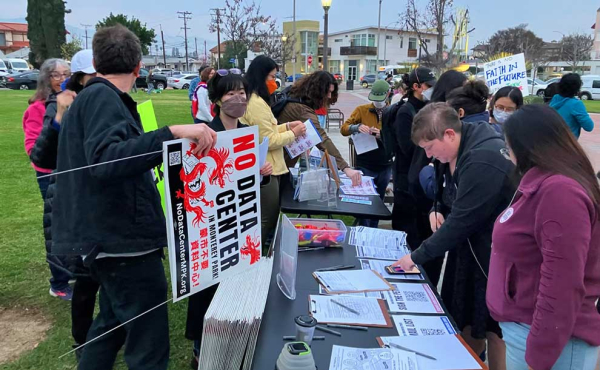
XR Youth Los Angeles gathering, June 2022 (File Photo – Ee Lin)
It’s deemed to be a universal fact that young people can’t vote and they’re not engaged in politics, leading to low young voter turnout, but isn’t this a self-fulfilling prophecy?
By Aidan Artz
Most politicians’ programs focus on older generations and not on college and high school kids.
There’s little incentive to target the youth who do not/cannot vote, but there is a flaw in this thinking. As a junior in high school looking to get involved in politics, there is a shocking lack of opportunities for young people. It is no wonder that the youth feel left out of politics. We can counter this, though, by engaging teenagers in digital education, online communities, interactive campaigns, and viral content.
Young people will feel empowered to share their perspectives, organize events, and become future leaders, turning digital waste into a catalyst for real-world change. Programs such as DoSomething.org, Khan Academy, and the Trevor Project all represent different issues, but use the Internet to teach and empower young people to act. We must build localized grassroots campaigns. When young people participate in community-driven projects, such as protests, local dialogue, and resistance, they develop a personal connection and commitment to issues shaping their communities, which in turn strengthens democracy. Organizations like March For Our Lives (MFOL), Sunrise Movement, and Youth Council all contribute to expanding the opportunities for engagement of young people. Despite popular belief, today’s youth aren’t inherently apathetic—they’re simply marginalized by a system that rarely invites them to the table. Limited opportunities for civic participation and political programs focused on older generations have left young people sidelined. Yet, this very exclusion could be sparking a quiet revolution.
This isn’t just a call for reform. It’s a rallying cry for politicians and parents to convert neglect into opportunity and apathy into action through accessibility to political processes.
Aidan Artz, a La Cañada resident, is a junior at La Cañada High School. He’s a political enthusiast who explores and analyzes the ever-evolving world of politics.











Good article especially since in California you can register on line to vote at age 16 and become automatically eligible to vote at age 18.