

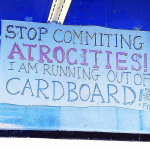



A sign held by one of the teachers at PUSD Board meeting on Thursday, March 28, 2019 (Photo – Garrett Rowlan).
As an example of two contradictory trends in public policy, consider Thursday’s meeting of the Pasadena Unified School District.
By Garrett Rowlan
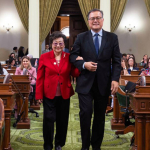
The meeting, which opened with brief scene from “Guys and Dolls,” included a student hero award (he saved an elderly docent from falling during a field trip), teacher commendations, and resolutions, one for Cesar Chavez and another for student equity in arts learning with buzzwords like rights, creative, inclusive, and so forth.
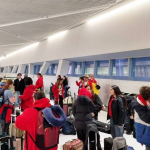
Meanwhile, inside the small, stuffy room, disgruntled teachers held minatory signs of a potential strike and outside, in the halls, chants of “two four six eight, district needs to compensate” resounded inside the building, like restive subjects outside the castle keep.
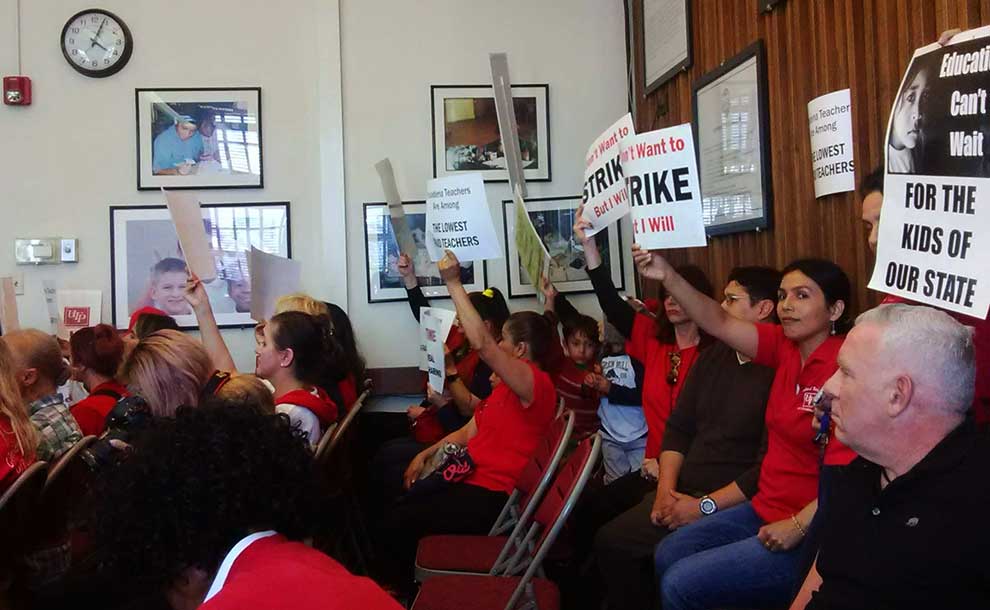
Teachers holding signs of a potential strike at PUSD Board meeting on Thursday, March 28, 2019 (Photo – Garrett Rowlan).
In short, PUSD’s problems—in spite of the feel-good language, in spite of the Measure J money—are part of the continuum that plays like a broken record, especially after the strike by LA teachers: understaffed, overcrowded, and underfunded campuses, all underpinned by demographic realities: high rents are driving students away to other, outlying districts, leaving local schools less money to satisfy more, an entire rainbow of needs. All the makings of a vicious circle.
At least, the school board agreed to put in motion a process whereby the tax money can be handed over to the schools, beginning in July.
> Watch the entire PUSD Board meeting on March 28, 2019.
[This article was updated March 29, 11:05 am for Measure J clarification and to add a video.]








Please correct the line about sharing Measure J with charter schools – that was never the intent of the measure, and there are no current plans to do so. The ballot language neither said nor implied this to be the case.
Thank you for bringing it to our attention. It’s been corrected.