








A rendering of the proposed north entrance from the parking lot.
The main library has been closed for three years following a determination by engineers that it would likely collapse in even a mild earthquake.
By Sharon Hawley
After eliminating several other possible retrofits, it was decided that reinforced concrete shear walls should be constructed inside the building to resist horizontal shaking. This retrofit requires major disruption to the building’s interior, and many suggestions have been raised as to how the interior should be restored.
At a community meeting held on March 13 and chaired by Tim McDonald, Director of Libraries, a semi-final design was presented by Debra Gerod, project manager, Gruen Associates, the design consulting firm.
Gerod listed some goals for the project:
- Improve seismic performance
- Make the building accessible and escapable for people of all levels of mobility
- Preserve the building’s historic character
- Reoccupy the building as soon as reasonable
- Stay within the City’s ability to fund the project, estimated at $195 million
- Enhance the building for today’s culture, and provide for future changes
- Replace outdated technology
Gerod and her assistant presented preliminary plans toward these goals, which she described as nearly final, and showed the design with renderings on a big screen. Because about two hundred people overflowed the small meeting room, those in the back expressed difficulty hearing and seeing.
The interior wall surfaces will be removed and replaced with reinforced concrete shear walls. The existing wood portions of the interior surfaces will be removed, stored, then reinstalled in their original locations after shear wall construction. The existing plastered interior surfaces will be discarded and replaced with new sound-absorbing plaster to look like the original, minus the paint that was added after original construction. The existing air gaps between the exterior and interior surfaces will be preserved and used for air circulation. The exterior of the building will be largely preserved in its present form.
Many changes to the interior were shown in the design renderings. The intention is to keep the historic décor while adding amenities for modern tastes and technological change.
A major element in the design includes ramps and elevators to meet or exceed building codes and improve access from the north-side parking lot.
New features will be added, such as private tutoring rooms, an upgraded auditorium, EV parking, and a more inviting south entrance. Details of these and other changes are still in the discussion stage. The lower level will have some major layout changes.
Final construction plans have yet to be drawn, but Gerod expressed confidence that the cost estimate of $195 million will not be overrun. McDonald expressed confidence that any insufficiency in funding probably can be met by a bond measure on the November ballot to keep the project on schedule.
Comments from the audience were mostly in favor of the major elements of the project. Concerns were expressed, however, concerning parking, convenience, preserving the stacks, and holding to the existing look and feel of the interior. The presenters said that all suggestions will be considered.
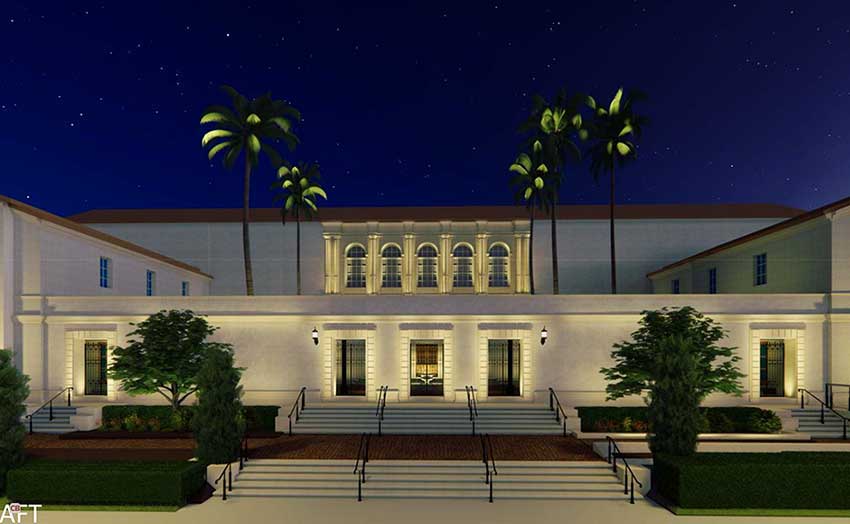
Rendering of exterior night lighting – South Entry.

Rendering of proposed Grand Hall.












Leave a Reply