








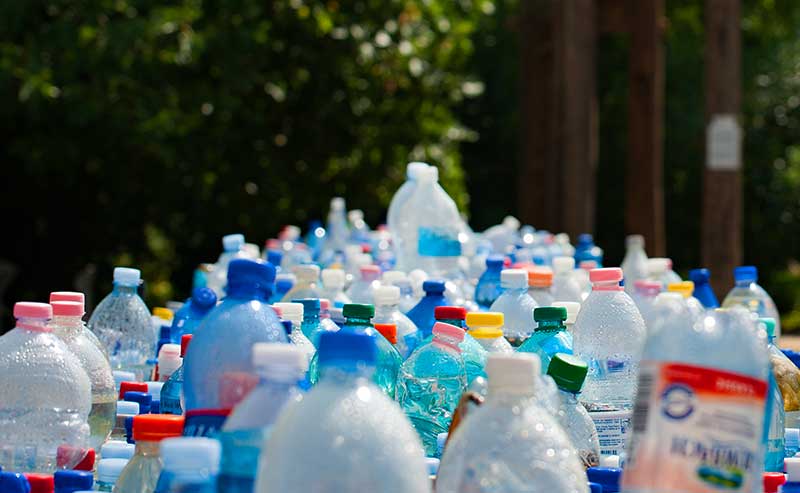
Plastic bottles (Photo – Mali Maeder)
Most of us have questions about plastic. Is it recyclable? Is it reusable? Is it toxic? The last question might be the most important question as we are starting to learn more about the toxicity of plastics and their impacts on humans and other species.
By Cheryl Auger
Just a couple of months ago a train derailed in East Palestine, Ohio. It was filled with Polyvinyl Chloride, also known as PVC, the resin used to make stretchy, flexible, materials such as plastic wraps, gloves, and yoga mats. The fires that engulfed the community weren’t the biggest concern. In fact, the biggest concern was the toxic chemicals and additives that make up PVC. PVC may arguably be the most toxic plastic in our daily lives as it contains Phthalates often called plasticizers and Phthalate substitutes which are added to help the plastic be flexible and malleable.
But there have been a number of health concerns with Phthalates and Phthalate substitutes since they are endocrine disruptors and linked to hormone disruption, cancer, reproductive disorders such as genital malformation and undescended testes in baby boys, and low sperm counts and testosterone levels in adult males. This was the real concern of many chemists and health experts when the train derailed and the fires erupted. And even though Phthalates were banned from plastic wrap in 2006, the chemical replacement DEHA, has a chemical structure similar to a known phthalate, DEHP, and has proven to have similar health risks. So basically we are replacing bad chemicals with bad chemicals and we have seen a growing trend including when BPA was replaced with BPF or BPS. BPA, BPF, and BPS are all endocrine disruptors.
It turns out that humans and dogs are having issues reproducing because of these endocrine disruptors. Dr. Shanna Swan, a Professor of Environmental Medicine, studies this issue and believes that by 2045 most couples will need to use assisted reproduction to have children. So sadly, PVC, or the plastic industry, is altering the future reproductive capabilities of humans and dogs and probably many other species.
So how do you avoid Phthalates and their substitutes? Refuse to anything labeled with PVC or Resin Number 3. Buy produce in natural skin without packaging. Buy cheese in wax or foil. Switch to beeswax wraps and bags or silicone containers to store your food. Use (and reuse) foil, glass jars, and containers for food storage.













Leave a Reply