




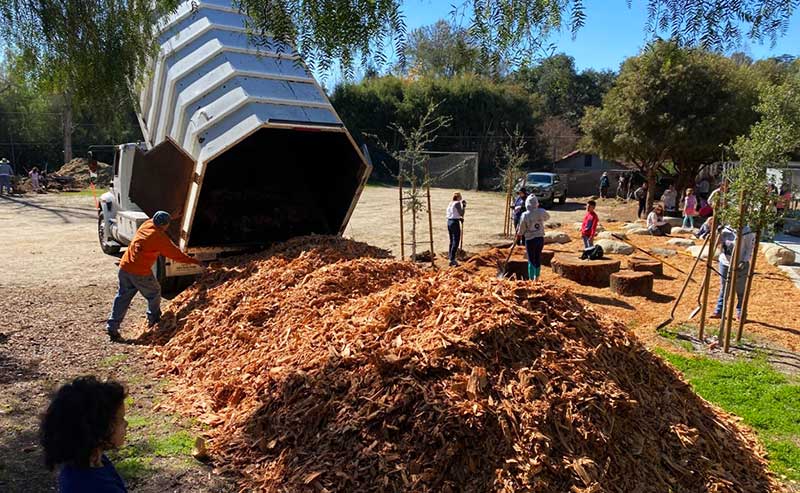
Donated load of wood chips delivered to the lower field at San Rafael Elementary (photo – Wes Reutimann)
In January 2023 the ‘greening’ project at San Rafael Elementary kicked off while students were still enjoying their holiday break.
By Wesley Reutimann
Heat-absorbing asphalt was removed and replaced with natural infrastructure elements such as bioswales to capture stormwater.
The school’s lower yard received a permeable path, two outdoor classroom spaces with large boulders, natural log seating, and new wood chip play areas. The school’s outdoor Kindergarten area was improved with log stools, wood chips, and four raised beds for classroom use.
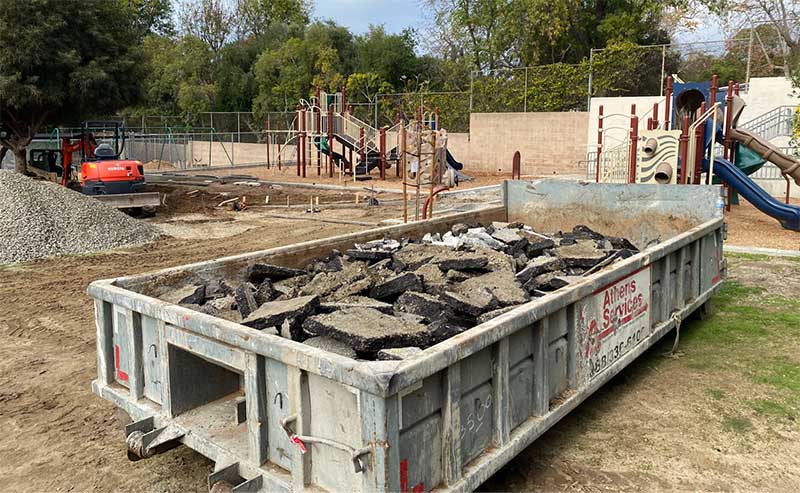
Asphalt awaiting removal from San Rafael Elementary (Photo – Wes Reutimann)
Twenty-nine new native trees – Coast Live Oaks, Englemann Oaks, California Sycamores, Chitalpas, Western Redbuds, Velvet Ashes, Desert Willows, Fremont Cottonwoods, and Toyons – were planted in the rear of the school, where they will help cool areas children frequent during recess and PE.
One planter in front of the school was transformed with a Hügelkultur, a traditional planting process that involves burying wood and other compostable plant materials to create a natural, raised bed. Embraced by permaculture advocates, the technique improves soil health, water retention, and soil warming, thus benefiting plants grown on or adjacent to such mounds. Teams of San Rafael students, parents, and community volunteers completed the new Hügel under the direction of local native plant expert Pilar Reynaldo. Once completed, a variety of bird-and-butterfly friendly native plants, including Saint Catherine’s Lace, Dudleya, Apricot Mallow and California Poppies, were planted on and around the new Hügel.
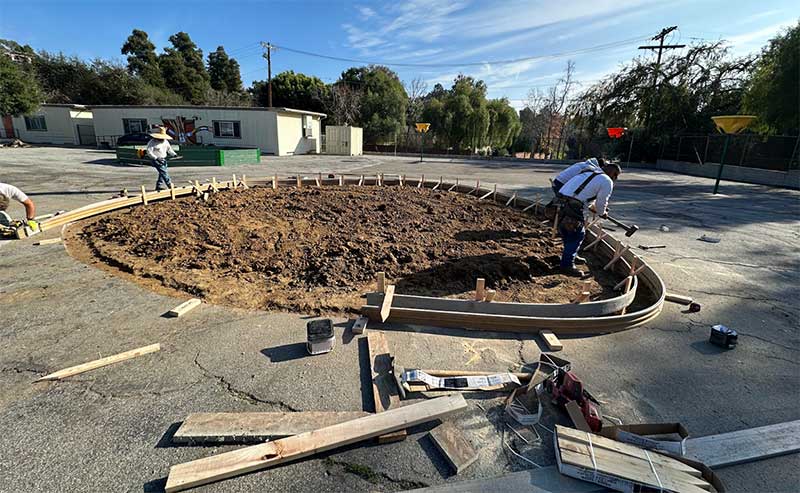
One of four new planters were carved out of the asphalt yard to create space for native trees, stormwater capture, and natural log seating (Photo – Pilar Reynaldo)
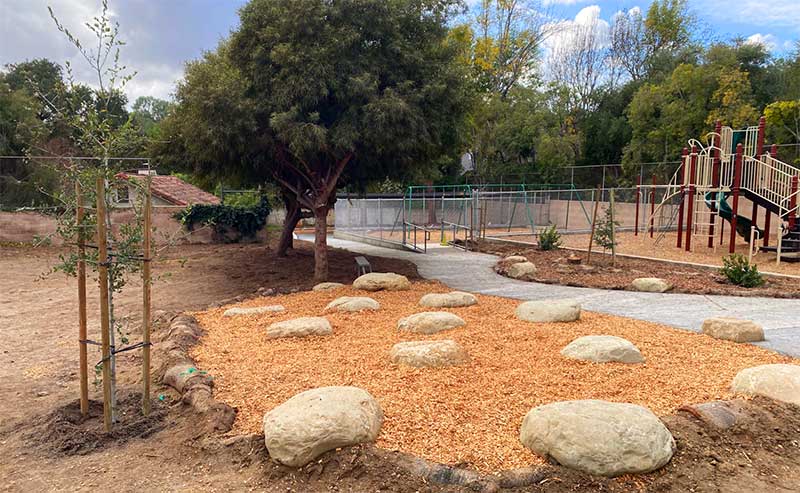
One of two outdoor classroom spaces featuring large boulders, a permeable path, and freshly planted native trees (Coast Live Oaks, Toyon, and Englemann Oak) were a few of the improvements added to the lower campus (Photo – Wes Reutimann)
The project was funded by a 2023 CA Green Schoolyard Grant from the California Department of Forestry and Fire Protection, as well as over $25,000 in matching funds from San Rafael Elementary’s Annual Fund. In-kind volunteer support for implementation and post-planting landscape care was provided by the school’s Outdoor Education Committee and local volunteers.
The San Rafael project is the latest example of the growing “Green Schoolyards” movement in California. Over the past decade parent and public awareness of the benefits of more verdant schoolyards has been on the rise as Southern California faces a hotter future. The San Gabriel Valley currently averages 32 days per year where daytime temperatures exceed 95°F. According to UCLA researchers, this number could rise to an average of 74 days per year by 2050 — two-and-a-half months above 95°F.
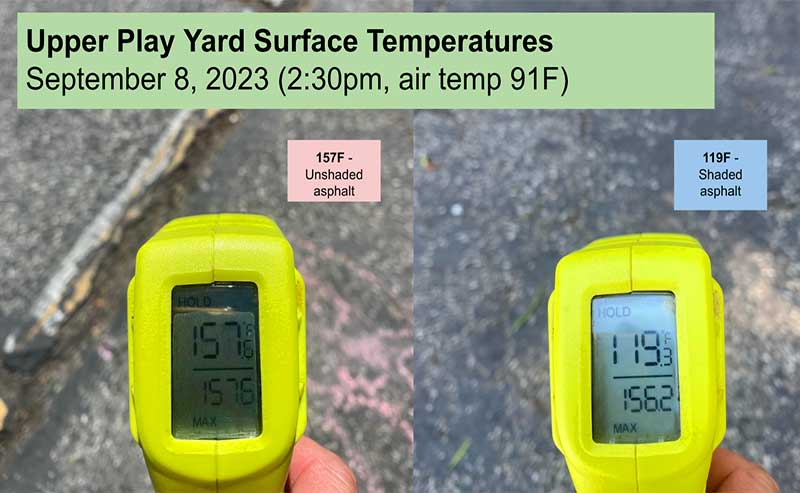
(L) A laser heat measurement device registers a temperature of 157°F on unshaded asphalt at the San Rafael campus on a 91°F day. (R) An adjacent shaded section of asphalt registers a temperature of 119°F.
For a second year, parent volunteers measured campus temperatures in September 2023, several months before project implementation. On a more typical 91°F day unshaded asphalt areas registered over 150°F, whereas shaded asphalt areas were 35 degrees cooler. The coolest outdoor space on campus was found on natural surfaces under a mature Coast Live Oak tree in front of the campus, which was only 82°F.
Greener schoolyards are one strategy to mitigate the impacts of such heat. In addition to shading surfaces below, trees release water into the air, helping bring down air temperatures further. Asphalt absorbs heat all day and releases it during the evening, a phenomenon known as the “urban heat island” effect.
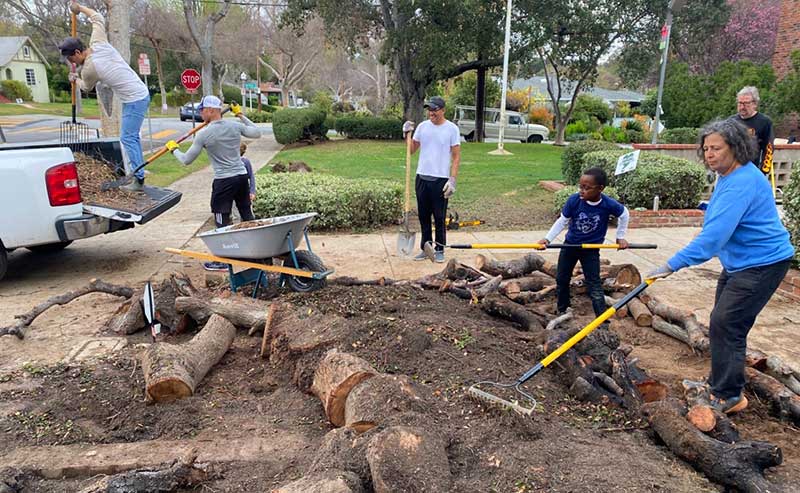
Volunteers work on creating a Hügelkultur raised bed in front of the school with donated logs, branches, and leaves (Photo – Wes Reutimann)
As a whole, the project improvements should benefit students’ physical fitness, academic performance, and mental health, as well as mitigate the rise in extreme heat, capture stormwater, sequester greenhouse gases, and support local biodiversity. The project is part of the larger Emerald Necklace Mountains to Sea Natural Infrastructure Landscape-scale Conservation Initiative, a regional vision to ensure equitable access to nature for urban communities.
While the implementation phase of the project at San Rafael is almost complete – final steps include sanding some additional donated log stools, adding cool paint to some asphalt surfaces, and installing additional bilingual signage to help increase student and community understanding of the project and native plantings. Altadena-based Amigos de los Rios is advancing similar greening efforts at other PUSD sites.
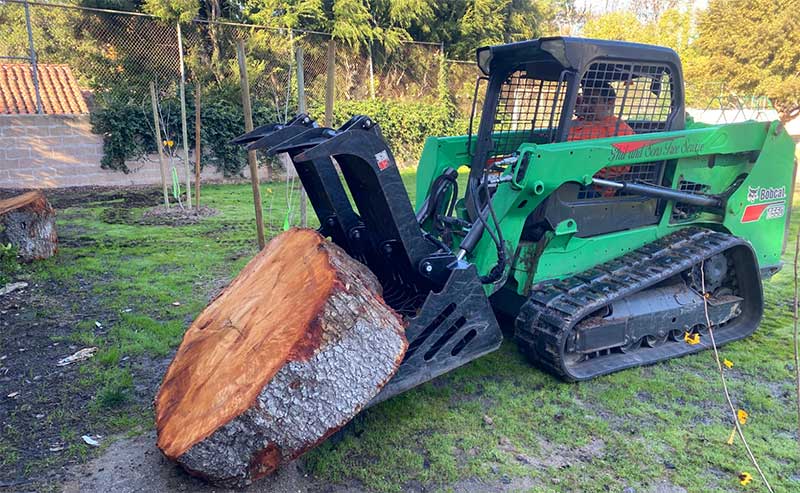
Two local tree trimming companies – Phil and Son’s and Navarro Tree Trimming – donated logs, wood chips, and mulch for the project (Photo – Wes Reutimann)
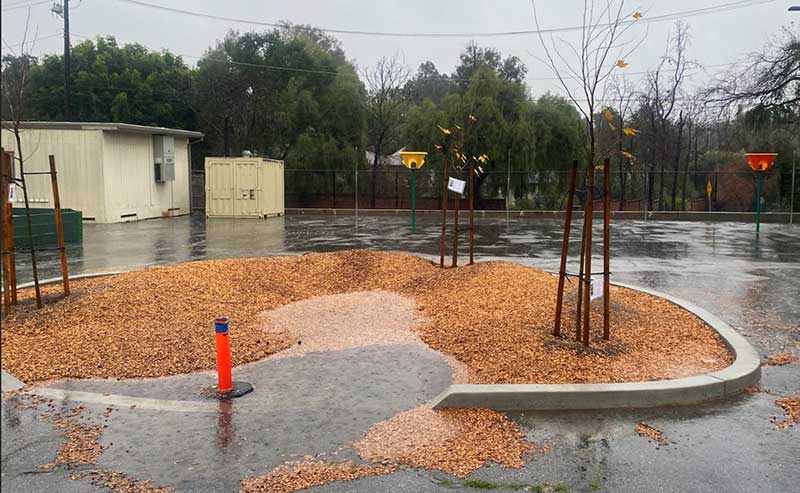
New planters capture stormwater from recent rains, helping recharge the local aquifer and water the newly planted trees (Photo – Wes Reutimann)











Fantastic!
We replaced Field Elementary School’s front lawn with a garden for each class several years ago. Sadly, the lawn has been put back in place.