






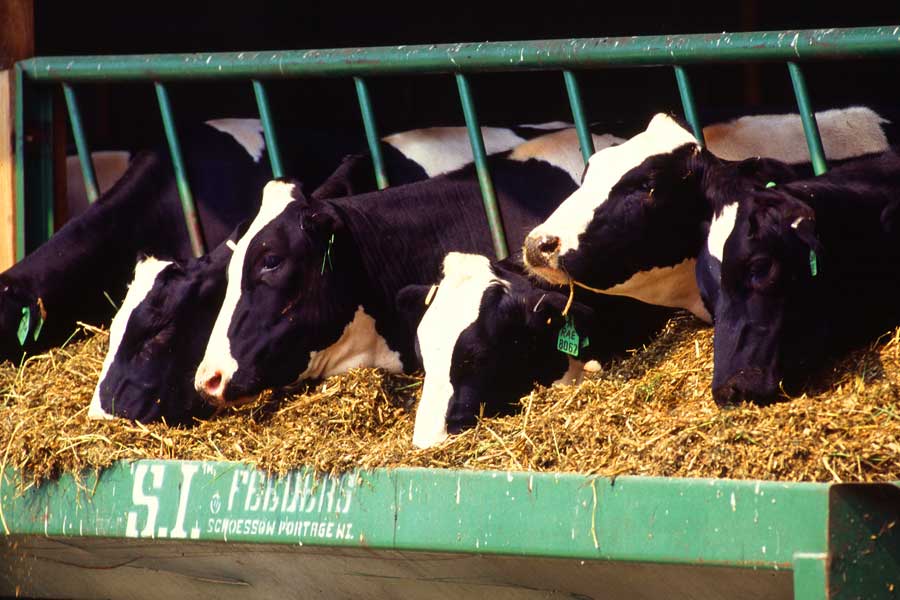
Dairy cows (Photo – en.wikipedia.org).
“Oh, give me a home/Where the buffalo roam,” the iconic verse from the Home on the Range, is almost the poster song of the organic dairy movement.
By George Patton
Dairy cow milk consumers are demanding and getting free range, grass-fed, wholesome products like milk, cheese, yogurt and kefir. This return to the natural ways of grazing and foraging is being fueled by a desire of consumers to know and have a choice about what is going into their bodies.
Since World War II, dairy cow farmers and feed growers have explored new ways to increase the production of milk and profit.
But the methods they found were not designed to consider the cow’s well-being or the health of the soil. The early increases in production were accomplished by confining cows to milking stations and feeding them special grains, heavily out-of-balance with high protein supplements and additives, designed to make them produce more milk.
The current dairy production technology is giving the cows injections of genetically modified growth hormone and GMO feeds.
These ‘improved’ methods have led to more increases in production and a much lower quality of milk that creates sickness in some, dullness in others, and antibiotic resistant supergerms. The cost to society is large and immeasurable, while agribusiness reaps ever-increasing profits.
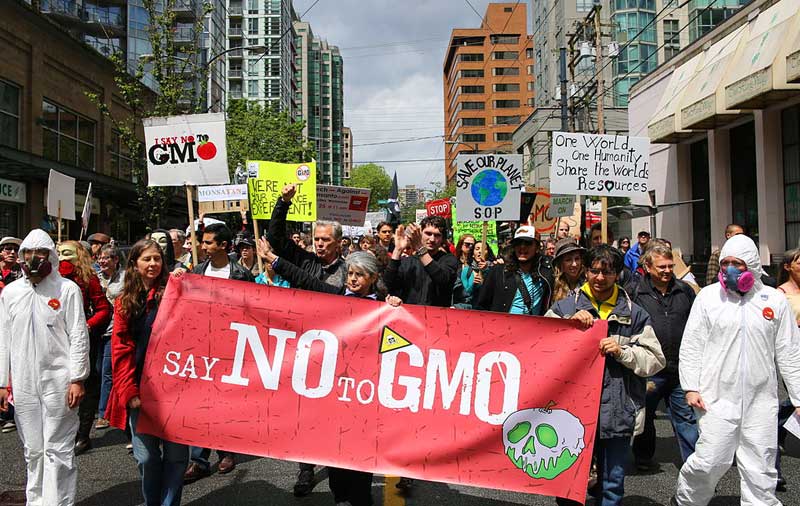
March against Monsanto (Photo – en.wikipedia.org).
rBGH-Cancer Links
In his 2007 book What’s in Your Milk?, Dr. Samuel Epstein exposes the science, politics, and corporate greed behind Monsanto’s GMO creation rBGH, recombinant bovine growth hormone, (link) approved by the FDA, and later sold to Eli Lilly. This ‘experiment,’ gone terribly wrong, has inflicted harm on millions of people in the United States and abroad since the FDA greenlighted it in 1993.
rBGH is still being used in the U.S. and around the world despite the scientific evidence against its use.
Women with breast cancer and men with prostate cancer have been shown to have higher concentrations of IGF-I or insulin growth factor, in their bodies, which is also found in milk treated with rBGH, according to studies made by the American Cancer Society. This insulin growth factor has a unique interaction with estrogen and may contribute to tumor development in women. A 2013 study concluded that higher concentrations of IGF-I are a factor in colorectal cancer and have a correlation to the presence of prostate cancer.
Cows given rBGH are more likely to develop mastitis, an infection of the mammary tissue, and many other problems, requiring more antibiotics, which in turn help create more supergerms, highly resistant to even the newest antibiotics.
This powerful evidence led to a total ban of GMO milk by 2000 in the European Union, Canada, Australia, Japan, New Zealand, and Israel.
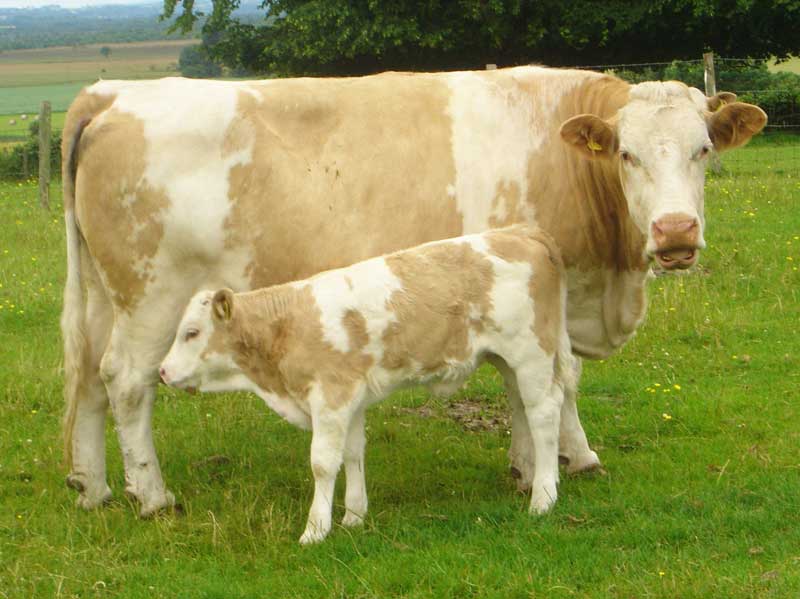
Cow and calf (Photo – en.wikipedia.org).
Choices
Many consumers have switched to rBGH-free milk, and others have switched to organic milk products, while some have changed their milk of choice from cow to goat. To lactose-intolerant milk lovers, goat milk offers an allergy-free choice with almost the same nutrition profile as human breast milk.
In conclusion, consumer support of clean and healthy milk and milk products allows cows a level of happiness and contentment as they peruse the grasses they prefer. It also helps to remove a significant number of people from the health care system while helping the general welfare.
George Patton is a Bio-Dynamic farmer and compost expert. He studied Permaculture with Bill Mollison and hosted his own “Gardening Naturally” show on KCRW. You can see George’s garden creations all over Pasadena, Altadena and the Los Angeles area.
“Fresh Raw Milk vs. Pasteurized Milk” with Mark McAfee
Founder of Organic Pastures Dairy Company,
will be talking about milk from sustainably raised cows
 that are pasture grazed year round.

Date/Time
 06/13/2017
7:00 pm - 8:00 pm

Location
 Culture Club 101













Leave a Reply