






KNITTING CORNER

Baby coat (Photo – commons.wikimedia.org).
Last winter, I lost my favorite coat. I don’t know how I managed it. Perhaps I mindlessly left it somewhere, lost in the warmth of spring. Or perhaps someone picked it up, thinking it was theirs, and I didn’t notice. For whatever reason, this winter I needed a new coat.
By Robin Southworth
I couldn’t find one I liked, however. They either didn’t fit correctly, were not made to last longer than one winter, or were too expensive. After two weeks of shopping, both in stores and online, the futility of my search sank in. I began to wonder why couldn’t I knit my own coat. I don’t live where it snows or gets below freezing more than once a year, so a knit coat would work well. I saw a coat in one of my knitting books that I rather liked. I was suddenly excited. I’d have a coat in my choice of color, a size that fits well, and a style that I like. So, I went looking for yarn.

Shopping Bag of Knitting (Photo Robin Southworth).
Living in California, I decided I didn’t need an all-wool yarn or anything expensive. I ended up purchasing Lion Brand Wool-ese Chunky yarn. Ten skeins all together. That’s a lot of yarn. Clearly, there would be a lot of knitting with this project.
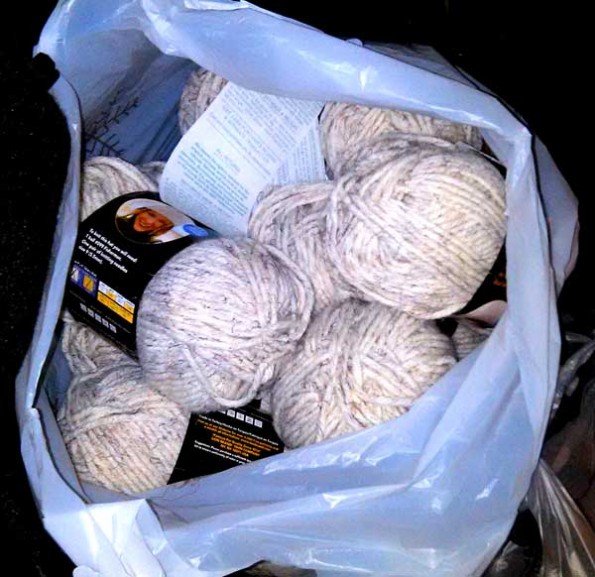
Eight Skeins of Yarn (Photo – Robin Southworth).
The pattern I used was designed by Sally Melville and can be found in her book, “The Knit Stitch”. The design is called The Einstein Coat, because, as Ms. Melville says, “…you feel like a genius when you’re done…” I had previously knit this same coat in a baby size. It looked great and was easy to knit. I almost did feel like a genius when it was finished. I decided I could knit this in an adult size.
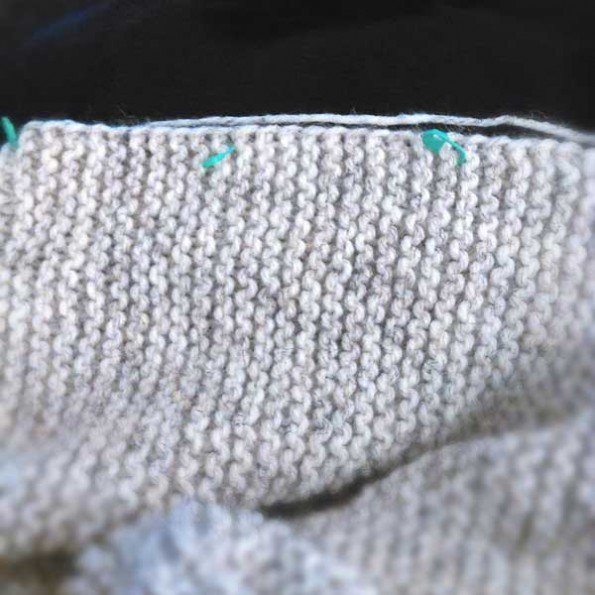
Measuring rows (Photo – Robin Southworth).
I knit during every free moment. I was aiming for a specific size, so I needed to measure each and every row. Every tenth row got a stitch marker.
By the time the bottom half was finished, I had to carry the coat in a large shopping bag. When I started on the arms, there was barely any room left in the bag. The only part of the coat I had to think about was seaming the sleeves. The seam creates an interesting design aesthetic down the arm, so it needed to be perfect. Seaming took two evenings to get right. The time taken was worth it.
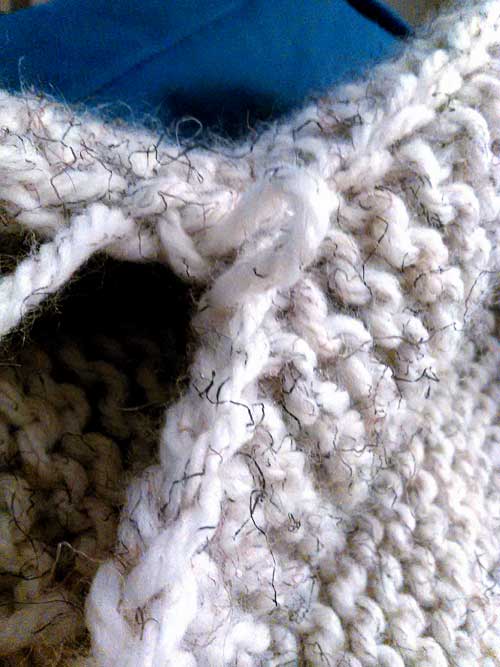
Seaming the sleeves (Photo – Robin Southworth).
It took four full weeks to finish.
I now have a coat that turns heads, is unique, warm, comfortable, and well worth the time taken.

Finished coat (Photo – Robin Southworth).
Now get out there and KNIT!
Robin Southworth is editor, proofreader and writer at Colorado Boulevard. She never met a knitting pattern she couldn’t futz with for the better.











Leave a Reply