








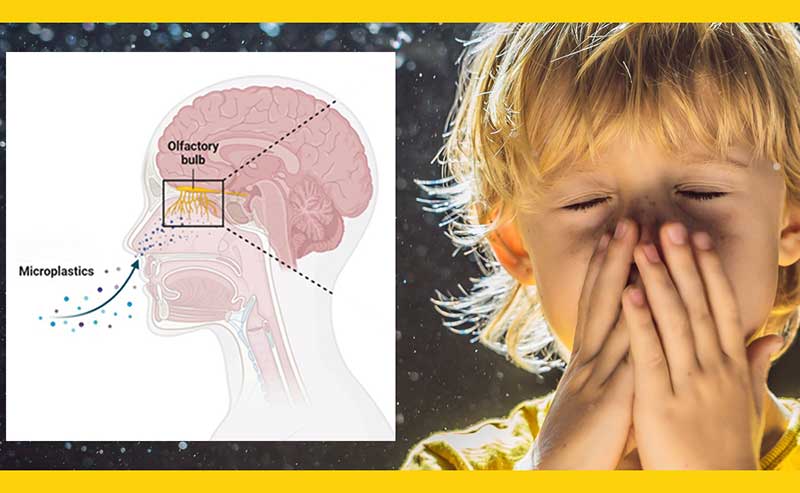
Plastic in brains (Photo – plasticsoupfoundation.org)
Many might remember last year’s research from URI showing that microplastics breached the blood barrier to the brain of lab mice after they ingested liquid with polystyrene.
By Cheryl Auger
The researcher’s expected to find disease along the digestive tract but were surprised to find microplastics deep in the brain’s tissue and to see the older mice exhibiting symptoms like Alzheimer’s.
A new study from the University of Sao Paulo show microplastics being inhaled into the nasal passage to the olfactory bulb which is located at the base of the brain. She is concerned because there is so much plastic and we do not know the impacts.
The plastics‘ found by the researchers included polypropylene, nylon/polyamide, polyethylene and polyethylene vinyl acetate. This is interesting because it is not the fatty foods absorbing toxins from plastic packaging. It’s not the forever chemicals being absorbed into our bloodstream when playing on artificial turf or taking a receipt at checkout. These are microplastics fragmenting from our clothes and blankets and becoming airborne. These are microplastics fragmenting from our food containers and plastic utensils and becoming airborne. These are microplastics fragmenting from our plastic bags and becoming airborne.
We need to use less toxic and reactive materials in all of our products. Stopping use of single-use plastic is one of the easiest ways. Bring your own bags for groceries, your own take-out containers for food, and buy clothes and housewares without plastic.














Leave a Reply