
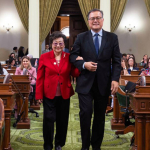



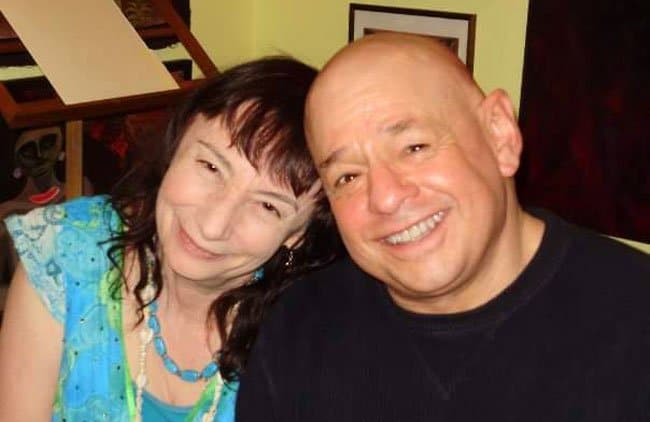
William O’Daly and Kathabela Wilson.
William O’Daly is a worldwide poet, who nurtures the environment with his poetic and scientific work. He is in the unique position of having an inside view into the world of Pablo Neruda, his translations invite us into never before explored works by this beloved poet, in his later years.
By Kathabela Wilson
William has visited and shared with the poets of Pasadena many times in a very special way. It is an honor to present this conversation with him.
I know that you have been in the unique position to make amazing translations of the great poet Pablo Neruda’s last books of poetry. Your successful beautiful translations have been in my life as some of the most inspiring of all literary works. What are you doing now?
I recently began translating Crepusculario, Neruda’s first book of poetry. It’ll be my ninth Neruda translation, and like the previous eight it’ll be published by Copper Canyon Press. One fascinating thing about working with Crepusculario is that, when I seriously started translating Neruda, I was a young poet trying to imagine — to see and to hear — as a much older, more worldly poet, as the master who senses he’s nearing death. My eight previously published Nerudas are among his last works. Now I’m approaching the same age Neruda was when he started publishing that late work, but in translating Crepusculario I’m trying to imagine as a 19-year-old Chilean from La Frontera, in the then-remote South, who has arrived in Santiago. He was a poorly paid teacher of French, lonely and often hungry, who fell in with a small cadre of young poets. Latin American modernismo was declining as a movement by the early 1920s, but it still held sway. Crepusculario, which came out in 1923, is in that vein. The impoverished young poet paid for the book’s publication by selling just about everything he had, including the gold watch his father had given him as a parting gift. Translating the poems, I’m finding an elegance and a remarkable ear for such a young poet, but also the emerging power and distinct voice of the poet Neruda became. Now, somehow, translating this book feels natural to me, oddly right.
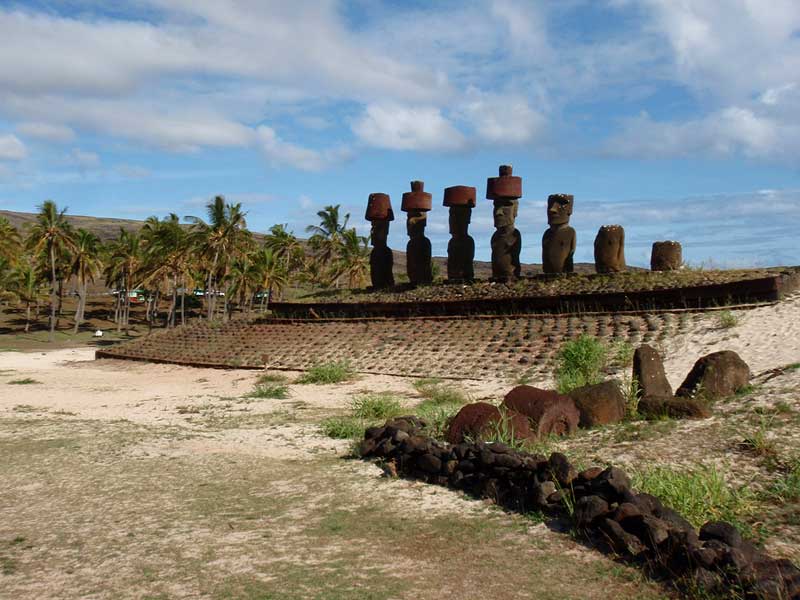
Anakena Beach, 2008 (Photo – William-ODaly).
We were fortunate to have you come to Pasadena and read at our Poets Salon from your Neruda translations and as well some of your own wonderful poetry. You also showed striking images, photos you took during travels on the trail in Neruda’s homeland. Can you share something of your recent projects and something of those travels?
“The Road to Isla Negra” was released last June by Folded Word Press. The chapbook is comprised of five poems in homage to Neruda, accompanied by mysterious, evocative photos by world-class artist Galen Garwood. Galen and I have collaborated, in various ways, on a number of projects over the years. I asked him if he’d be willing to provide photos for the book; when he agreed I was over the moon. He spent time with the poems, then shot a series of photos, called “The Dream Sea,” near his home in Thailand. I chose one photo for each poem and one for the book’s cover. Then Folded Word did beautiful job of design and production.
All those years I translated Neruda, I never wrote a poem for him. I didn’t even try to imitate him, not consciously, but in 2008, before I wrote the introduction to World’s End, my eighth Neruda, I took myself on a poet’s pilgrimage and civil rights “tour” around Chile. I spent three weeks in the country and eight days and nights on Rapa Nui, aka Easter Island, the setting of my second Neruda, The Separate Rose. It was a journey of self-discovery, as much as anything, one that a few years later helped give rise to the five poems.
Folded Word is issuing another chapbook of poems, Yarrow and Smoke, in 2017. The poem of mine you’re posting to accompany this interview, “The Turning Year,” is included in that collection. Also I’m collaborating on a book with Folded Word’s editor in chief, J.S. Graustein, based on the waterways and lakes of New Hampshire, the press’s home state. Last September, I was privileged to participate in a poetry tour around the state. In our travels, Jessi and I visited lakes, rivers, reservoirs, and even the Franconia Notch Flume, a natural, powerful granite flume crashing down about 800 feet to the base of Mount Liberty. I’m writing poems and Jessi is writing prose and providing photos she took during our journey. In every way, working with Folded has put me in close touch with all the values and integrity one would hope for in a small independent press. Overall, I’ve been lucky that way.

William O’Daly (Photo – Katy Brown).
How do you see the position of poetry in our world? I know Neruda’s voice, and yours also, aims to speak for the positive possibilities of our humanity, to make the world a better place?
The poets that have been important to me are many. In a contemporary vein, some who have been mentors to varying degrees and by various means, or even friends, are Kenneth Rexroth, Philip Levine, Denise Levertov, Thomas McGrath, Eleanor Wilner, and John Balaban. They all embody what Bradford Morrow said about Rexroth: they stand for what they love and take a strong, active stance against what they believe is “contrary to human dignity and the spiritual transcendence of the natural world.” Their social positions, almost as much as their masterful works, inspire me to try and emulate their commitment to the art form and its communities, to propagate poetry and help make the world a better place. But no poet can accomplish that by walking in the shoes of another. Every poet or writer or translator travels his or her own road, not only to prepare but also to be filled with the voices of others and remain open to inspiration — to find his or her own voice. Inspiration can come from a deep well or high mountain, from light-years away or the subway; it can come from sharing the cosmos with a friend or a loved one on a clear, high desert night; it can come from biting into an apple or falling asleep to the owl’s refrain. Whatever the case, I take comfort in W.S. Merwin’s rendering of Antonio Porchia: “They will say that you are on the wrong road, if it is your own.”

William O’Daly (Photo – Kristine Iwersen O’Daly).
I love remembering how you came several years ago to our Caltech Poets community in Pasadena, and gave a strong, memorable workshop at the Center for Diversity there. What an honor and a joy that this could happen! You are a teacher. But you do other things to support your family and poetic work. With technology and with the environment! What scientific work have you done that has merged in what way with your poetry?
The relationship between day job and poetry has long interested me, as it has many poets and writers, and many painters and dancers, for that matter. I have a passion for teaching and have done a good amount of it. In one capacity or another, I’ve taught every grade level, from the first through graduate school. But what most surprised me was being enticed into accepting the role of senior instructional designer at a software company. Before they hired me, I’d never touched a computer. I found fascinating the experience of software as metaphor, the perception and use of it, especially of the interface. In 2006, I started working in the environmental field. Recently I was corresponding with a friend, a singer and poet who has long worked in the environmental field, about how grounding the work can be over time — as we learn more about the science of ecosystem and the archaeology of place, and gain greater knowledge of the materials that make up this world. Working in software and the environment has influenced my poetry, for sure, but not in ways some might expect. What’s more remarkable is that my work in poetry — the study and the practice, in which translation has played a trans-formative role — opened doors to two solid careers based on the sciences.
The Turning Year
By William O’Daly
Here is a place to raise our cups—
where last spring we perched on a boulder
still warm from all day sun, and cast
our lines into the moonlit river.
Late thaw tumbled and whitened
beyond what is known of thunder,
of time slipping from pools below.
Through the grasslands and gorge,
you cleared a switchback trail
five hundred miles in my blood.
All summer, moist light spun
the leaves and purple clusters.
Then yellow mountain ash.
Home at last, you sip wine
beneath the naked mimosa
and drift near sleep,
beyond flood leveled plains
and the snowy mountains between us.
This casual moonlight holds you, holds me,
where we are. Even far apart
we share everything—the deep red wine
of some distant summer
and the harvest moon
floating in our cups.
________________________________________________________
> William O’Daly will be performing at Moonday Poetry, at the Flintridge Bookstore on Sunday April 17, 2016 at 4:00 p.m..









Leave a Reply