



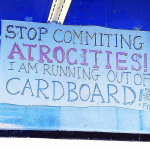



March for Our Climate, Jan. 30, 2024 (File Photo – Brian Biery)
Two Los Angeles-area residents, Gretchen Brickson and Randall Adams, will travel to Washington, D.C., on July 22 to advocate for policies that support renewable energy and reduce energy costs for Californians.
By News Desk
Their mission is urgent: rising temperatures are placing increasing health and financial strain on communities, and new federal legislation threatens to make matters worse.
Brickson and Adams will meet with the offices of Senators Alex Padilla and Adam Schiff, as well as Representative Judy Chu. They are part of a larger grassroots campaign organized by Citizens’ Climate Lobby (CCL), a nonpartisan, nonprofit group mobilizing hundreds of volunteers nationwide this summer to press Congress for clean energy solutions.
On July 4, the “One Big Beautiful Bill” was signed into law, a sweeping measure that phases out popular clean energy tax credits while prioritizing fossil fuel infrastructure. According to Energy Innovation Policy & Technology, the law could cost California $29.67 billion in GDP by 2030 and eliminate tens of thousands of clean energy jobs.
“Repealing the clean energy incentives in the IRA isn’t just a setback—it’s a disaster for California’s economy and climate,” said Brickson. “We’re here to remind Congress what their constituents truly want.”
Public opinion supports their stance. A December 2024 survey by the Yale Program on Climate Change Communication found that 63% of Americans believe developing clean energy should be a top priority for federal leaders. In California, that number rises to 70%, according to the Public Policy Institute of California.
The new law is already having consequences. Since January, $15.5 billion in clean energy projects and factory investments have been canceled nationwide. California is among the hardest hit, facing fewer clean energy jobs, higher utility bills, and worsening air pollution.
Aurora Energy Research estimates that eliminating the tax credits will result in a loss of 169 gigawatts of wind and solar capacity in the U.S. by 2040. In California, where renewables are among the most cost-effective sources of energy, replacing that capacity with fossil fuels could raise utility bills by 10%.
“Polluting energy isn’t just bad for the planet, it’s expensive,” Adams said. “Clean energy was lowering bills and creating jobs. Now, we risk losing both.”
Before their meetings on Capitol Hill, Brickson and Adams will attend CCL’s 2025 Summer Conference, where volunteers will gather to learn advocacy strategies and connect with others committed to solving the climate crisis.
“Our message to Congress is simple,” Brickson said. “Clean energy is what Californians want, and it’s what we need—for our economy, our health, and our future.”










Leave a Reply