







One Colorado Tree Lighting in Old Pasadena (Photo – ColoradoBlvd.net)
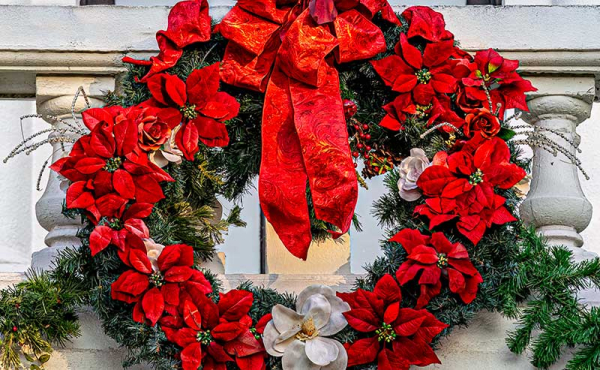
Sure indications of deck-the halls time in Pasadena are the Christmas tree at Pasadena City Hall, Paseo Colorado and One Colorado Courtyard in Old Pasadena.
By Jeannette Bovard
This time of year, community Christmas trees pop up in city squares, shopping centers and public spaces throughout the United States, creating a seasonal landscape that we tend to take for granted. Many of us enjoy the festive ambience, while the Bah Humbugs among us see these as more fuel for the shopping frenzy fires that retailers have stoked relentlessly since well before Thanksgiving. Love them or not, have you ever wondered how the tradition started–and where?
Bringing communities together
Community–or public–trees have been a part of the American Christmas holiday season for over 100 years. More than just pretty decorations in public spaces, these trees were originally meant to play a significant role in bringing communities together across socio-economic and ethnic boundaries. Numerous books and scholarly reports have chronicled these presentations and the specific social ills they were meant to mollify at different times and in different parts of the country.

Tree Lighting Celebration at Paseo Colorado, 2017 (Photo – ColoradoBlvd.net).
Some researchers claim that the first community Christmas tree was erected in New York’s Madison Square Park in 1912. The first “National” Christmas tree was a 60-foot fir on the Ellipse adjacent to the White House lawn; it was lit by President Calvin Coolidge on December 24, 1923. The first official Rockefeller Center tree in New York City was displayed in 1933, the depths of the Depression, and was decorated with 700 blue and white lights*.
However…
The Herbert Hoover Museum’s researchers credit Pasadena with beginning the tradition of the outdoor community tree in 1909! We cannot quite rest on our laurels because conflicting studies claim that San Diego scooped us by five years, lighting a tree for the community in 1904. Either way, it is clear that Southern California was in the forefront of the notion of providing seasonal cheer for all.
*About those lights: 700 lights on a massive outdoor tree may seem seriously underwhelming by today’s standards when you consider that 6-7 foot artificial trees sold for home display are routinely pre-wired with 1,000 or more lights. We favor tiny lights, however, while the early Christmas bulbs were significantly larger–about the size and shape of a walnut. Also, light strings were not affordable (or perhaps not even available) for home use in the early part of the 20th century. General Electric Company introduced its first sets of pre-wired sockets in 1903 at a cost of $12.00 for a set of 24 lights. Since the average wage at that time was 22-cents per hour, a single string of lights would have cost a full week’s wages. Hundreds of lights on a single tree would have been dazzling, indeed!











First cheeseburgers and now this.. We rock