







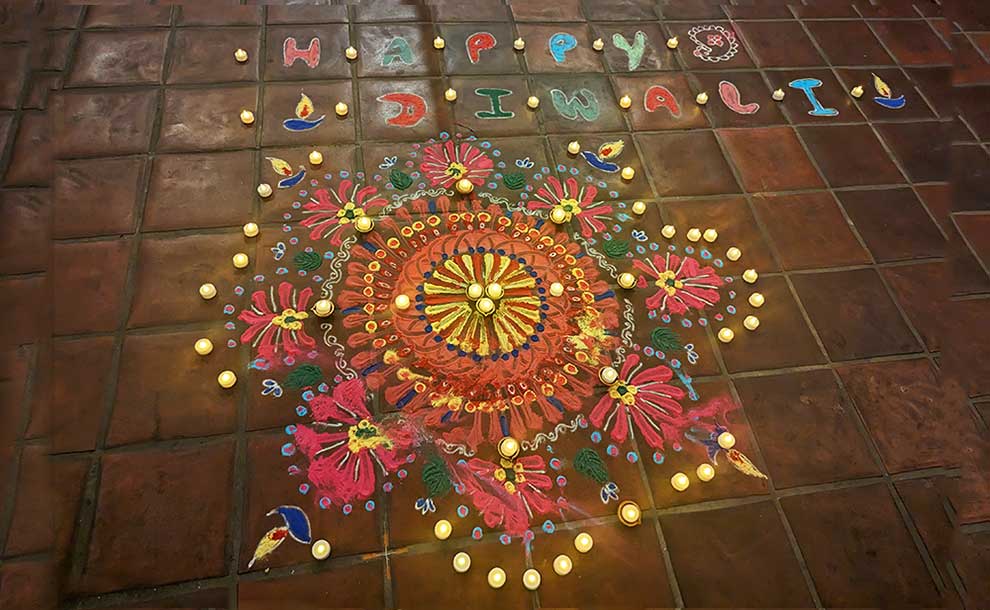
“Happy Diwali” at Caltech, Nov. 10, 2023 (Photo – ColoradoBlvd.net)
Nov. 12, the new moon, marks Diwali, a festival celebrated in much of south Asia by Hindus, Zjains, Buddhists and Sikhs. Over a billion people globally will light small clay pot lamps or fireworks and don new clothing in honor of this venerable holiday.
By Briony James
Although the 12th marks the official ‘day’, the holiday is noted and celebrated for at least five days, marking the darkest point of the year and the glorious return of light and prosperity. Taking its inspirations from the Ramayana and the Mahabharata for Hindu celebrants, it marks the end of Rama and Sita’s exile and Krishna’s victory over demonic forces. It is dedicated to the great teacher of the Jains, Lord Mahavira. It marks the release of Guru Hargobind from 12 years imprisonment and the Buddhist conversion of Emperor Ashoka. Special attention is given to Lakshmi, the goddess of prosperity, and prayers are offered to her, gifts of gold and new clothing celebrate her. All these things make this vibrant festival an outpouring of good will and light, always light to bring peace, hope and good fortune to all.
Divas, the small clay pots, filled with oil and wicks create fairylands of brilliant light as the five days are celebrated. Colorful chalk and powder paintings and designs on the floors of homes, meant to ward off evil and honor the gods and goddess, bring light, color and prosperity to all.
Good wishes and greetings of love, laughter and bright fortune, along with hopes of a happy, joyous time are spoken as the lights flicker and glow. May this new moon bring Diwali’s light and love to all!












Leave a Reply