






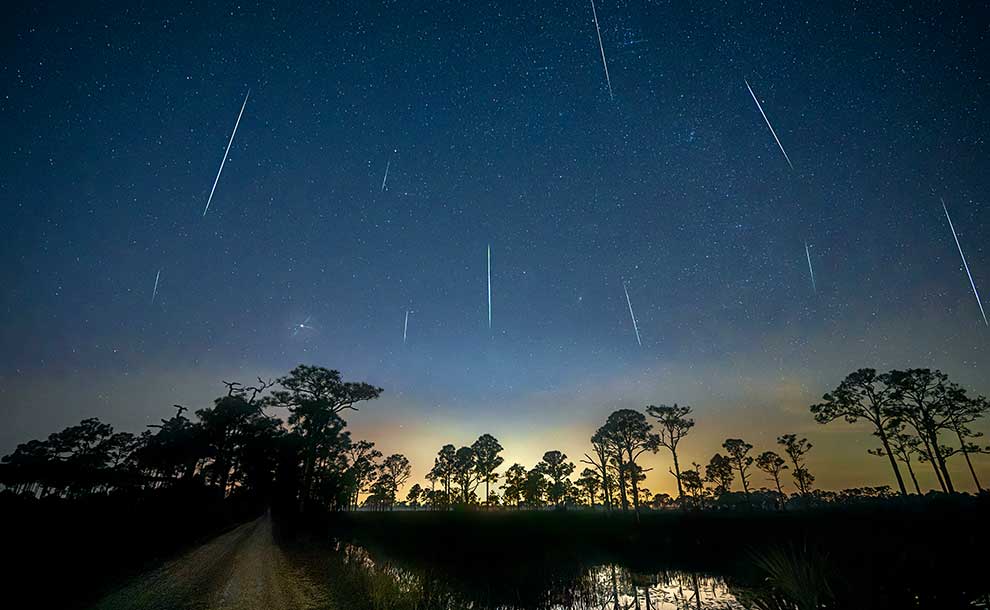
Geminid Meteor Shower (Photo – Diana Robinson)
It’s that time of year to keep your eyes on the skies!
By Briony James
Skywatchers in the San Gabriel Valley are in for a celestial treat this weekend as the Geminid meteor shower reaches its peak overnight Saturday, Dec. 13, into the early hours of Sunday, Dec. 14.
Known as one of the most dependable and visually striking meteor showers of the year, the Geminids offer an excellent opportunity to see shooting stars streak across the winter sky.
While meteors may appear as early as mid-evening, the most impressive viewing is expected after midnight and before dawn. During these pre-dawn hours, the constellation Gemini, the point in the sky from which the meteors appear to originate, rises higher, increasing the number of visible meteors. As Earth turns into a stream of debris left behind by asteroid 3200 Phaethon, activity intensifies, potentially producing dozens of meteors each hour. Under ideal dark-sky conditions, observers could spot well over 100 meteors in a single hour.
Gemini can be found northeast of the familiar constellation Orion, nestled between Taurus and Cancer. The constellation is easy to identify thanks to its two bright stars, Castor and Pollux, which represent the heads of the mythological twins. However, stargazers are advised not to focus directly on Gemini itself. Meteors closer to the radiant tend to appear shorter and fainter. Instead, viewers should scan darker areas of the sky farther away for longer, more dramatic streaks of light.
The good news for casual observers is that staying up all night isn’t required. Even a short viewing session in the late evening could yield results. Still, those willing to brave the colder early-morning hours on Dec. 14 are more likely to catch brighter meteors with longer trails.
For the best experience, experts recommend dressing warmly and allowing at least 30 minutes for eyes to fully adjust to the darkness. Once settled, patience is key, no telescope or binoculars are needed. Just find a comfortable spot, look up, and enjoy one of the year’s most anticipated skywatching events.
Just in time to celebrate our season of light, look up and enjoy the show!












Leave a Reply