






Tree cutter on Santa Anita in Altadena (Photo – Melissa Michelson)
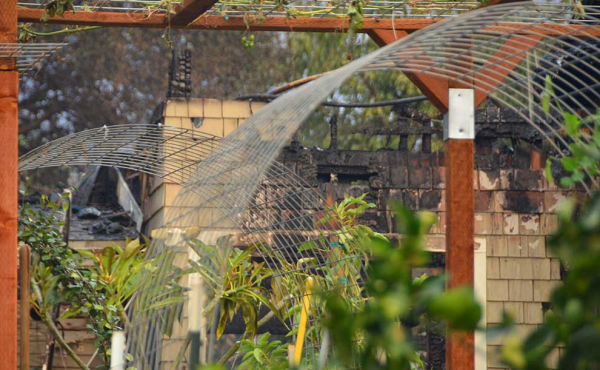
Six months after the devastating Eaton and Palisades fires tore through Los Angeles, Governor Gavin Newsom announced Monday, July 7, the near-completion of the largest and fastest residential wildfire cleanup in U.S. history, a milestone that clears the path for rapid reconstruction and long-term community recovery.
By News Desk
Standing alongside local leaders at a press conference in Los Angeles, Newsom marked the six-month anniversary by signing a sweeping executive order aimed at fast-tracking the rebuilding of homes and schools, easing permitting processes, and cutting red tape for survivors eager to return home.
“California is not only rebuilding what was lost, we’re building back stronger, safer, and faster than ever before,” said Governor Newsom. “The speed and scale of this response shows what’s possible when government works hand-in-hand at every level.”
Historic Cleanup, Record Pace
The state’s Consolidated Debris Removal Program, managed jointly by Cal OES and the U.S. Army Corps of Engineers in partnership with FEMA and local governments, has already cleared debris from 9,195 of 12,048 destroyed properties, including over 2.5 million tons of ash, metal, and contaminated soil. That’s equivalent to 92 Statues of Liberty in mass and more than double the debris removed from Ground Zero after 9/11.
The state’s Consolidated Debris Removal Program, managed by Cal OES and the U.S. Army Corps of Engineers in partnership with FEMA and local governments, has already cleared debris from 9,195 of the 12,048 destroyed properties. This includes the removal of more than 2.5 million tons of ash, metal, and contaminated soil, equivalent in weight to 92 Statues of Liberty and more than double the debris cleared from Ground Zero after 9/11.
At the operation’s peak, over 500 heavy equipment crews worked around the clock, enabling the removal of hazardous waste from 9,000 homes in less than 30 days, a pace months ahead of past cleanups following disasters like the Camp, Woolsey, and Tubbs fires.
“This is the most effective and coordinated disaster recovery I’ve seen in nearly three decades of emergency management,” said FEMA Region 9 Administrator Bob Fenton.
Executive Order to Accelerate Rebuilding
Newsom’s newly signed executive order suspends certain local permitting laws and environmental regulations, expanding CEQA and Coastal Act exemptions to streamline the reconstruction of homes and schools.
Key provisions include:
- Expedited rebuilding by suspending local reviews for homes and schools
- Temporary relief from rooftop solar mandates to reduce upfront costs
- Deferral of building code changes until January 2026, providing certainty for rebuilding plans
- Support for temporary housing and tenant protections
The order also addresses local concerns about parity in rebuilding access, reducing costs and bureaucratic hurdles for affected residents across city and county lines.
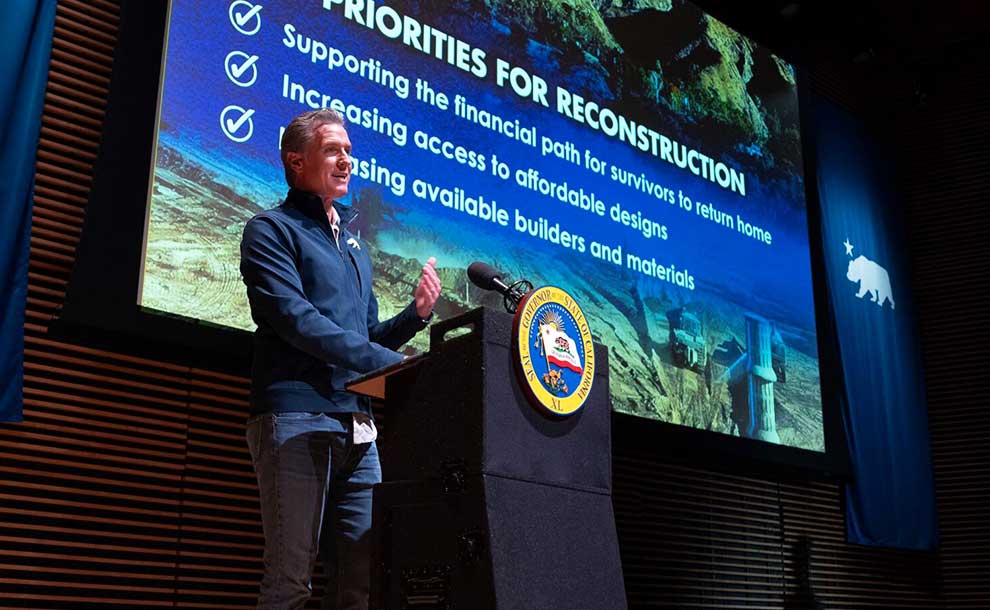
Governor Gavin Newsom, July 7, 2025 (Photo – ca.gov)
A Blueprint for the Future
Alongside Los Angeles County officials, the Governor also unveiled a 120-day “Blueprint for Recovery” to guide the transition from emergency response to sustainable reconstruction. The plan focuses on identifying community needs, expanding access to affordable housing, and delivering targeted support for homeowners, businesses, and schools.
“Recovery is a long journey,” said Kathryn Barger, Chair of the LA County Board of Supervisors. “But thanks to a people-first approach and the fastest cleanup in our history, we are now positioned to lead a smart, equitable rebuild for every impacted neighborhood.”
Broad Federal and Local Support
Federal officials applauded California’s urgent response while calling for continued federal investment to maintain momentum.
“We’ve made incredible progress, but the road ahead will require continued federal investment,” said Senator Alex Padilla. “Natural disasters don’t care about political affiliation, and neither should our response.”
Representative Judy Chu echoed the call for sustained efforts: “We must fight for affordable long-term housing, because every American deserves the dignity of recovery.”
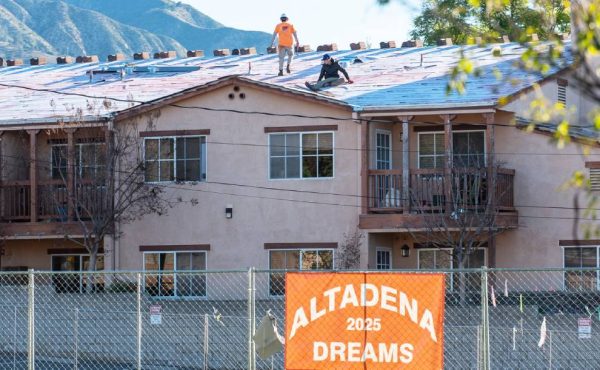
Local leaders, from LA Mayor Karen Bass to city officials in Malibu, Pasadena, and Sierra Madre, praised the unprecedented collaboration and resilience shown by their communities.
“From Malibu to Altadena, we have proven that LA is not just surviving, we’re leading,” said Mayor Bass.
By the Numbers
- 9,195 properties cleared of debris
- 2.5 million tons of material removed
- 12,500 right-of-entry forms submitted
- 8 of 8 schools resumed in-person instruction
- 9 of 9 water systems reactivated
- 16,000 first responders and personnel deployed
- $2.5 billion in SBA assistance approved
- $144.2 million in individual relief disbursed
- $100 million in local rebuilding partnerships via LA Rises
Safeguards and Support for Survivors
California has also enacted robust protections for survivors, including bans on predatory real estate practices, price gouging, and forced housing displacement. Executive actions provide:
- Eviction bans for hosts sheltering displaced residents
- Tax deadline extensions and mortgage relief packages
- Fee waivers for small businesses affected by the fires
“From day one, we’ve been all in,” Newsom said. “Now it’s time to rebuild with the same urgency, because Californians deserve nothing less.”

Governor Newsom with local leaders and representatives from L.A., Malibu, Pasadena, and Sierra Madre (Photo – ca.gov)










Leave a Reply