





Michael McCarthy (Photo – Benoit Photo)
Turning into the final corner at Pimlico Race Course in Baltimore, Maryland, trainer Michael McCarthy, an Arcadia native and Arcadia High School alum, watched as his horse Journalism, with jockey Umberto Rispoli aboard, fought through a crowd of contenders along the home stretch of the 2025 Preakness Stakes. Just as he did in April’s Santa Anita Derby, and nearly did weeks earlier in the Kentucky Derby, Journalism clawed his way from behind to edge out the heavy underdog, Gosger, in a thrilling finish.
By Daniel Peters
By a mere half horse length, McCarthy had won his second Preakness Stakes in five years, Rispoli became the first Italian jockey to win a Triple Crown Race, and Journalism had finally found glory after the Kentucky Derby.
By a mere half a horse length, McCarthy claimed his second Preakness Stakes victory in five years, Rispoli became the first Italian jockey to win a Triple Crown race, and Journalism finally found redemption after the Derby.
“I thought after the Kentucky Derby that he had trained just as well, if not better, leading up to the Preakness,” McCarthy stated. “His appetite was good, his attitude was good… all of these things you’re looking for; he was not showing us any signs of fatigue.”
A defining moment came when Journalism and Rispoli found themselves sandwiched between Goal Oriented and Clever Again in a tight, high-pressure trio. Despite what many would consider a nightmare scenario, Rispoli powered through and reeled in Gosger, who appeared to be pulling away for a sure win.
“Umberto is a very tactical rider, always does his homework, and as you saw in the Preakness, he’s a very brave rider,” shared McCarthy. “Not a lot of jockeys would have persevered through that situation. Umberto put a lot of trust in Journalism, and I think Journalism put a lot of trust in Umberto. So, the two of them together were both spectacular.”
This wasn’t McCarthy’s first visit to the Pimlico winner’s circle. In 2021, he won his first Preakness Stakes with racehorse Rombauer. But McCarthy sees key differences between his two champions.
“Rombauer had been training well, and he was getting good at the right time,” explained McCarthy. “A horse like Journalism, however, has always been meant for something like that. He’s a special talent, and I thought he was always meant for races like the Kentucky Derby, the Preakness, and Belmont… racing on the biggest stages.”
That special talent showed early when McCarthy began working with Journalism in July 2024. He described the colt as an “easy study,” noting how he handled training tasks with ease, especially for a two-year-old.
“He was very amenable to anything we asked of him, training-wise. He’d go as slow as we’d like, as fast as we’d like, gallop alongside another horse, gallop behind another horse, all these kinds of things that make you realize he’s obviously well-schooled, well-broke, and has a good mind.”
McCarthy leaned into those strengths when preparing for the Preakness, running mile to mile-and-a-half sessions and applying the wealth of knowledge gained over his long and decorated career.
Growing up near Santa Anita Park, McCarthy developed a deep love for the sport long before he turned it into a profession. He eventually worked alongside renowned trainers like John O’Hara and Todd Pletcher, spending 12 years under Pletcher’s guidance. During that time, McCarthy gained international experience, training in England, Japan, Hong Kong, and Dubai. His stateside work in Saratoga, Kentucky, and Florida also shaped a training style rooted in a wide range of influences.
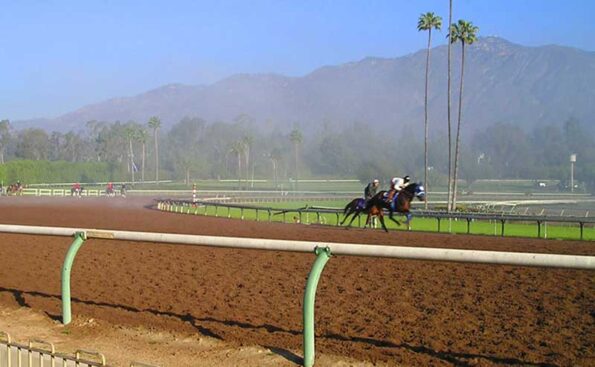
Yet despite his global resume, McCarthy remains convinced that, outside of Churchill Downs, Santa Anita is the best place in the country to train and race horses. From the consistently favorable weather to the expert work of track superintendent Dennis Moore, McCarthy credits the environment as a key reason he returned to Southern California for a fresh start.
In 2014, McCarthy left his position with Pletcher, returned to Santa Anita, and launched his own independent training operation. Since then, he’s kept his passion alive—driven by a love for the competition and for the horses themselves.
“This is a profession where you get out of it what you put into it. There’s really no such thing as an overnight sensation doing what we do,” McCarthy said. “First and foremost, you have to have a passion for this because it’s all-consuming; 365 days a year, sunup to sundown. And I love training the $10,000 horse just as much as I enjoy training the $1 million horse.”
He continued, “I like to compete. I like the feeling I get from winning. I like being around the horses. I like being able to put my hands on them. I like working around the barn. I like the crew I’ve assembled here. It’s a lifestyle more than anything, you know? And if you have a bad day, I’m fortunate enough to come back the next racing day and get the job done all over again.”
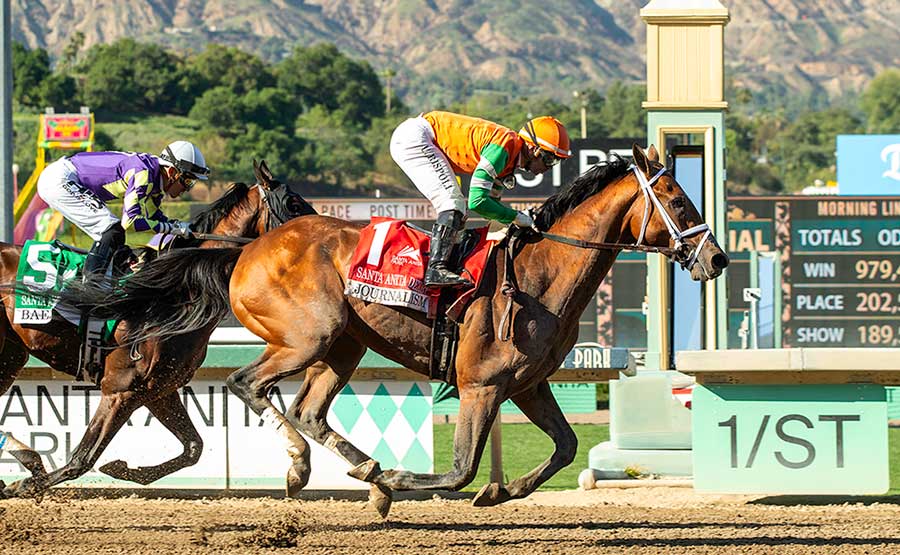
Journalism (Photo – Benoit Photo)







Leave a Reply