






Editor’s Note: An excellent resource from the Altadena Town Council:
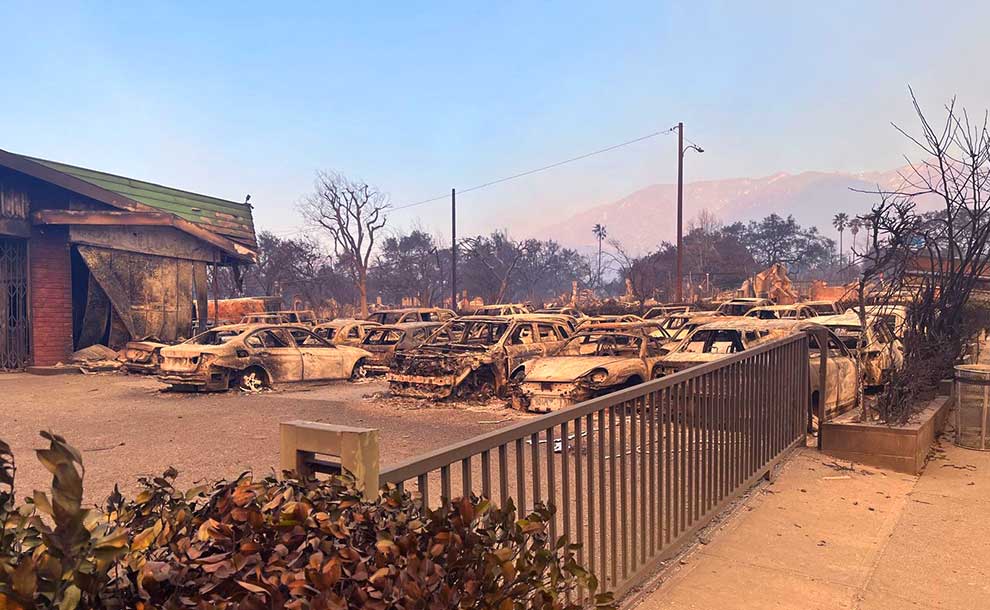
An auto garage on the corner of Fair Oaks and Mendocino (Photo – Afnan)
Recovering from the Eaton Canyon Fire requires immediate action, careful planning, and access to the right resources.
By Altadena Town Council
Whether you’re a homeowner, renter, or small business owner, this guide outlines essential steps to help you navigate the recovery process and rebuild your life and our community.
Let’s start with basics:
1- Register for Disaster Assistance
-
Apply for assistance from FEMA, even if you have insurance. FEMA may provide funds for expenses not covered by your insurance policy. Visit DisasterAssistance.gov to apply.
2. Stay Informed
-
Follow updates from local authorities, including Altadena Town Council and Water Departments, for recovery announcements and safety advisories.
-
Subscribe to alerts and notifications through county websites.
3. Protect Your Health
-
Wear protective gear (N95 masks, gloves, and boots) when entering fire-damaged areas.
-
Avoid direct contact with ash, soot, or contaminated water.
4. Mental Health Support
-
Disasters can be overwhelming. Reach out to local mental health services or support groups for assistance.
-
FEMA and Red Cross offer mental health resources for disaster survivors.
For Homeowners
Assess Damage to Your Property
- Only return home once authorities declare it safe.
- Document all visible damage with photos and videos. This includes structural damage, destroyed belongings, and exterior issues like landscaping.
- Contact your insurance provider to report the damage and begin the claims process.
Water and Utilities
- Avoid using tap water until local authorities confirm it is safe. Use bottled water for drinking, cooking, and hygiene.
- Inspect utilities (electricity, gas, and water) for safety and report any issues to your utility provider.
Seek Temporary Housing
- If your home is uninhabitable, check if your insurance provides coverage for hotel stays or rental assistance.
- Reach out to local housing authorities or disaster relief organizations for temporary housing support.
Salvage Personal Belongings
- Safely retrieve essential items if authorities allow access to your home. Wear protective gear to minimize exposure to hazardous materials.
Debris Removal
- Do not attempt to remove fire debris yourself. Ash and debris may contain hazardous materials.
- Contact a licensed contractor or local government-approved debris removal program.
- Homeowners may qualify for financial assistance to cover debris removal costs. See FEMA
Rebuilding and Repairs
- Hire licensed contractors for repairs and rebuilding. Verify licenses through your state contractor’s board.
- Check if your insurance policy covers temporary housing while your home is repaired.
For Renters
Notify Your Landlord
- Inform your landlord of any damage to your rental unit. Take pictures to document the condition of your home.
- Review your lease for clauses related to disaster recovery and repair responsibilities.
Water and Utilities
- Avoid using tap water until local authorities confirm it is safe. Use bottled water for drinking, cooking, and hygiene.
- Report utilities issues to your landlord or provider (electricity, gas, and water) for safety.
File Renters Insurance Claims
- If you have renters insurance, contact your provider to report damages. Policies typically cover personal property losses and temporary housing expenses.
Seek Temporary Housing
- If your rental is uninhabitable, check if your insurance provides coverage for hotel stays or rental assistance.
- Reach out to local housing authorities or disaster relief organizations for temporary housing support.
Salvage Personal Belongings
- Safely retrieve essential items if authorities allow access to your unit. Wear protective gear to minimize exposure to hazardous materials.
For Small Businesses
Evaluate Damage and Report Losses
- Inspect your property and inventory for damage. Document everything with photos and receipts.
- Contact your insurance provider to initiate a business interruption or property loss claim.
Apply for Financial Assistance
- Small businesses affected by the fire may qualify for loans or grants from the Small Business Administration (SBA) or local programs.
- Visit FEMA and SBA Disaster Assistance for more information.
Plan for Recovery
- Create a recovery plan to prioritize reopening your business. This may include securing temporary premises, restocking inventory, or repairing equipment.
- Contact your local chamber of commerce or business associations for additional resources and guidance.
Access Community Support
- Partner with other local businesses and community organizations to share resources and support each other during recovery.
Financial and Logistical Considerations
Document Everything
- Keep all receipts for purchases related to your loss, including essentials and incidental items. Insurance may cover these costs.
Manage Utilities and Services
- Contact your utility providers to freeze or cancel services (electricity, gas, etc.) and update your mailing address to your PO Box.
- Call the rest of your insurance points as needed (car insurance, speciality insurance for unique items, etc.).
Understand Your Taxes
- You may be able to claim losses for items not covered by insurance on your tax returns. Consult with a tax advisor to explore your options.
Get A Storage Unit for the things you acquire
This is an excellent resource put out by the Altadena Town Council. The Altadena Town Council is a locally elected Council of resident volunteers across eight census tracts, dedicated to supporting recovery efforts from the Eaton Fire, prioritizing both residents and local businesses. They have put an official website that focuses on providing straight forward guidance and resources to help the Altadena community rebuild.












Leave a Reply