






GUEST OPINION
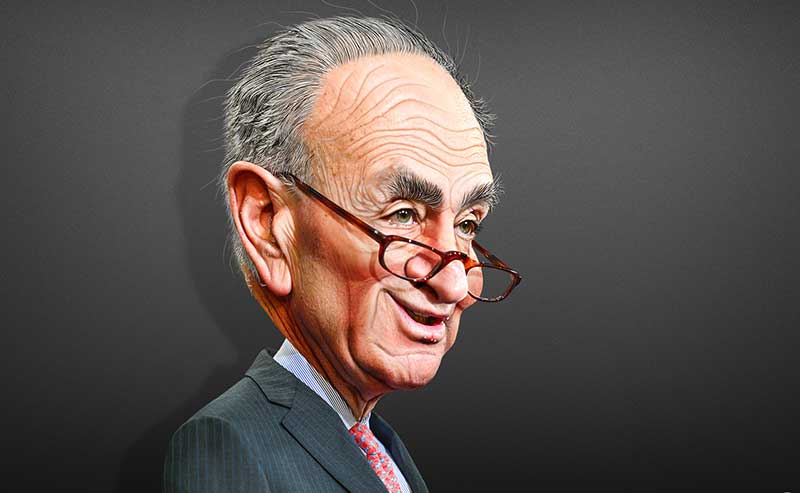
Chuck Schumer (Photo – DonkeyHotey)
The Democratic Party has reached a critical juncture in American politics, and it’s becoming increasingly clear that Chuck Schumer, the Senate Minority Leader, is no longer the person who can guide the party forward.
By William Garrison
Schumer’s recent actions, or lack thereof, have exposed a troubling pattern of ineffective leadership that has left the party weak, divided, and unable to seize the momentum needed to address the major issues facing America.
At the heart of the most recent debacle is Schumer’s role in the funding package deal brokered with a handful of Senate Democrats. This agreement to reopen the government was widely seen as a complete capitulation. In exchange for reopening the government, Democrats secured little to no tangible concessions on issues that matter to the party’s base. Most notably, the healthcare tax credits for those covered under the Affordable Care Act remain unresolved, a key sticking point for Democrats. Schumer’s inability to secure any significant victories on this front highlights a lack of strategic foresight and political muscle.
Recent election results show that healthcare continues to be a winning issue for Democrats. Exit polls consistently indicated that Democrats made significant gains by emphasizing their historic advantage on healthcare and fighting to lower costs. The party has a powerful message to rally behind, yet Schumer’s failure to capitalize on it during these crucial negotiations demonstrates a leader out of touch with both his caucus and the American people.
Perhaps most telling is Schumer’s response to the eight Senate Democrats who broke rank to support the funding package. These defections are not a minor issue; they represent a clear fracture within the Democratic Party. If Schumer was unaware or did not approve of these defections, it suggests he has lost control of his caucus, an unacceptable situation for any party leader. On the other hand, if Schumer was aware of and implicitly supported these breakaway votes, it indicates he was trying to play both sides without delivering real results. Either way, the fact remains that Schumer is not leading; he is merely reacting.
In contrast, there are bright spots emerging in the political landscape. A new generation of Democrats, eager to challenge the status quo and push for meaningful reforms, is rising to the occasion. These fresh faces offer the hope of a more unified and effective Democratic Party, one that can take bold actions on healthcare, climate change, and economic justice. Unfortunately, Chuck Schumer’s leadership has become a roadblock to that progress, and it is increasingly clear that he is not the one to guide these new leaders into a cohesive force.
Schumer’s “no” vote on the funding package is especially troubling because it leaves the party with limited options. By voting against the deal, he essentially boxed Democrats into a corner, leaving them with no viable path forward. It was a political move that did little to strengthen the party’s position and only served to deepen the division within his own ranks. Such strategic missteps are not just frustrating—they’re dangerous. When party leadership fails to offer a clear, compelling vision, it weakens the party and emboldens its opponents.
Ultimately, Chuck Schumer’s failure to effectively lead and deliver for his party’s base should serve as a wake-up call. The Democratic Party deserves better. It deserves a leader who can navigate the complexities of Washington with skill, unite the party around a common vision, and take decisive action on the issues that matter most to the American people. Schumer’s time has come and gone. It’s time for a new generation of leadership, one capable of charting a bold course for the future of the Democratic Party.
Chuck Schumer needs to go. His tenure has been defined by missed opportunities, fractured unity, and an inability to deliver on key promises. The party needs someone who can do better, someone who can actually move the needle on healthcare, climate change, and the economy. The Democratic Party’s future depends on it.













Leave a Reply