






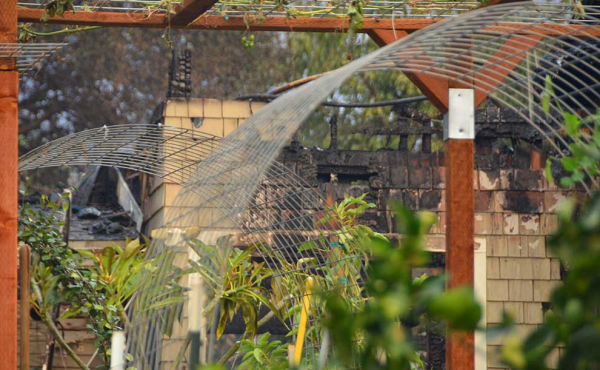
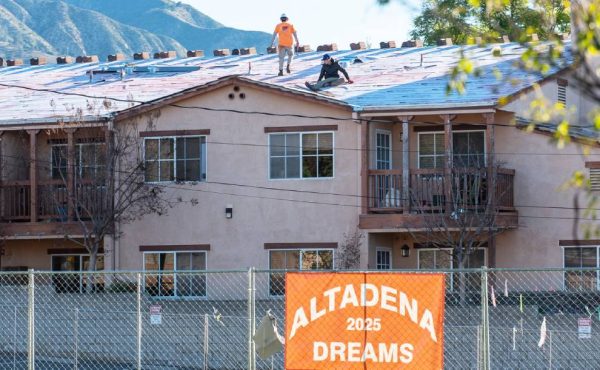
Altadena fire destruction (Photo – W.K.) Design (Photo – Graphics Dept.)
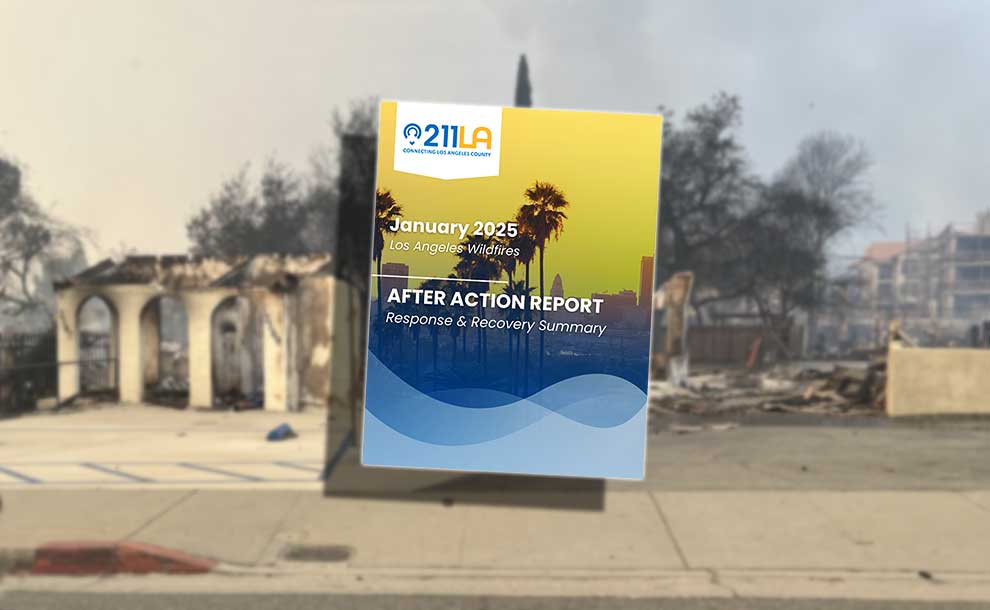
Following Los Angeles County’s official after-action review of the Eaton and Palisades Fires, which identified failures in evacuation alerts and emergency coordination, 211 LA has released its own After Action Report, spotlighting a critical yet often overlooked component of disaster response: the role of community-based organizations.
By News Desk
While the County’s report calls for improved alert systems and clearer emergency protocols, 211 LA’s findings reveal how local nonprofits and grassroots networks stepped in to fill vital gaps when official systems faltered. According to the report, tens of thousands of Angelenos relied on trusted community organizations for timely safety information, emergency shelter, and recovery resources during the crisis.
Key takeaways from the 211 LA report include:
- Recovery Starts on Day One:
Community organizations began providing housing support and case management within 48 hours of the fires, demonstrating the importance of integrating survivor recovery into the immediate response phase. - Community Nonprofit Capacity as Critical Infrastructure:
The report calls for greater investment in nonprofit readiness, asserting that organizations like 211 LA are as essential as alert systems when public infrastructure fails. - Equity Through Local Partnerships:
Collaborations with Independent Living Centers, senior advocates, and grassroots groups were instrumental in reaching vulnerable and underserved populations. - Data and Technology for People, Not Just Protocols:
Tools such as integrated dashboards and secure document systems enabled faster access to aid, especially when official communications were delayed.
“Los Angeles cannot build wildfire resilience without acknowledging the essential role of community organizations,” said Maribel Marin, Executive Director of 211 LA. “The County’s report identifies important system fixes, and our report highlights the human impact and community response that made recovery possible.”
211 LA emphasizes that true disaster resilience requires more than technical improvements—it demands deeper, sustained collaboration between government agencies and the nonprofit infrastructure that communities already depend on.
Founded in 1981, 211 LA is a nonprofit hub that connects Los Angeles County residents to a wide range of health, human, and social services. From wildfires to the COVID-19 pandemic, the organization has played a vital role in helping communities navigate crises.
A summary of the 211 LA After Action Report is available here.











Leave a Reply