







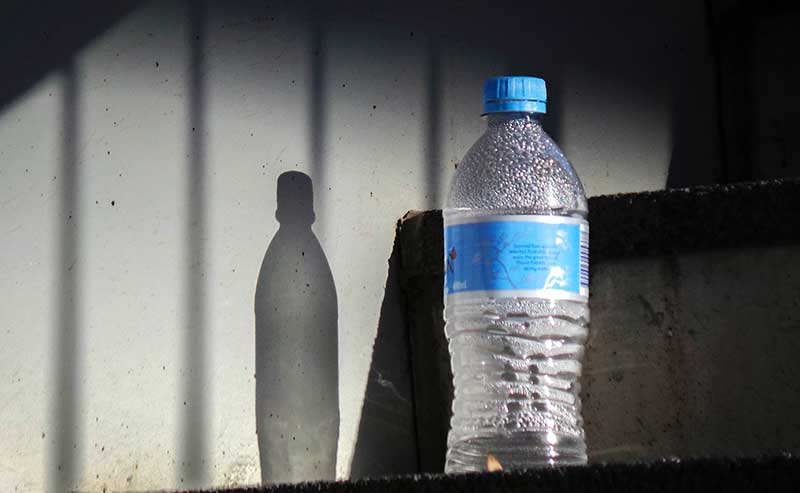
A water bottle in the sun (Photo – Theen Moy)
Studies show that plastic fragments (microplastics and nanoplastics), heavy metals, organic pollutants, and synthetic chemicals in bottled water are exposing us to health risks.
By Cheryl Auger
Water is typically bottled in plastic made from Polyethylene Terephthalate (PET) and High Density Polyethylene (HDPE) resins. Recently researchers from Columbia University and Rutgers University found nearly a quarter of a million detectable plastic fragments in a liter of bottled water. About 10% of the detected plastic particles were microplastics, 90% were nanoplastics.
Microplastics have been found in people’s lungs, excrement, and blood, and URI Researchers found that microplastics breached the blood barrier to the brain in mice causing potential serious health consequences including Alzheimer’s. Nanoplastics and microplastics also breached the blood barrier to men’s testicles and may be related to reduced sperm counts.
PET and HDPE contain various toxins such as heavy metals, organic pollutants and synthetic chemicals.
- In one test, 40% of water bottled in PET exceeded California’s Standard of 1 ppb of Antimony. Antimony exposure is linked to liver damage, cancers, and heart disease.
- The bisphenol chemicals BPA, BPF and BPS have been found in plastic water bottles. They have been linked to hormone disruption, breast cancer, early puberty, infertility, and autism.
- Fluorination is commonly used to treat hundreds of millions of polyethylene and polypropylene containers each year. This process creates PFAS, which is also found in bottled water. PFAS is linked to health issues such as increased cholesterol, changes to liver enzymes, decreased birth weights, and increases in high blood pressure of pregnant women.
Senator Portantino, Senate District 25, introduced legislation this year to assess microplastics in plastic drinking water and set safe standards for bottled water.
Note: Pasadena’s PWP recently published an RFP to procure bottled.












Easy to avoid, don’t drink bottled water. It is easy to do. Don’t waste your money
Would be better to get clean enough water at home, use a filter and your own non deposable bottle. The amount of testing done to the water going out to your house would astound you. The lack of testing for the little bottles would do the same.
With disposable/consumables you don’t know how much sun or heat the bottles have been subjected to.
I think the disposables contribute to micro plastics in the environment and your body. PFAS are also part of the supply chain with the throw aways as well as a bunch of fuel and other packaging.
Your own stainless steel or glass bottle with your own filtered water. Almost nothing to buy and almost nothing to throw away.