







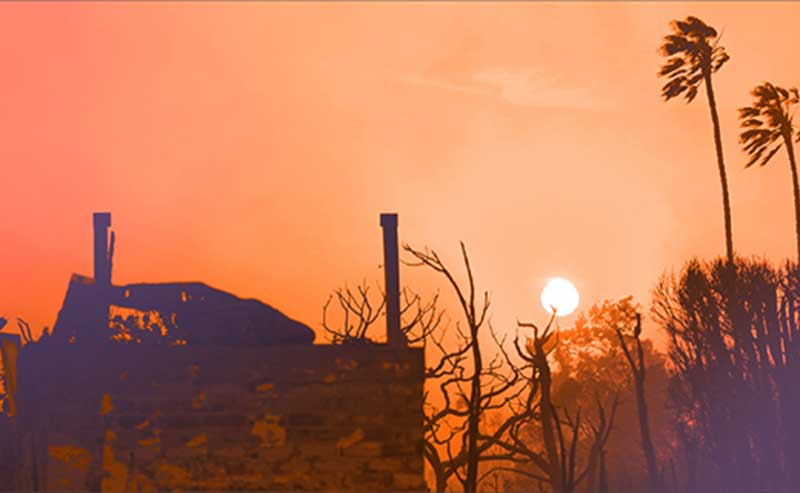
Exploring Toxic Metal Contamination After the Eaton Fire (Photo – Caltech)
In the wake of the devastating Eaton fire in January 2025, Caltech researchers have released their initial findings on the presence of toxic metals, including lead, in the environment.
By News Desk
The fire, which caused widespread destruction in Altadena and surrounding communities, claimed 18 lives, destroyed over 9,000 buildings, and caused an estimated $10 billion in damages. Among those affected was François Tissot, a Caltech professor of geochemistry, whose own home was severely damaged.
Tissot, whose expertise focuses on the study of heavy metals in meteorites, seized the opportunity to apply his lab’s cutting-edge techniques to assess the presence of hazardous elements like lead in the aftermath of the fire. Many of the homes destroyed in the blaze were built before 1975, making them likely to contain materials such as lead-based paint and asbestos, which were banned by the EPA years ago.
300 samples from 52 homes
Working swiftly, Tissot and his team collected over 300 samples from 52 homes across the fire zone and extending into Pasadena, South Pasadena, and La Cañada Flintridge. Their initial findings show that lead particles from the fire plume traveled over 7 miles from the burn area, contaminating indoor surfaces—particularly windowsills. However, areas that had been cleaned properly showed significantly lower levels of lead contamination.
The research revealed that lead concentrations near windows were up to 10 times higher than those found on surfaces further from the exterior. Cleaning surfaces reduced lead contamination by approximately 90%. Tissot stressed that ongoing cleaning, especially in areas near windows and doors where new particles may enter, is critical to minimizing lead exposure. He also highlighted the particular risks to children, as even low levels of lead can cause developmental harm.
In addition to lead, the team found elevated levels of arsenic. However, no lead contamination was detected in tap water samples. Further studies are underway to explore the potential presence of asbestos, which is a concern given the age of the buildings that burned.
Tissot also advised residents to take extra precautions during the cleanup, including using HEPA vacuums and wearing protective gear to avoid disturbing harmful particles. Experts continue to monitor air quality in the area, with projects like the PHOENIX sensor network providing real-time data on particulate levels to help mitigate exposure risks.
Conversations After the Fires: Studying Lead in the Environment
In the first conversation of a new series, join Caltech geochemist François Tissot, graduate students Merritt McDowell and Isaac Aguilar, and guest speaker Christine O’Connell, assistant professor of Biological Sciences at Chapman University, as they discuss their ongoing research into the environmental impact of urban fires. The conversation will be moderated by Caltech science writer Lori Dajose.
This event is free, but registration is required. The first 3,000 attendees can join the Zoom webinar, while others will have access via YouTube.
Studying Lead in the Environment
Apr 10, 2025
11:00 am
Location
Zoom and YouTube
Register at this link.










Leave a Reply