





We’re a small local business and can’t do it alone. Your support helps us stick around! Thank you for choosing to upgrade your free ColoradoBoulevard.net account and do your share of “buying local.”
Will you explore one of the many ways you can support us by checking the blue button below?
[asp_product id=”80314″]
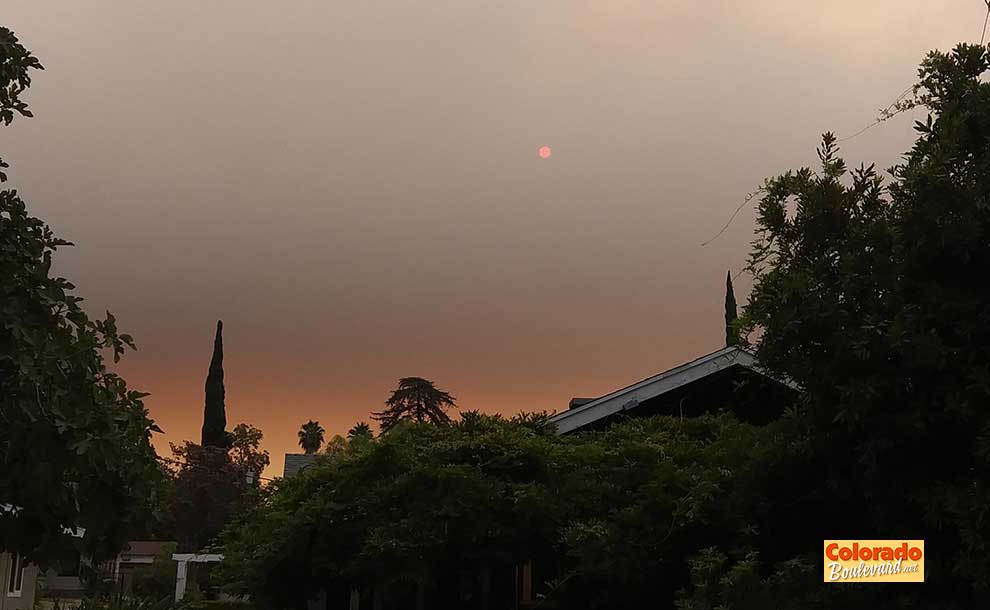
This moon-shaped thing is the sun. Monrovia on Labor Day, 2020, at 8:30 am (Photo – Ann Hunnewell, ColoradoBlvd.net)
With wildfires burning across the southland, residents who are not in the immediate path of the flames have been instead impacted by Wildfire smoke.
By News Desk
Tiny smoke particles can embed themselves in the lungs, enter the bloodstream and affect the heart, according to the EPA. Larger particles can cause eye, nose and throat irritation.
Here are tips on how to keep the air quality in your home clean:
- Stay inside, close windows or use air conditioners (if you have them) with the intake closed. Also, run a high efficiency particulate air filter (HEPA), or an electro-static precipitator (ESP) if you have one.
- If you do not have air conditioning and it is too hot to stay indoors with the windows closed, you may need to book a hotel room, or stay with a friend who has air conditioning.
- Don’t use anything that burns, like candles or gas stoves. And don’t smoke cigarettes indoors, which contributes to the already poor air quality.
- No vacuuming or doing other activities that stir up dust.
- The American Lung Association recommends placing damp towels under doors or in other crevices where polluted air might leak in.
- Do not rely on masks for protection. Most non-medical grade masks won’t protect lungs from the fine particulates of wildfire smoke. Bandanas are equally ineffective.
- Although respirators, like those labeled “NIOSH” and the rating of N95 or N100, can protect against smoke, they must be properly fitted by a trained professional, and are in scarce supply due to the coronavirus pandemic. Officials also have urged that these masks be reserved for medical and other frontline workers. For more information about effective masks, see the Respirator Fact Sheet provided by CDC’s National Institute for Occupational Safety and Health.
- Avoid outdoor activities, especially exercise, when air quality is unhealthy and hazardous.
- Asthma sufferers or those with other respiratory problems should follow their breathing management plans or talk to their doctors. Have an adequate supply of medication on hand (OHA recommends a five-day supply).
- If you spend time in a vehicle, turn the air conditioning on recirculate.
Don’t call 911 to report smoke. There’s smoke everywhere and our 911 system would be inundated with smoke calls instead of tending to other important matters.
Air Quality Index: FYI
- Zero to 50: Good.
- 50 to 100: Moderate.
- 101 to 150: Unhealthy for some groups.
- 151 to 200: Unhealthy for everyone.
- 200 to 300: Very unhealthy.
On Saturday, Sept. 12, at 22:00 UTC, Monrovia, was 170 and Altadena was 294. Some of the hardest hit parts in the center of the State are measuring more than 500.
> Check the latest on the Bobcat Fire. (Click photo below.)
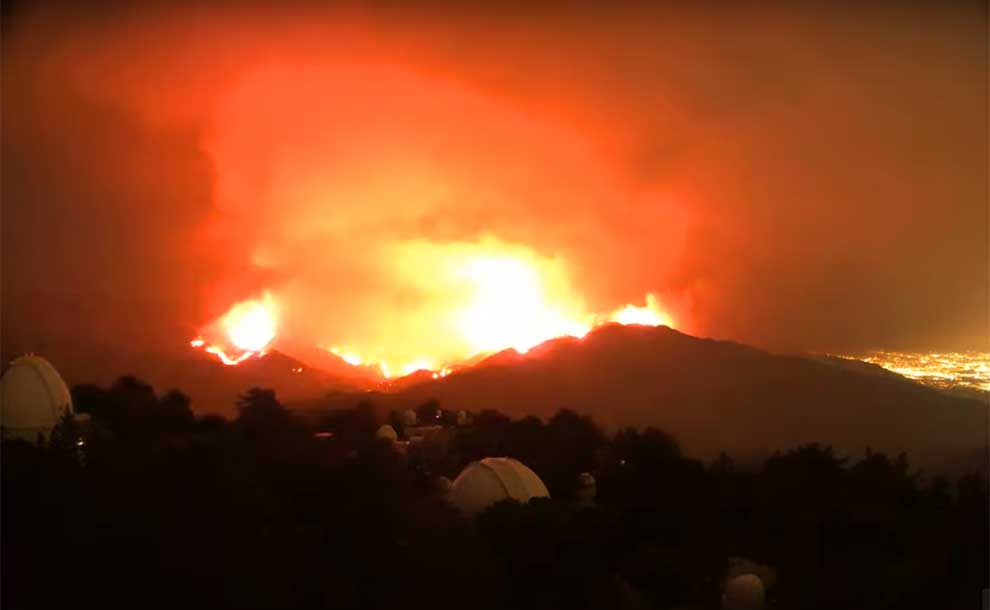
A Bobcat Fire still image from a camera by UC San Diego at Mount Wilson (Photo – HPWREN)












I noticed that my home has bad air quality that may affect our health, which is why I’m currently looking for a service that offers an air purification system. Well, thank you for stating here the disadvantage of smoking inside the house. I’ll also keep in mind to avoid vacuuming sine this may stir up dust.