



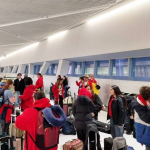





Looking north in Santa Rosa and Altadena drive Jan 12, 2025 (Photo – Melissa Michelson)
Southern California’s wildfire seasons are intensifying, driven by the increasing frequency of extreme weather patterns.
By Marina Khubesrian
A combination of 1-in-20-year Santa Ana winds speeds and 1-in-50-year dry starts to wet seasons has created a perfect storm of conditions ripe for ignition. Once a wildfire ignites under these circumstances, it spreads rapidly, fueled by high winds and dry vegetation. No amount of water in our current infrastructure—designed primarily for urban fires—is sufficient to stop wildfires under these conditions.
Moving water requires enormous resources, infrastructure, and power—resources that are already stretched thin during wildfire conditions. This highlights the critical importance of prevention. While we cannot control the weather, we can control the conditions that allow fires to ignite and spread. Addressing human-caused ignitions, such as sparks from power lines, fireworks, firearms or embers from wood-burning fireplaces, unattended campfires, cigarette butts, is essential to reducing the risk of catastrophic wildfires.
Air Quality: Understanding and Acting
One of the most immediate and hazardous impacts of wildfires is poor air quality, primarily due to fine particulate matter, or PM2.5. These tiny particles travel hundreds of miles and linger in the air for days, causing respiratory and cardiovascular health risks. Tools like the WatchDuty Watch Duty and EPA’s AirNow apps provide critical information, including Air Quality Index or AQI measurements, wind patterns, and fire updates.
If you’re upwind from a wildfire, your air quality is likely better. However, if you’re downwind, poor AQI means it’s time to take precautions, such as staying indoors, sealing windows and doors, and using HVAC systems with high-grade MERV-13 filters. Additionally, individuals with asthma and respiratory allergies would benefit from designated “clean air rooms” with HEPA air purifiers. If your home doesn’t have a whole-house filtration system, focus on improving air quality in a single room using a portable high-efficiency air purifier. Once AQI improves, ventilate your home and enjoy outdoor activities again.
When cleaning ash or dust, wear protective equipment (such as a P100 or N95 mask and gloves), wet ash before removing it to prevent particles from becoming airborne, damp wipe furniture and floors, use a vacuum with a HEPA filter. Avoid tracking outdoor debris inside by removing shoes at the door.
Wildfires can also elevate levels of volatile organic compounds (VOCs) in the air such as formaldehyde, acetone, and benzene, which can cause migraines, breathing problems, disorientation, and even cancer with chronic exposure. Air out your home to remove heavy VOCs when AQI is good. Consider adding VOC-absorbing plants like spider plants or rubber plants, and installing VOC scrubbers in your central air systems.
Water and Pool Safety
Wildfires also affect water systems. Ash, debris, and chemical runoff can impact drinking water and beaches. Pay attention to alerts from local regulatory agencies for updates on water safety. Residents in areas with burned infrastructure should test their water for contaminants and flush out pipes if necessary. Damaged pipes will likely need to be replaced.
Pools exposed to wildfire ash or debris don’t necessarily need to be drained. Instead, they should be cleaned, dredged, and chemically balanced. Regular maintenance ensures the safety of these spaces without wasting precious water.
Mitigating Fire Risk
Wildfire prevention remains our most effective tool. The majority of ignitions are man-made, and while specifics vary, power lines, wood-burning home or camp fires, arson and other sources of sparks or embers are common culprits. During Santa Ana winds, communities should be especially vigilant about preventing ignitions.
Land management is also critical. Invasive grasses that ignite easily and spread rapidly should be replaced with native, fire-resistant landscaping. These changes can reduce wildfire risks and foster biodiversity.
A Call to Action
Wildfires are not just a seasonal issue—they are a year-round threat with serious implications for public health and safety. Once ignited, wildfires spread rapidly under extreme conditions, and our current infrastructure cannot stop them. Prevention is our best defense. By addressing the causes of ignitions, maintaining fire-resistant landscapes, and staying informed through tools like AirNow and Watch Duty, we can mitigate their devastating impacts.
We have the tools and knowledge to adapt to this new reality. Let’s work together to create safer, more resilient communities for the challenges ahead.
Marina Khubesrian, MD, is the former Mayor of South Pasadena, and a public health policy advocate.










Leave a Reply