


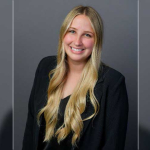

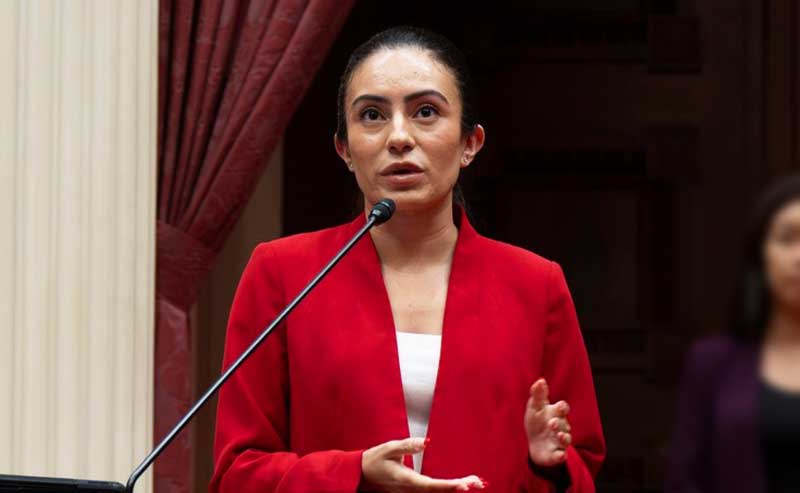
Sasha Renée Pérez (File Photo – Office of Sasha Renée Pérez)
Senator Sasha Renée Pérez (D-Pasadena) has introduced SB 995, the Masuma Khan Justice Act, legislation aimed at increasing state oversight of private detention facilities and holding operators accountable for health and safety violations.
By News Desk
Under SB 995, California would use its existing state authority to inspect private detention centers and require them to comply with the same health and safety standards applied to other involuntary residential facilities. The bill would authorize inspections of physical facilities to evaluate compliance and require operators to correct identified deficiencies.
Facilities that fail to meet standards could face civil penalties of up to $25,000 per violation per day, as well as suspension or revocation of their state-issued permits to operate.
“Private detention centers have earned millions in profits and continued to secure contracts with government agencies, despite well documented cases of health and safety violations,” Pérez said. “It is time for the State of California to use its legal and moral authority to inspect private detention facilities, hold bad actors accountable and close facilities with consistent, documented cases of human rights abuses.”
The legislation follows the release of a report last year by the California Attorney General reviewing six private immigration detention facilities in the state. The report identified serious deficiencies, including inadequate medical and mental health care, insufficient suicide prevention protocols, lack of transparency around use-of-force practices, and impacts to due process rights, including access to legal counsel. The Attorney General noted that many of these issues have persisted despite federal inspections conducted under U.S. Immigration and Customs Enforcement’s Performance-Based National Detention Standards.
California currently has an estimated 7,000 detention beds statewide, a number that could increase as some operators seek to expand detention space at two facilities in Kern County. The Attorney General warned that population increases could further strain facilities’ ability to provide adequate health care and essential services.
The bill is named after Masuma Khan, a 64-year-old immigrant from Bangladesh and resident of Altadena who has lived in the United States for nearly 30 years with her husband and daughter, both U.S. citizens. Khan survived the Eaton Fire in January 2025 and has been attempting to obtain permanent legal status for years. In October 2025, she was detained by federal immigration officials during a routine check-in appointment and held at a private detention facility. According to her account, she was kept in cold conditions without warm clothing, appropriate food, or access to vital medication. In November 2025, a federal judge ordered her release and blocked her detention while the court considers the government’s arguments.
“Masuma Khan represents just one of the many people with no criminal history, who is responsibly showing up to her government appointments, and has still been targeted by the Trump Administration,” Pérez said. “To make matters worse, Mrs. Khan was treated with cruelty, rather than dignity, in Core Civic’s private detention center.”
Khan described her experience as traumatic. “While I was detained at Core Civic’s California City facility, I experienced fear and lasting trauma that no one should have to experience,” she said, citing denial of vital medications, proper meals, and access to family and attorneys. She praised Pérez’s advocacy and called for greater transparency and accountability in detention facilities.
The bill is co-sponsored by the Mexican American Legal Defense and Educational Fund (MALDEF) and the Coalition for Humane Immigrant Rights (CHIRLA). Hector O. Villagra, MALDEF’s vice president of policy advocacy and community education, said the legislation affirms California’s responsibility to ensure humane treatment in all involuntary residential facilities. Angelica Salas, executive director of CHIRLA, said SB 995 addresses long-standing gaps in oversight that have compromised detainees’ health and safety.
SB 995 will begin the legislative process and is scheduled to be considered in a Senate policy committee hearing this spring.











Leave a Reply