


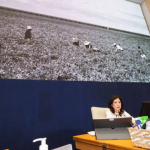


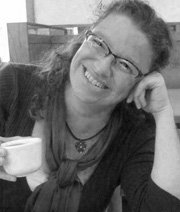
Barbara Ann Drake (Photos – Pitzer, tongvalhistorygarden)
With great sadness, I report that on November 18 of 2020, Barbara Drake, a respected elder of the Gabrielino/Tongva passed away.
By Christopher Nyerges
I met Barbara when I was lecturing at REI in San Dimas in the late 1980s. In my lectures, I showed native uses of plants, and how, in the past, indigenous peoples of this area – her people – made fire with wood, and wove sandals, and created all their everyday needs from the plants, rocks, shells, and trees of the landscape.
Barbara and I became quick friends. She enjoyed my hands-on and visual way of teaching, and she tapped me to teach many workshops in the Title VII Indian Education programs that she organized at the time for San Bernardino Schools. I participated in teaching students, and families in some cases, how to make traditional yucca sandals, how to use the native plants for food, and how to make fire with the hand drill.
I would visit Barbara up at Indian Springs Ranch, and interviewed her for my “Enter the Forest” book and for Wilderness Way magazine. One winter solstice, in the early 2000s, Barbara invited me up to Haramokngna Indian Center, at Red Box in the Angeles Forest. About 70 Indians were expected, but because of the heavy snow, most chose to not come. Only a dozen people actually showed up for the outdoor ceremony honoring the winter solstice in the cold snow. It was very special time for me, an intimate occasion in the snow, and around a fire.
Barbara actively participated in the Leadership in Environmental Education Program (LEEP), where she introduced hundreds of children to Tongva perspectives on the environment. She was one of the founding members of Mother Earth Clan, Cultural Keepers, and the Chia Café Collective. The Chia Café Collective eventually produced a book of that name, where Barbara and a handful of other native teachers shared their knowledge of cooking with traditional native foods.
When I attended Barbara’s lectures on native culture at the Southwest Museum, Eaton Canyon, and elsewhere, I was often surprised that she would call on me in the audience to answer questions, or to comment upon the current supply of native foods in the wilds. She typically began her talks by pointing out how Southern California seemed so park-like to the early Spanish explorers, who mistakenly believed the landscape was “natural” and “wild.” “Guess what?” Barbara would ask her audience. “We – our people – kept and preserved the land that way,” and she’d go on to describe the many methods of land management that were practiced by the early people of this area.
My wife Helen and I had the great pleasure of visiting Barbara, and donating plants and tools to her project of the Tongva Living History Garden, located 15 minutes away from Pomona College at the Chaffey Community Cultural Center in Upland. The Garden explored three distinct eras and their plants of the Inland Empire: the Tongva Era, the Rancho Era, and the Citrus Era. Students worked closely with Barbara Drake in the garden, learning about traditional Native uses of plants.
She was loved by all, never spoke ill of anyone, and always brought a positive light to her interactions with students, staff, and community members, always seeking to unite rather than divide.
Born in West Los Angeles in 1940 to Tongva mother Dolores Lola Lassos and Anglo father Charles Milton Scott, Barbara Drake (née Barbara Ann Scott) was raised exclusively on her mother’s traditional plant-based medicines until she was in her teens. Barbara was an enrolled member of The Gabrieleño/Tongva San Gabriel Band of Mission Indians and served as Tribal Secretary for many years. She worked in Indian Education Title VII for San Bernardino Schools, before coming to Pitzer College in 1993 to lecture on ethno-ecology. Her Tongva name was Kwi Tokor, meaning Acorn Woman.
Barbara Drake is survived by her husband of sixty years, Gary Drake, two children, and numerous extended family members.







Leave a Reply