







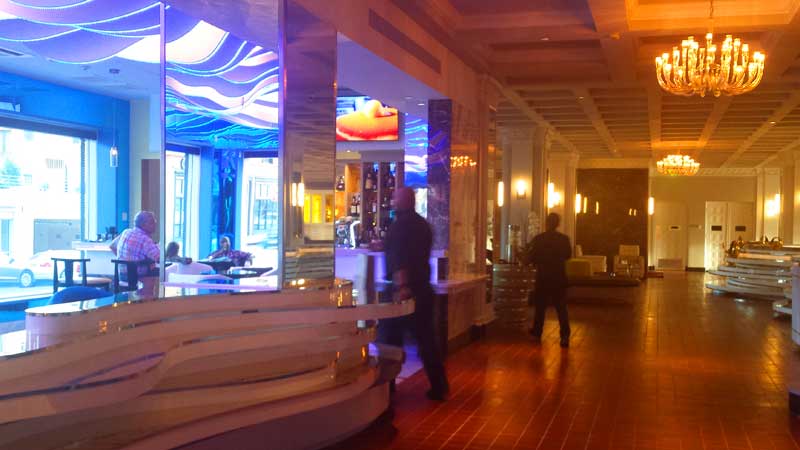
dusitD2 Constance Pasadena (Photo – Staff).
When the Constance Hotel reopened last year in Pasadena, it had many of the hallmark features of a modernized, energy-efficient property, including a new HVAC system, controllers, LED lighting, elevator motors, window treatments, water systems and insulation. The landmark property, with a neoclassical style and Spanish-tiled roofs, received energy efficiency upgrades as part of the $60 million overhaul, expected to yield an estimated annual savings of 207,000 kilowatt hours in electricity and 3.2 million gallons of water.
By Charles Keenan
To pay for the energy components of the renovation, William Chu, chief financial officer of the hotel’s general partner Sinpoli Capital Corp., tapped an innovative way to finance the improvements. An investment bank issued $6.9 million in 6 percent bonds in a private placement, to be paid back over 20 years through local tax assessments.
It was the right fit for us to secure some long-term financing for our upgrade to the hotel,” Chu says. “Compared with what you have to go through with a bank, this was nothing.
Chu represents a small but growing group of real estate owners and managers using a type of financing for “property assessed clean energy,” more commonly known as “PACE.” It offers users a relatively inexpensive way to finance efficiency improvements and permits the upgrades to be cash-flow positive since the repayments are made over a long-term period. For those looking to embark on major energy efficiency upgrades in the years to come, PACE could end up becoming another standard financing tool.
Old concept with a new twist
PACE takes an old concept of the tax assessment and gives it a new twist. The financing gets wrapped into tax payments collected by a participating municipality, which protects bondholders in the event of default, as the debt owed would be picked up by any new owner and paid through assessments. PACE pays 100% of a project’s cost and is repaid for up to 20 years.
Institutional investors provide the capital. They receive bonds in return that pay generally 6% to 7%.
David Gabrielson, executive director of non-profit advocate PACENow says:
The funder of the PACE project stands first in line—even ahead of the mortgage lender—to be paid in the amount in arrears that’s owed to them. Like property-tax assessments, PACE assessments don’t get extinguished.
PACE proponents say the financing can help justify energy efficiency improvements because it stretches out amortization of the repayments. Expensive upgrades might be difficult to justify over a five- to seven-year period of mezzanine financing.
Improving operating income
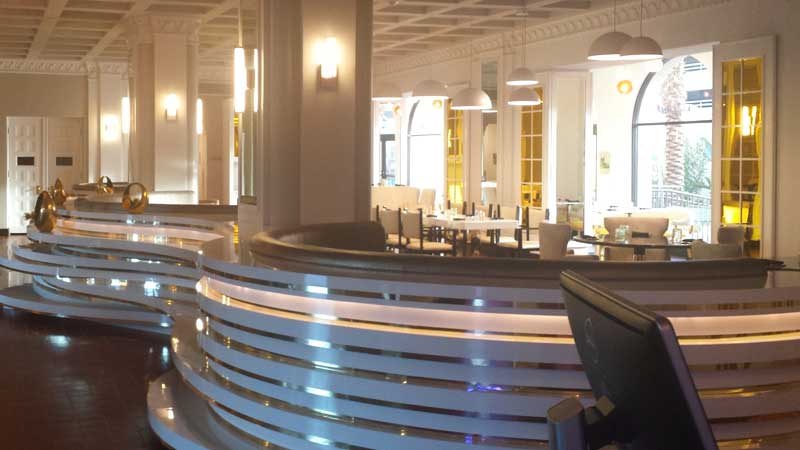
Constance Hotel in Pasadena (Photo – Staff).
On the bright side, for many developers, PACE has shown improvement to the bottom line. In the case of the Constance Hotel, which was built in 1926, the building had fallen into disrepair by the mid-2000s. Sinpoli Capital Corp., a California-based owner of commercial real estate properties, bought the hotel in 2007, and renovations started in 2011.
The goals behind the PACE-financed energy efficiency retrofit included deploying LED lighting and a new HVAC system, and central controls for lighting to reduce wasted energy in unoccupied rooms. It also included raising guest comfort through sophisticated room lighting and lowering water usage in part by installing dual flush toilets.
Chu became familiar with PACE in 2013; yet, renovations had already begun. While the building was financed with private money, the hotel would not have been able to go to a bank for a first mortgage, since lien rules dictate other creditors in the construction would be first in line in a default. Even so, bank financing would have involved more paperwork, Chu notes, whereas PACE financing was arranged in 60 days with the help of K2 Clean Energy Capital, a Campbell, Calif.-based company that develops solar power and energy efficiency projects and facilitates financing, and Structured Finance Associates. “This gave us a way out with a clean title, and financing for 20 years,” Chu says.
PACE then became a cheap way to boost revenue streams once the hotel opened in 2014. The maturity of the bonds was 20 years, allowing the energy savings to outpace the payments each payment period.
“These improvements allow the hotel to increase its operating cash flow and the corresponding value of the property” said Jonathan Pickering of K2. “It’s accretive to cash flow every year.”
Charles Keenan is a longtime contributor to REIT magazine and numerous other business publications. The content has been edited for length and clarity. Read the full article here.












Leave a Reply