







POETS SALON

Caprio on the Francigena (Photo – Kathabela Wilson)
– 10/27/21
Hosted by Kathabela Wilson
Some years ago my Caltech professor husband Rick Wilson and I traveled to Tuscany, and stayed at a beautiful 15th century home, restored by a dear friend and mathematician from the UK. We found ourselves walking along the Francigena, in the small village of Caprio. We slept in a beautiful low-ceilinged stone room where the cow had long ago been kept! Now we journey in great company with Susana Porras and Giselle Maya.
this camino this life —
we travel with our hearts
together~ Kathabela
Ο Ο Ο

Dad on Camino (Photo – Susana Porras)
Susana Porras
Traveling the Camino de Santiago with my 73-year-old father was a life-changing journey filled with awe-inspiring scenery, spiritual awakening, and lots of café con leche. Come with us as we travel physically, spiritually, and historically along this 500-mile Camino, through France to Spain. Take in the scenery, learn about its 1,000-year history of clerics and kings, and of course, don’t forget to stop and savor the tortillas.” Susana documented their journey by writing sonnets each day on this 39 day journey, and compiled them in her book “To Compostela and Beyond! A Poet’s Chronicle of the Camino de Santiago”.
Sonnet 31 Way to Villafranca Del Bierzo
The region’s cherry season at its peak,
Each branch drooping from the weight of its fruit.
We pick some for a taste of the unique
And sneak off to enjoy our tasty loot!On the hill, the Castle of the Templars
With imposing stone walls and watch towers.
An order whose life calling is stellar
And has unparalleled earthly powers.Touring the castle grounds sets us off course
And we are warned of an impending storm
That threatens to hit the region with force.
The skies slowly darken and grey clouds form.We arrive late into the evening hours
To a quaint village under rain showers.
Ο Ο Ο

Giselle Maya in her Garden
St. Martin de Castillons, France (Photo courtesy of author)
Giselle Maya and Kathabela Wilson
Tree of Life
tree of life
her lichen rain-drenched
limbs anchored
wounded and recovered
after a thunderstormstrong roots wrap
around themselves
arms weave
threads of light
a canopy of starssycamore trees
planted long ago by the road
to Manosque
the path wayfarers used
to get from Rome to Francein the village of Caprio
our sleepwalk footsteps
on the Francigena
fill the cracks
between old stonessigns of autumn
the pond reflects the moon
water’s memory
along the narrow path home
grasses whispergold-leafed the dream
in the breezeway between days
moss-green this bed
where pilgrims stop
to hold hands in their sleep
Ο

Dad and I, Santiago (Photo courtesy of author)
Traveling Together: Quotes and Credits
Susana Porras is a poet, travel enthusiast, and community organizer. In 2010, she was named one of The Magazine’s 50 Women of Influence for her dedication to effecting innovative ways of rebuilding neighborhoods in her hometown of Pasadena, California.
Susana has traveled extensively throughout Europe and Central America, putting down roots in both the South of France and Guatemala. She is fluent in both French and Spanish.
Susana earned her M.A. in sociology and a second B.A. in French at California State University–Los Angeles. Her love of learning has given her an appetite for cultural appreciation and an understanding of social nuances, creating a lifelong traveler and chronicler of adventures both at home and abroad.
After her journey along the Camino through France to Spain, she concludes her book of sonnets, To Compostela and Beyond! A Poet’s Chronicle of the Camino de Santiago, with a…“Thank you
Hearing the gratitude and appreciation in my father’s voice as we disembarked at LAX brought tears to my eyes. In that quiet moment, I realized the gift I had been given: a father-daughter bond stronger than either of us could have imagined, forged during this life changing adventure along the Camino, through resilience, perseverance, and love.”
Giselle Maya lives in St. Martin de Castillon, in the Provence area of France, a land of caminos not far from The Via Domita. She says: “This ancient road was built around 118 B.C. to connect Italia to Hispania across Southern France. Already the road had been used for centuries, repaved when necessary, with traces of a mythic route traveled by Heracles. These routes have several ‘arms,’ one of which goes through Apt-en-Provence, and through the valley just below the house in the village where I live. I can see it from my window.”
Giselle Maya is a painter, poet and gardener who has lived in Provence for almost 30 years, tending a piece of land with a spring, organizing exhibits of abstract art work in chapels and writing haiku, tanka, haibun, tanka prose, published in the journals Ribbons, CHO, Haibun Today, Lynx, Kokako, Skylark, the Tanka Journal, and Gusts. She has studied Chado, the Japanese tea ceremony in Kyoto, Literature at Sophia University in Tokyo and has published several books, among which are the Tao of Water, Poem Tales, Garden Mandala, Anemones, Treewhispers, Shizuka and Cicada Chant.
Kathabela says: “Giselle and I have combined here our experience to travel the pilgrim’s path in our poems, finding there, The Tree of Life! Our poem is a tanka sequence (five-line lyrical, emotional, linked verse, responding to one another from our own experiences.”
Memory Lane
> See our previous Salon: Finding a Way Through
Submission Guidelines
Suggest your own theme. or write Kathabela for a theme suggestion. We publish every two weeks. Send short poems, free verse, haiku, senryu, tanka, cherita, haibun, tanka prose, short prose poems, etc., or your own unique approach, to Kathabela by text message or (click here to email her directly). We can feature your work again after five months. Multiple Submissions can be saved to appear later:
- Send a short bio, with comments on your theme.
- Send photos or artwork by you, or friends.
- Put your poems directly in the email.
- No attachments except photos.
End of article
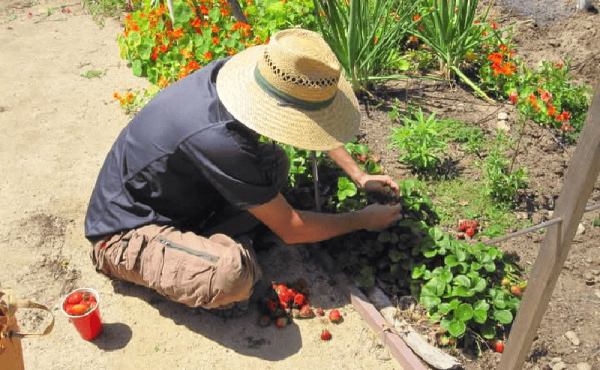












an excellent idea Kath Abela, well-presented, it allows the land here to be shared in poetry; i go to my garden almost daily to tend the plants – many of them shall be covered for winter; first we rake poplar & walnut leaves fallen to the ground into a pile.
the dahlia stems now frosted are cut to about10-20 cm, i hoe around the root area, add some compost, ‘voile d’ hivernage’ (a white cloth held in place with field stones while the cold weather lasts. Merci for posting our tanka sequence here.
Lovely to keep in touch. I miss you.