







Measles (File Photo)
L.A. County’s Health Department has confirmed one case of measles in a non-Los Angeles County resident who traveled to Los Angeles International (LAX) airport while infectious on July 26, 2024.
By News Desk
The indoividual arrived on Norse Atlantic Airways flight Z0711 at the Tom Bradley International Terminal, Gate 202, on July 26, 2024, at 2:18 pm and traveled to Orange County upon arrival (The Orange County Healthcare Agency is investigating additional exposure sites in Orange County).
Individuals who were at LAX TBIT and Terminal B from approximately 2:30 pm to 4:00 pm. may be at risk of developing measles due to exposure to this traveler. Additional locations where possible exposures may have occurred are being investigated.
In collaboration with the Centers for Disease Control and the Orange County Healthcare Agency, passengers assigned to specific seats that may been exposed on Norse Atlantic Airways flight Z0711 on July 26, 2024, will be notified of exposure by local Departments of Health. These agencies work together to investigate communicable disease exposures on international and domestic flights to the United States.
Unimmunized persons
Exposed individuals should confirm if they have been vaccinated against measles. If they have not had measles in the past and have not yet obtained the measles vaccine, they are at risk of contracting measles if they have been exposed. Unimmunized persons or those with unknown immunization status who were at this location during the date and times listed above are at risk of developing measles from 7 to 21 days after being exposed. Exposed individuals who have been free of symptoms for more than 21 days (August 16th) are no longer at risk.
“Measles spreads easily through the air and on surfaces and easily between people who are not already protected from it,” said Muntu Davis, MD, MPH, Los Angeles County Health Officer. “A person can spread the illness to others before they have symptoms, and it can take seven to 21 days for symptoms to show up after being exposed. Measles can lead to severe disease in young children and vulnerable adults. The best way to protect yourself and your family from infection is with the highly effective measle vaccine.”
What should you do
People who were in the location above around the aforementioned times should:
- Review their immunization and medical records to determine if they are protected against measles. People who have not had measles infection or received the measles immunization previously may not be protected from the measles virus and should talk with a health care provider about receiving measles, mumps and rubella (MMR) immunization.
- Contact and notify their health care provider as soon as possible about a potential exposure if they are pregnant, an infant, have a weakened immune system and/or are unimmunized regardless of vaccination history.
- Monitor themselves for illness with fever and/or an unexplained rash from 7 days to 21 days after their exposure (the time period when symptoms may develop).
- If symptoms develop, stay at home, and avoid school, work and any large gatherings. Call a healthcare provider immediately. Do not enter a health care facility before calling them and making them aware of your measles exposure and symptoms. Public Health can assist health care providers in appropriately diagnosing and managing your care.
Symptoms
Common symptoms for measles include:
- High fever (higher than 101° F)
- Cough
- Runny nose
- Red and watery eyes
- Tiny white spots that may appear inside the mouth 2-3 days after symptoms begin.
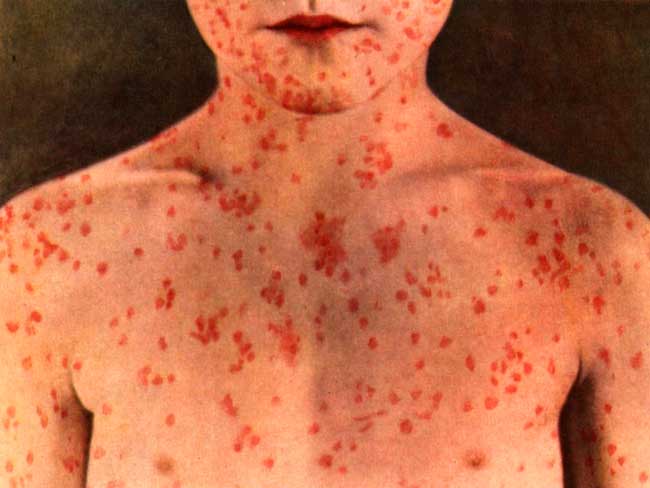
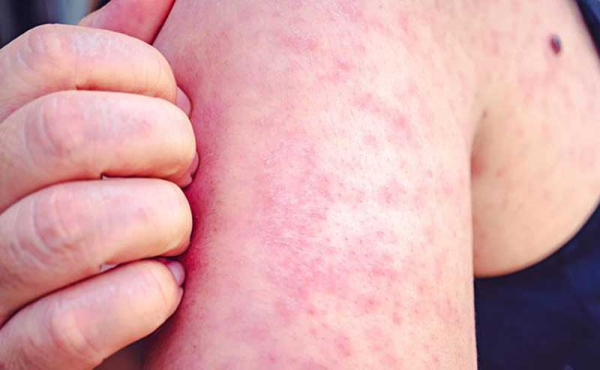
- Rash 3-5 days after other signs of illness. The “measles rash” typically starts at the face and then spreads down to the rest of the body.











Leave a Reply