
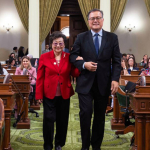



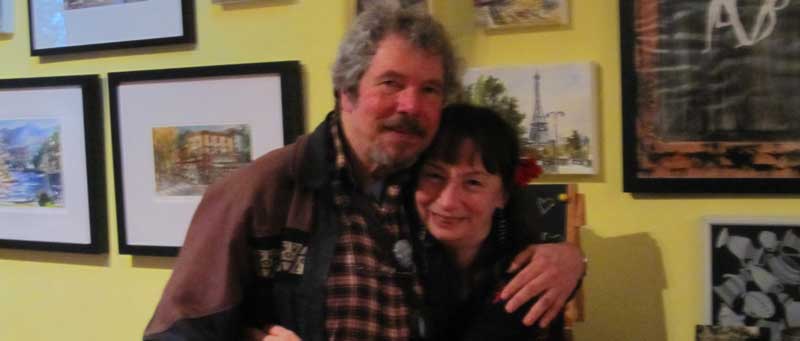
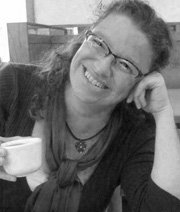
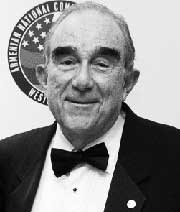
Peter Ludwin and Kathabela Wilson.
Peter Ludwin is a magnificent poet, of great detail and sensitivity, a musician and adventurer who is lured by the remote and wide open spaces of the world.
By Kathabela Wilson
Peter, who lives and works in Kent, Washington, has been a guest in our house, and great friend of our Pasadena Poets. He has given workshops at our Caltech meetings and Poets on Site Salon readings, in our Living Room Gallery.
You’re a solo traveler, one who quietly explores the world. Your poems have a deep touch to the land and the specifics that grow up out of it, as well as a wide open sense of observation and wonder, how did this begin?
When I was seven years old my parents took me to the hospital to have a tonsillectomy. While I was recovering my mother brought me two comics books—the first I ever owned. One featured the old singing cowboy Gene Autry, but I didn’t feel a connection with him. The other, however, told the story of how the Lone Ranger became the Lone Ranger. I was enthralled, both by the Lone Ranger himself and perhaps even more so by his milieu. The buttes, mesas and deserts of the American West became instant touchstones, and I have had a love affair with its landscapes ever since. From them I derived a sense that space is therapeutic, and the natural world a temple.
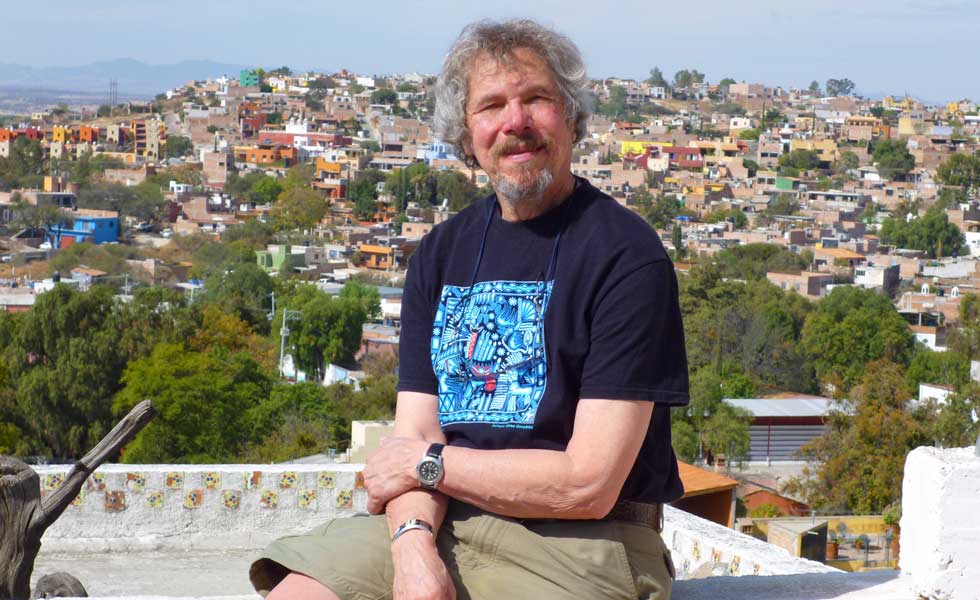
Peter Ludwin in San Miguel de Allende, Mexico.
A sense of place
From the world of our immediate environment to the exotic reaches of our imagination, how did you become a lifelong poetic wanderer and where did that lead?
I grew up two blocks from Puget Sound in the 1950s. My room at one end of the house was connected to the rest of it by a hallway on whose walls my father had hung photographs from his travels in China, Tibet, the Amazon and West Africa. Every day I walked past the Panchen Lama of Tibet, a monk in Western China spinning a prayer wheel, a Tuareg of the Sahara whose only visible features were his eyes, a jaguar in the Brazilian jungle. I was fascinated by this exotica and became intensely interested in geography, drawing my own countries and continents. All my adult life I have loved foreign travel and the experience of other cultures.
At our Poetry Salon in Pasadena you read from your books…where poetry indeed sweeps through vast spaces in the night like starlight, and looks through windows and under the doorways of small houses worldwide. At one reading you played your autoharp, how did you come to combine music and poetry as you do, in such a what I would call “bardic” way?
From July 1965 until November 1967 I lived in Bavaria as a radio spy for the U.S. Army. It was there, on a base with several guitarists, that I began a long struggle to learn how to finger-pick acoustic country blues. As has been true for me concerning various forms of music during most of my life, the blues had entered my awareness with shattering impact. But even more eventful were my two trips to Greece in 1966 and 1967.
I drank the rhythms
of the Aegean
like a man
dying of thirstIt was to the Greek writer Nikos Kazantzakis, author of Zorba the Greek, The Last Temptation of Christ and other books that I owed my intellectual revival in my late teens after coasting through junior high school. I was a huge fan—my encounters with his work were life-changing—and when I went to Greece it was as if I were continuing chapters from his novels. I had experiences there I’d never had before and have never had since. Everything about it—the herbal aroma of the air in the countryside, the music, the quality of the light—spoke to me. Coming from a sterile middle class family with an aloof, authoritarian father and an overprotective mother, I drank the rhythms of the Aegean like a man dying of thirst. I had desperately needed contact with something more vibrant, spontaneous and life-embracing than what my family and middle class 1950s American culture represented, and whether being picked up by the same dump truck driver three times while hitchhiking in Thrace or being dragged out of a mountain village café to dance with the locals, I found it in overwhelming abundance in this small, poor country at the doorstep of Asia that laid the foundation for what ultimately became what we call Western Civilization.

Peter Ludwin
Books, Travels, Beginnings
You have become “A Guest in All Your Houses” and given us “Rumors of Fallible Gods,” what a personal tour of the world you take us on, beginning from your curiosity in that hallway of your father’s pictures to your travels and the words. What other highlights?
From 1998-2006 I spent significant parts of my winters in a tiny alternative community called Terlingua in the Texas Big Bend. It was a stone’s throw from Mexico and also from Big Bend National Park. I lived in a 16-foot trailer without electricity or running water, could walk around naked to a pit toilet if I felt like it and loved crawling into my bunk after dinner to read while listening to coyotes and the wind. It was the one time and place of the year when I truly could get away from it all. During the 1999 and 2000 seasons I hired on with a river rafting company as a shuttle driver and occasional musician who entertained clients on overnight trips through Santa Elena Canyon. Each year I made it a point to visit friends in a nearby Mexican village who had built a funky bed and breakfast called the Buzzard’s Roost. You could pay ten bucks a night for a cot, drag it outside to sleep under the grandest star-studded sky in the country and listen to bullfrogs, burros, horses, whatever. Mexico has become for me in my later life what Greece was in my 20s.
All along, I have felt a connection to my father’s globe-trotting past: In the Tibetan town of Tagong, 2011, I drag myself out of sick bed up to the temple and spin its many prayer wheels while thinking of him. He had been nearly beheaded in Mongolia in 1935, but survived to make it to Tibet. In 1990, heading down the Shushufindi River in the Ecuadorean Amazon, I watch the jungle canopy close around us as an Indian waves from a bluff. Around 1929-30 my father spent several months with Jivaro headhunters in this part of the world. In 2009 I was walking among the Maya in Panajachel, Guatemala. And at at Schὅnbrunn, the former summer palace of the Hapsburgs in Vienna, where he was born in 1895, his presence was very real.
A Chance Encounter
By Peter Ludwin
Because she had once married a Greek
because I’d traveled to Greece in the ‘60s
because we were visiting a mutual friend
on the Upper West Side,
we had this conversation.
And though I protested when she sat down
that I had to get some sleep
she insisted on just one small glass of wine.
Which became two and then three
as we agreed that where Kazantzakis was transcendent,
Sartre was empty and Hemingway merely small.
Her hands spoke passion,
as if releasing flocks of doves into her voice,
a soft liqueur blend of European Texas
that drew me into that old yearning
for the expatriate life,
for garnet angels
and mandolins raining down on Russia
and I thought yes,
there’s that chorus in the blood,
the one that’s attended all our births:
to track the minotaur,
the iron tyranny of things,
to find it and destroy it with the dance,
with epiphanies of water,
swinging up onto its head
like a naked acrobat
as light pours in from the sea.
________________________________________________________
*On the eve of publication, Peter Ludwin was notified that he is a finalist for the 2016 Tucson Festival of Books Literary Awards.










Thanks to all of you who read, appreciate, and go forward creating beauty!
Hi Peter:
Keep your prayer wheel and your story board spinning; you’re a wonderful raconteur and
first hand observer and participant in the real “geographical: world out there! Keep your ear to the wind and you will always be–
a guest in all our houses.
Michael Magee
cheers, Peter Ludwin, World Traveler, celebrating the stories & splendors of people everywhere!