





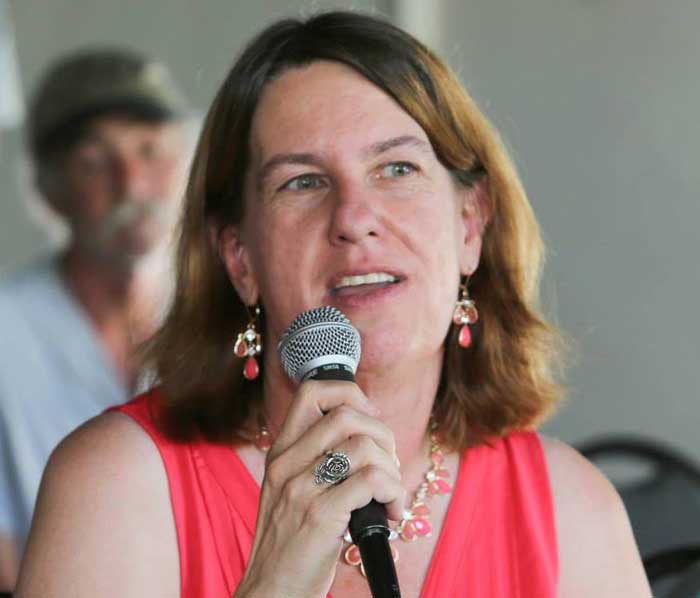
Deborah P Kolodji at USC Pacific Asia Museum
An interview with Deborah P Kolodji.
By Kathabela Wilson
Deborah’s haiku steps into outer space to discover an inner universe we all can feel.
A telescope on the poet in the contemporary world
How do you see yourself as a poet in the world of technology, in this time, and literally, space?
Today’s world creates hectic lives. Everything needs to be done now, often with little time for deep reflection. As a “road warrior,” a technical consultant for a business software firm, my moments for reflection become scattered, in different places and time zones. Haiku is the perfect poetry for me because I can catch glimmers of inspiration in the moments between catching flights, deadlines, drives to clients, etc.
Haiku also helps me appreciate the moments of my world more fully. Whether it is a wildflower unexpectedly growing in the old railroad ties by a cabinet factory, a painted poinsettia on a taco truck, or a moment of quiet in a historic battlefield, haiku helps me remember and also see moments I might have missed otherwise.”
Focusing in on Planet Poet
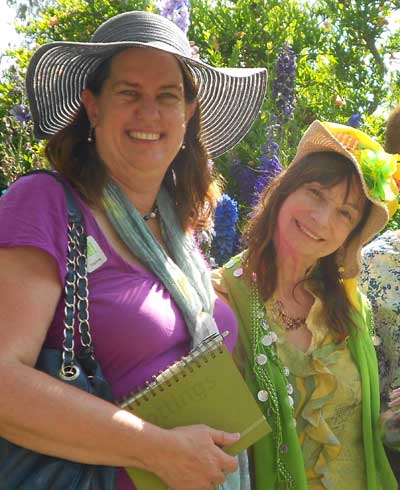
Deborah P Kolodji and Kathabela Wilson
I know you have a special love for science and a scientific background, how does this create a point of departure for your views and poetic observations?
I often gravitate to natural science topics, as well as astronomy. Soon after my divorce, I wrote an entire series of seismic poems…poems about earthquakes, tsunami, volcanoes, etc., all of which were really about relationships. One of my earliest published poems was called “Caltech Divorce Study,” which was published in Star*Line, the journal of the Science Fiction Poetry Association, an organization that I later joined and became president for five years.”
A microscope on the poet
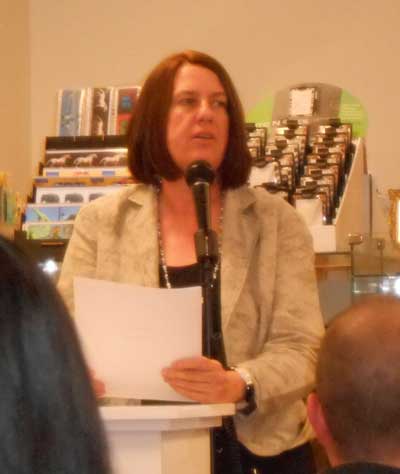
Deborah P Kolodji reciting one of her poems
Your childhood and natural inquisitiveness and inventiveness, how did this lead to poetry?
I’ve always loved poetry. I think most children do. I loved the Owl and the Pussycat and nursery rhymes and other poems in children’s books. We stop reading aloud to our children once they can read for themselves, and the sheer enjoyment of hearing something read and how it sounds is lost.
Dr. Francis St. Lawrence was one of my teachers at Hamilton Junior High in Long Beach. Although he taught math and science, on Fridays he would stop class a few minutes early and read a poem to us. He would read us poems he loved, like “Annabel Lee” by Edgar Allan Poe, “Jabberwocky” by Lewis Carroll, and “The Highwayman” by Alfred Noyes. I found his love of poetry contagious. In his class I also I built a seismograph, with my father’s help for for the science fair. It actually recorded an earthquake, which is how I came to win a regional award in a national science essay contest (Future Scientists and Engineers) as well as an award at the Los Angeles County Science Fair. Although I did not go into seismology, I still am interested in the forces of the earth and they crop up in my poetry.”
A microphone to the poet
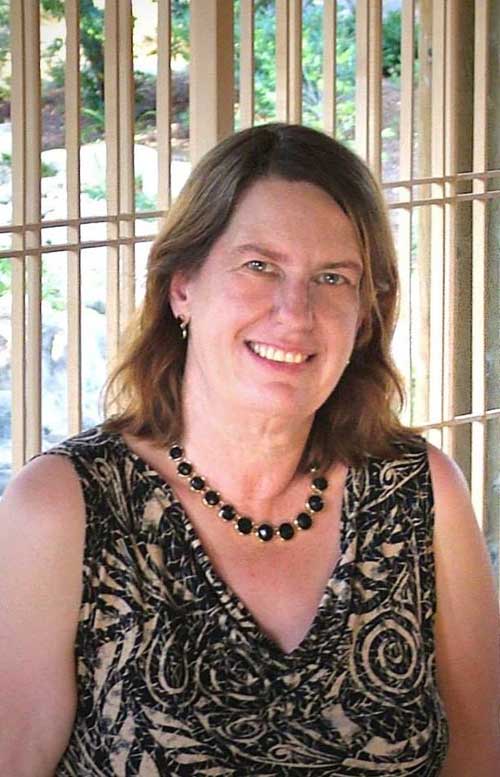
Deborah P Kolodji
How did you come to be the great leader organizer of poets and events that you are today?
When I started writing poetry again, after the divorce, I was immediately drawn to writing short scientific, sci-fi poetry called scifaiku. I became part of an e-mail list, where there would be a topic – binary stars, for example, and then everyone would write these little short poems, some might be about binary stars. Then, we might write poems about entropy or clones or Asimov’s Laws of Robotics. I also became part of local Pasadena poetry groups and of the Southern CA Haiku Study Group. When the founder/leader, Jerry Ball, moved to Northern CA I decided to become moderator so it could continue. We now meet at the Pasadena Library – Hill Avenue Branch at 2:00 pm on the third Saturday of every month and all are welcome! It is important for me to “give back” to the communities that nourished my growth as a writer. I also served as president for the Science Fiction Poetry Association for 5 years, and in 2013 I co-chaired “Haiku North America” conference on the Queen Mary. I was recently elected to be the Regional Coordinator for California for the Haiku Society of America.”
A pulse on the poet
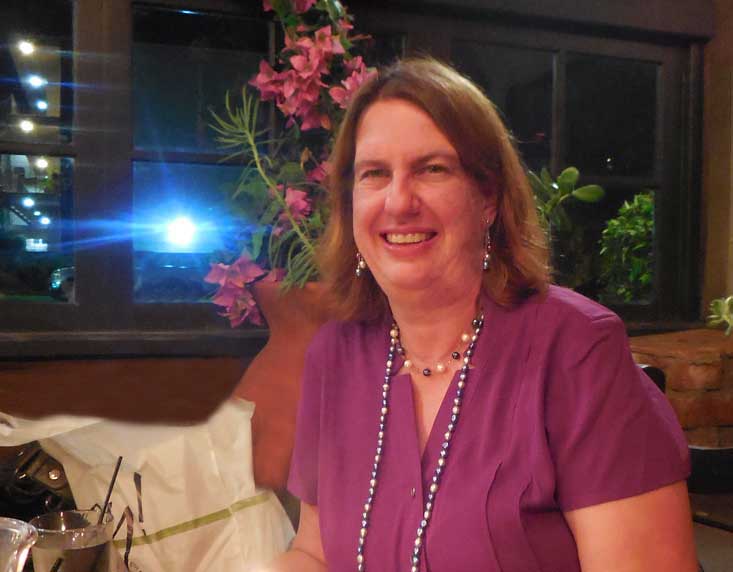
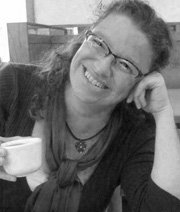
Deborah P Kolodji on her Birthday.
Your enthusiasm easily inspires others, including your own family, why do you love haiku?
Haiku is the perfect poetry for the world we live in. It is short enough to tweet, it is short enough to fit into a busy life. By its very nature, it helps the poet focus on the tiny details, the egret that flies across the street, the peacock wandering a neighborhood in Arcadia, a wildflower blooming at Arlington Garden, that we might otherwise miss.
And yes, two of my children, now past college age, write and publish their haiku, attending meetings sometimes, and helping with events. We had a family vacation to Arkansas a couple years ago, where some of us were in a van traveling from the Ozark Mountains to Little Rock and while I was driving, the car erupted into haiku about our visit to the ruins of my mother’s house, deep in the forest, where she was born. Even my sister ended up writing some haiku that day. It helped us crystallize all our feelings about how we felt being there, deep in the forest, where nothing but the old well and remnants of a foundation remain.
Haiku
By Deborah P Kolodji
Bollywood
shadows in the folds
of our napkins
dark chocolate
the radius
of your smile
all the birds
in my neighbor’s tree
custody agreement
gull cry
a morning’s layers
of gray
fresh squirt
of a kumquat
trash pickup day
short day
the cop doesn’t give me
a cell phone ticket
counting sheep
a stack of bills
after Christmas
arriving flights
on the lower level
traffic
neighborhood dispute
that woodpecker outside
my window
lengthening days
and even then
not enough time
wave of godwits
shifting, turning …
orange surfboard
marsh stillness
my voice hoarse even before
our argument
snow
on Mount Wilson
furnace repair estimate
________________________________________________________
Learn more about Deborah on her website.











Deborah is such a positive force in haiku, I’m pleased that she’s been featured. She can say so much with her poetry that it’s always a pleasure to read her work.
what a joy, reading this exploration of your life & poetry, Deborah and Kathabela!!
Deborah’s haikus are so dense that in fact they “still” time. They force our attention to focus so intensely, that we “have to” slow down and enter a deep, telluric rhythm. They expand time and space immensely…