


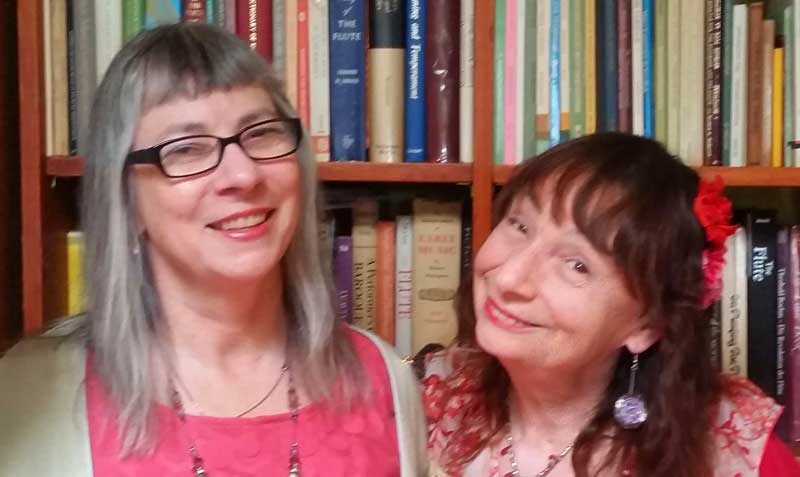
Cindy Rinne and Kathabela Wilson
Fascinating and passionate artist and poet, Cindy Rinne, weaves myths, stories, and a healing autobiography with gold threads through fabrics her natural canvas, where she embeds her words.
By Kathabela Wilson
A telescope on the poet
What were the beginnings of art and poetry in your life?
I remember drawing a bush with tiny blue flowers in my backyard when I was four years old.
My brother and I each had our own plant in the back yard. His was a crabapple tree. Mine was this bush with blue flowers. I liked the bush because the flowers were an unusual color. I don’t know what it was called, but it grew in the humid Midwest. The day I was drawing was a sunny day. I sat an angle to draw as the bush was on a hill. In high school I decorated a bulletin board for my English class. I copied famous Asian paintings on rice paper using watercolor (self-taught). Then I matched famous Haiku in ink.
These scrolls are still in my family. Now I like to design scrolls in my fiber art.

Pulse of the artist
How have difficulties in your life influenced and enlivened what you do?
I lost my home and all of my fabrics in the “Old Fire” in San Bernardino in 2003. I did save one small bag of fabric pieces from Japan that a friend gave me. I felt those couldn’t be replaced. I also grabbed a shoebox that held my photographs. I used these as inspirations for my art. I felt that by saving the photographs, I knew I would continue to make art after the fire. The bag of fabrics and the photographs symbolized going forward. We lost all of our gifts and photographs from our year of living in Taiwan.
Later, in the shoebox of pictures, I found a few from our time in Taiwan. After the fire, we returned to our house to go through the ashes. The ashes were still warm a few days later. I found the bottom of a raku pot (made from fire originally) that I had purchased at the beach in Santa Barbara, a porcelain doll that was my husband’s mother’s, and a ring from my grandmother. I liked that I found something intact from both sides of the family. The rest that I found were fragments. I have the pot, doll, and ring in the hutch of my new house. Someday I’ll make a mosaic of the fragments.

A microscope on the artist
In your art, you weave your fabrics, ideas, scraps of memory, scraps of cloth, where do they come from, and how did your art and poetry progress, after the fire?
Since the fire, people have returned some of the gifts we sent them from Taiwan. Our daughter went to China several years later and got us some scrolls and new chops made to sort of replace those we had lost. After losing my home and my fabrics to fire, I wasn’t sure what my art would look like. Quilt guilds and individuals donated beautiful fabrics to me, my husband saved my new sewing machine, and a friend offered me a room in her house to sew until my new home was built.
I started out sewing small objects, ornaments, as that was all my emotions could handle. As the art works got larger, I felt I was starting to heal. To my surprise the art quilts were still beautiful. I could enjoy a sunset, and nature still inspired me. I gained a Japanese pen-pal/quilter. At first my pen pal sent me calicos. I wrote and told her that I am an art quilter. Then she started sending me beautiful silk pieces. She creates traditional American quilts and I do art quilts. We still write and exchange fabrics ten years later. In spite of the loss, I was still me. It did take a few years before I could read out-loud any of my poems that mentioned fire.

Mapping the poet
When do your words come to you?
I take walks in the San Bernadino foothills to engage with the beauty and sounds of nature, to quiet my spirit, and to listen for poetry ideas. For example, I’ve written a Native American myth. The Feather Keeper gathers feathers from many tribes. I took a walk and asked, “Why does he do this?” “For the Chief’s headdresses,” came the answer.
Sometimes I include
overheard conversations, thoughts that I have, or am inspired by something I read. My poetry is often a collage like my art. I remember as a young child, standing at the edge of a cliff with my dad. My mother was terrified. He helped me to be adventurous in traveling, taking risks, and gave me a love for nature. To stand and notice. To listen. My father can talk to most anyone. I find people fascinating and like to include their stories in my poetry and art. My mother is a storyteller. I believe my love of writing narrative poetry comes from her. My art has become more narrative over time as it combines with my poetry. She loves history which has influenced my passion to write about many cultures.

Sticks
By Cindy Rinne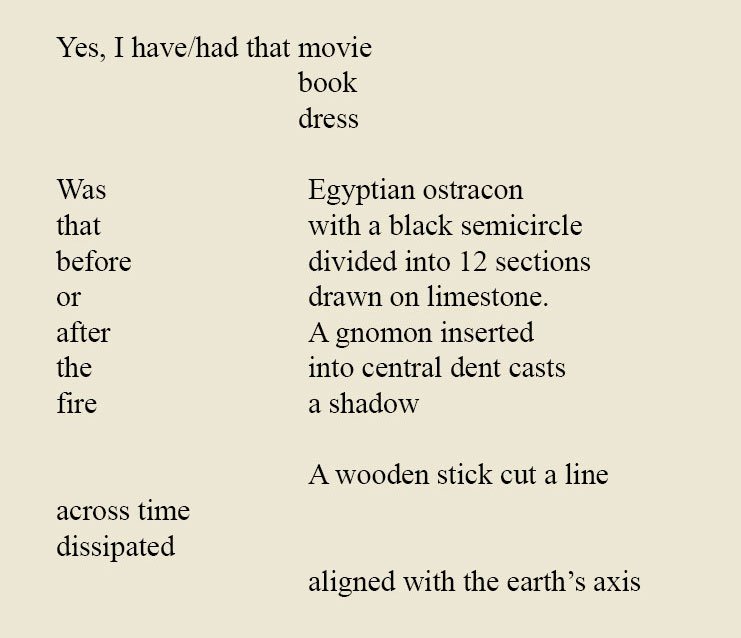
________________________________________________________
Check Cindy’s website for more of her beautiful work, and upcoming events. Click here for Cindy’s upcoming events.







Inspiring story and art. There is always a new beginning if you listen to your heart and spirit.
Really a terrific interview, Kath, and, Cindy, much admiration for your strong journey out of the fire! A joy to see your visual talents!!
The poem is very powerful… striking…
Thank you, Cindy and Kathabela