





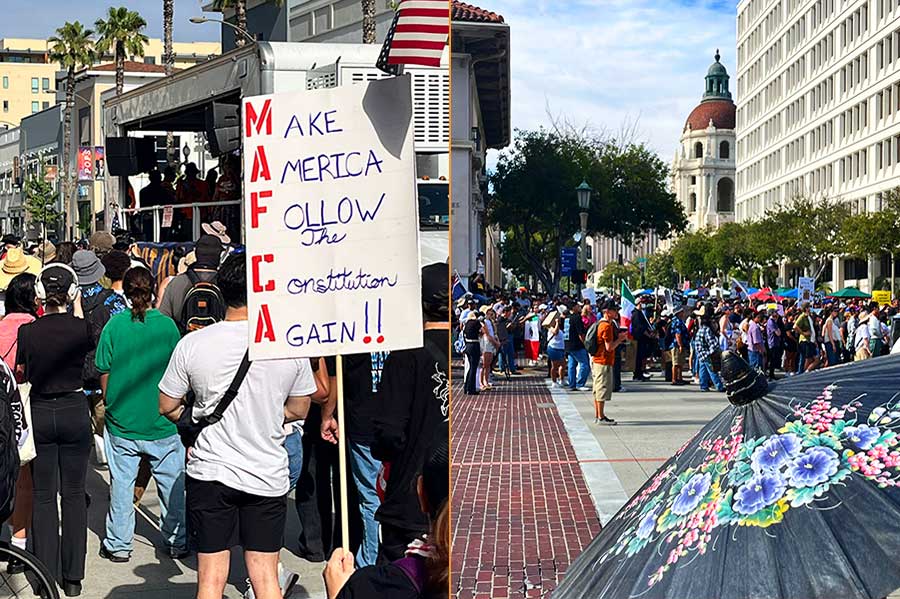
No KIngs Day in Pasadena (File Photos – Chris Manxon)
The Los Angeles County Board of Supervisors on Tuesday, August 12, unanimously approved a motion commemorating the 55th anniversary of the Chicano Moratorium, while also taking steps to strengthen protections for journalists covering public demonstrations.
By News Desk
The motion, introduced by Chair Pro Tem and First District Supervisor Hilda L. Solis, honors the historic 1970 protest, which brought more than 20,000 people to the streets of East Los Angeles to demand an end to the Vietnam War and justice for Latino communities. It also pays tribute to Rubén Salazar, the prominent Los Angeles Times journalist who was killed during the protest.
“The Chicano Moratorium was a powerful demonstration of community strength, courage and resistance. Fifty-five years later, its lessons are as urgent as ever,” said Solis. “We honor the memory of Rubén Salazar and uplift the work of today’s journalists who continue to shine a light on injustice. We must protect them, support them, and ensure their voices are never silenced.”
On August 29, 1970, the peaceful demonstration ended in tragedy when the Los Angeles County Sheriff’s Department declared the protest unlawful, deployed tear gas, and moved in on the crowd. Three people were killed, including Salazar, who was fatally struck by a tear gas projectile while taking cover inside the Silver Dollar Bar.
As part of the motion, the Sheriff’s Department is directed to report on measures to ensure the safety of journalists working in the field. The motion also recognizes the contributions of independent media outlets like LA Taco, CALÓ News, LA Public Press, and LAist, which continue to provide culturally relevant and community-based reporting for Latino and immigrant populations in L.A. County.
The resolution highlights the enduring relevance of the Chicano Moratorium’s demands, noting that systemic inequities in housing, health care, and immigration enforcement persist today.
“These actions are a stark reminder that the systemic injustices the Chicano Moratorium fought against more than fifty years ago persist today,” said Solis. “The fight for equity and justice continues.”










Leave a Reply