






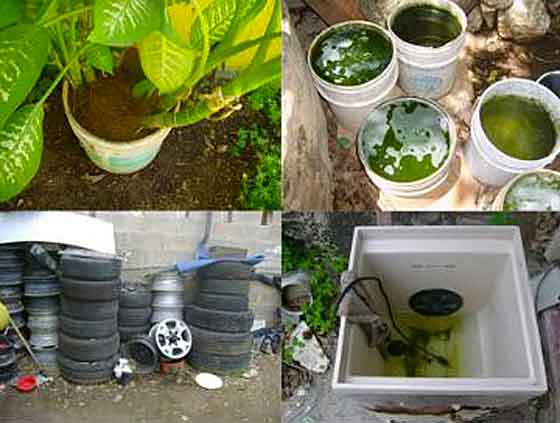
West Nile breeding spaces (Photos – CDC)
The Los Angeles County Department of Public Health has confirmed the first local death from West Nile virus (WNV) for the 2025 mosquito season.
By News Desk
The individual, a resident of the San Fernando Valley, was hospitalized and died from a neurological illness caused by severe West Nile virus infection.
“To the family and friends grieving the loss of a loved one due to West Nile virus, we extend our heartfelt condolences,” said Dr. Muntu Davis, Los Angeles County Health Officer. “This tragic loss reminds us how dangerous mosquito-borne diseases like West Nile virus and dengue can be. Protect yourself and your neighbors by using insect repellent, getting rid of standing water where mosquitoes breed, and keeping window and door screens in good repair. Small actions like these can make a big difference in preventing illness.”
To date, 14 cases of West Nile virus infection have been reported in Los Angeles County this year, excluding Long Beach and Pasadena, which report their own cases. Half of the individuals infected reside in the San Fernando Valley.
West Nile virus is the most common mosquito-borne disease in Los Angeles County and is considered endemic to the region. Public Health reports cases annually, with peak mosquito season typically lasting from June through November. The department, in coordination with local vector control agencies, continues to monitor infection risks and educate residents about prevention.
Health officials urge residents to take the following steps to reduce the risk of mosquito bites and infection:
- Use mosquito repellent:
Choose EPA-registered repellents containing DEET, picaridin, IR3535, 2-undecanone, or oil of lemon eucalyptus. - Keep mosquitoes out of your home:
Repair or replace damaged window and door screens. - Eliminate standing water:
Empty containers such as flowerpots, birdbaths, and buckets weekly; cover water storage containers; and properly maintain pools and spas. Dispose of items that can collect water, such as old tires and toys.
Residents experiencing persistent mosquito problems are encouraged to contact their local vector control agency by calling 2-1-1 for assistance.












Leave a Reply