








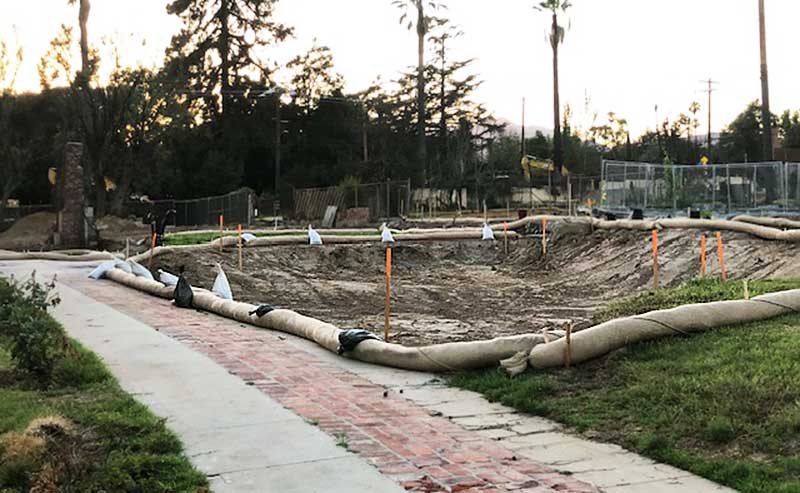
A cleaned up lot in Altadena (Photo – Melissa Michelson)
The Los Angeles County Assessor’s Office has granted approximately 18,000 property tax reductions for properties affected by the January wildfires, part of a broader effort to review roughly 23,500 impacted properties. Of the reductions issued so far, 60% were based on claims filed by property owners, while the remaining 40% came from the Assessor’s proactive review.
By News Desk
The remaining properties are still under review, with assessments expected to continue in the coming months.
Notices of Assessed Value Change have been mailed to property owners granted disaster relief, detailing the adjusted 2024 assessments. However, confusion has arisen over how taxes are calculated. Property owners will pay full taxes for the first half of the fiscal year (July–December 2024), and prorated, reduced taxes for the second half (January–June 2025), reflecting the post-disaster value.
The 2025–2026 tax bill, to be issued in fall 2025, will fully reflect the reduced value for the entire year.
Refund checks have also been sent out by the Auditor-Controller’s Office, but many have been returned as undeliverable due to outdated mailing addresses—often because properties were destroyed in the fires. Affected property owners are urged to update their mailing address via the Assessor’s Change of Mailing Address webpage to ensure they receive critical documents and refunds.
As rebuilding efforts begin, the Assessor’s Office emphasized the difference between permit standards and tax reassessment rules. Under an expedited permit process, structures rebuilt up to 110% of their original size and use qualify for streamlined approval. However, retaining the original tax base after rebuilding falls under two separate tax relief programs:
- Governor-Declared Misfortune and Calamity Relief:
If the replacement home is built within five years and is valued at no more than 120% of the original property’s pre-disaster market value, the property’s original tax base may be reinstated. - Substantial Equivalence Relief:
For non-Governor-declared disasters, owners can retain their pre-damage tax base if the rebuilt structure is similar in size and use. Additions or expansions are assessed at market value and added to the original base.
Due to rising construction costs and older home values, officials anticipate that only a small number of property owners will qualify for full tax base reinstatement under the 120% value standard.
For further details and to access resources, property owners are encouraged to visit the Assessor’s Disaster Relief (Misfortune & Calamity) webpage.












Leave a Reply