








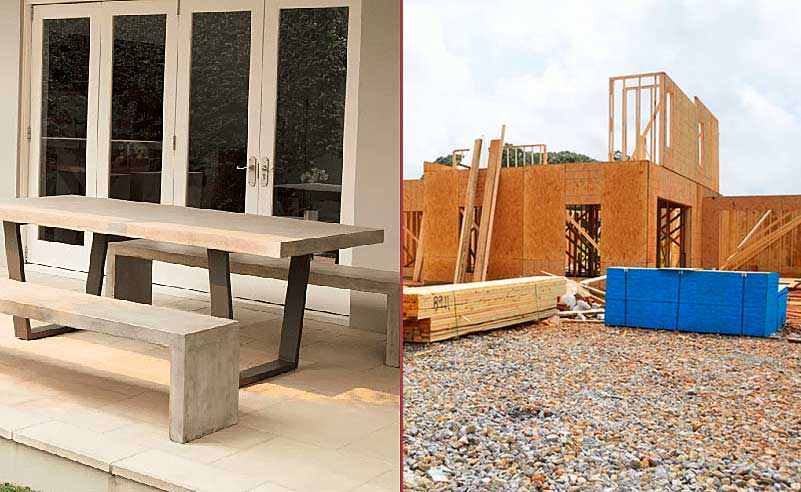
Concrete outdoor furniture and wood construction (Photos – PickPik)
Providing environmental sustainability, energy efficiency, construction speed, and aesthetic appeal, wood offers several advantages that can make it a preferred choice for certain building projects. Concrete excels in durability and strength, particularly reinforced concrete which is cast with embedded steel reinforcing bars for large-scale and high-risk structures. Wood provides a more eco-friendly, cost-effective, and versatile alternative, particularly in residential and mid-sized buildings.
By John Boucher
Here are the benefits of building with wood compared to concrete.
Benefits of Building with Wood
- Environmental Sustainability
- Renewable Resource:
Wood is a renewable resource, especially when sourced from sustainably managed forests, making it an eco-friendlier option compared to concrete, which is energy-intensive to produce. - Carbon Sequestration:
Wood naturally stores carbon throughout its life cycle, which can help reduce overall greenhouse gas emissions. This makes wood a carbon sink, whereas concrete production emits significant CO2.
- Renewable Resource:
- Energy Efficiency
- Insulation Properties:
Wood has natural insulating properties, making it more energy-efficient in terms of heating and cooling. This can result in lower energy costs over the life of a building. Other insulating materials are still needed for either wood or concrete structures. - Low Embodied Energy:
The energy required to process wood is significantly lower than concrete, resulting in a much smaller carbon footprint. Concrete requires high temperatures for cement production.
- Insulation Properties:
- Speed of Construction
- Faster Build Time:
Wood is easier and quicker to work with compared to concrete, which requires curing time. Wood structures can be built faster, which may reduce labor and overall project costs. - Pre-fabrication
Wood is well-suited for prefabricated building components, which can further accelerate construction. Precast and prefabricated concrete elements can also accelerate construction on a job site.
- Faster Build Time:
- Aesthetic Appeal:
- Natural Look
Wood offers a warm, organic aesthetic that many people find appealing. The beauty of exposed wood in a structure contributes to a pleasing and inviting atmosphere. - Versatility in Design
Wood can be easily shaped, making it a versatile material for creative designs, whether in residential homes or commercial buildings.
- Natural Look
- Seismic Performance:
- Flexibility and Lightness
Wood structures are lighter and more flexible than concrete, which can be an advantage in earthquake-prone areas. The ability of wood to bend without breaking may help structures absorb seismic energy better than rigid concrete structures.
- Flexibility and Lightness
- Health and Well-being:
- Biophilic Design
Wood has been shown to improve occupant well-being. It contributes to biophilic design principles by connecting people with nature, which can have positive psychological and physical health effects. - Air Quality
Wood’s ability to absorb and release moisture helps maintain stable humidity levels in a building, potentially improving indoor air quality and comfort.
- Biophilic Design
- Cost Considerations
- Lower Initial Costs:
Wood tends to be less expensive than concrete in terms of material costs, and it may also be more affordable when factoring in reduced labor time for construction. - Local Availability:
In many regions, wood is more readily available, reducing transportation costs and helping local economies. Concrete often requires raw materials like limestone, which need to be transported over long distances.
- Lower Initial Costs:
- Sustainability in Recycling
- Biodegradable:
Wood is a biodegradable material and can be repurposed or recycled at the end of its life, reducing landfill waste. In contrast, concrete is more difficult to recycle and can contribute to long-term waste issues.
- Biodegradable:
Benefits of Building with Concrete
- Durability
Concrete is highly durable, resistant to fire, moisture, and pests. It does not require the same level of maintenance as wood and can withstand harsh weather conditions better. - Structural Strength
Concrete, and particularly reinforced concrete, offers superior strength for large-scale, high-rise buildings and heavy load-bearing structures. It’s ideal for buildings that need to resist extreme forces (e.g., in flood zones or for high-rise buildings). - Fire Resistance
Concrete is fire-resistant for a longer duration than wood. Whereas wood can be a concern in fire-prone areas. - Long-term Performance
Concrete has a long lifespan with minimal maintenance, whereas wood structures can degrade over time due to environmental factors and require regular maintenance.
In conclusion, building with wood offers several ecological, aesthetic, and economic advantages, particularly for residential or mid-sized buildings, while concrete remains a preferred material for larger, more durable structures or in areas where the priorities are higher levels of fire safety and long-term durability.
The Opinion section reflects the opinions of the responsible contributor(s)/writer(s) only, and do not reflect the viewpoint of ColoradoBoulevard.net. ColoradoBoulevard.net does not endorse or guarantee the accuracy of any posting. ColoradoBoulevard.net accepts no obligation to review every posting, but reserves the right (with no obligation) to delete comments and postings that may be considered offensive, illegal or inappropriate.












Leave a Reply