

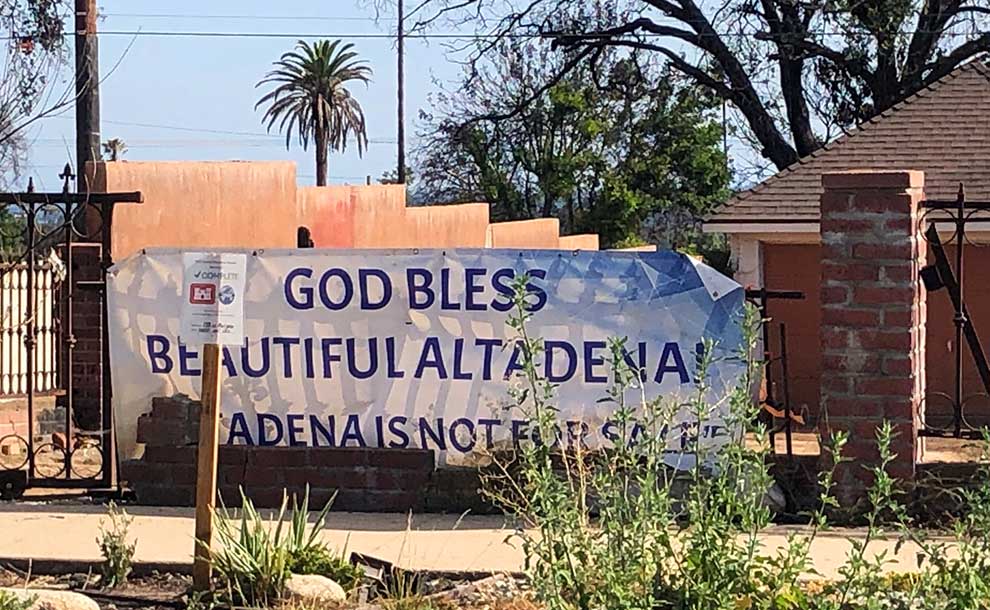
“God Bless Beautiful Altadena” (Photo – Melissa Michelson)
By now, many have heard of the mini-controversy swirling around the upcoming CBS sitcom in development by Black-ish creator Kenya Barris and comedian Mike Epps. Still in early stages, the project is described as a comedy about two brothers who, after plans to sell their grandmother’s property fall apart, move in with her former caretaker, all set in the backdrop of Altadena. But it’s not just where the show is set that’s raising eyebrows. It’s when.
By The Editorial Board
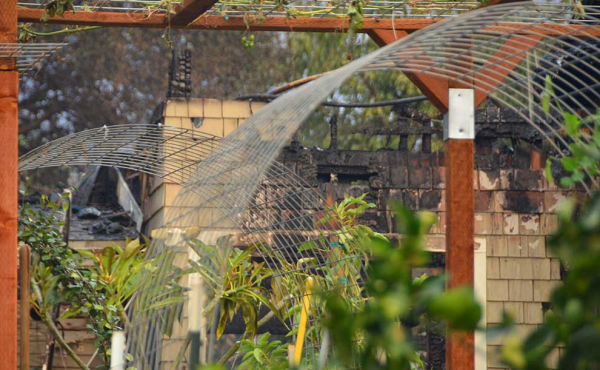
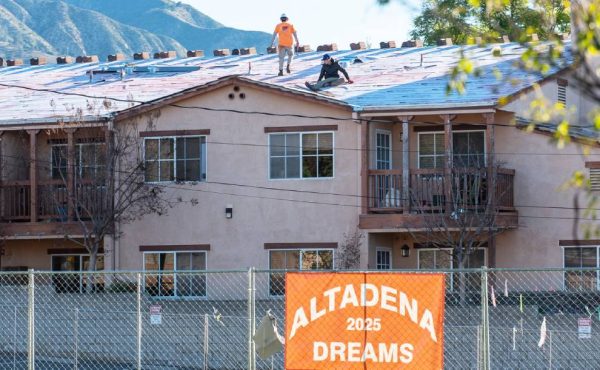
Altadena is still reeling from the Eaton Fire that tore through the area earlier this year, a deadly blaze that devastated the community and left deep emotional and environmental scars. That the sitcom uses this recent tragedy as part of its setting is, understandably, a sore point for some residents. And while it’s common for art to reflect life, the timing, sensitivity, and involvement of the community must all align, or the result feels like exploitation, not representation.
Kenya Barris has responded to some of the criticism, notably in an Instagram comment that reads:
“What way could you think of supporting it than by doing what I know how to do and trying to bring a light to a place that many have already forgotten. I understand your fear but know that I only plan to do the best I can to make sure the world sees you.”
There is sincerity in that sentiment. The entertainment industry too often overlooks communities like Altadena, only to return with cameras and scripts when there’s trauma to mine or nostalgia to sell. So yes, there is potential value in telling stories that acknowledge and even celebrate a place like Altadena. But representation without collaboration falls flat. Worse, it can retraumatize.
If this show is to move forward, it must do more than “bring a light.” It must share the mic, the budget, and the opportunity with the people who actually live here.
We urge Barris, Epps, CBS, and anyone involved in this project to go beyond surface-level homage. Altadena is home to an abundance of talent, not just stories to borrow, but actors, writers, technicians, caterers, and creatives who deserve to be part of telling their own story.
Here’s how that can look:
- Hire local crew and talent for both pre- and post-production. Not just extras, but grips, editors, camera ops, and designers.
- Open the writers’ room to voices from the community. Authenticity comes from lived experience.
- Use Altadena businesses for catering and craft services. Economic support should be as direct as the show’s premise.
- Host test screenings in Altadena, and incorporate feedback with humility. The community should be an active participant, not a passive subject.
- Engage with local leaders and organizations to understand what healing and rebuilding truly looks like for residents.
This can be a chance not just to make a show about Altadena, but a show with Altadena. That’s the kind of collaboration that would not only earn community trust, it would create better television.
Barris is right about one thing: many have already forgotten. But if the industry wants to “shine a light” on communities like Altadena, it must do so in ways that empower rather than extract. The people of Altadena deserve more than to be a setting. They deserve to be seen, heard, and paid.







Great article 👏