

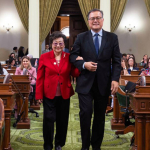



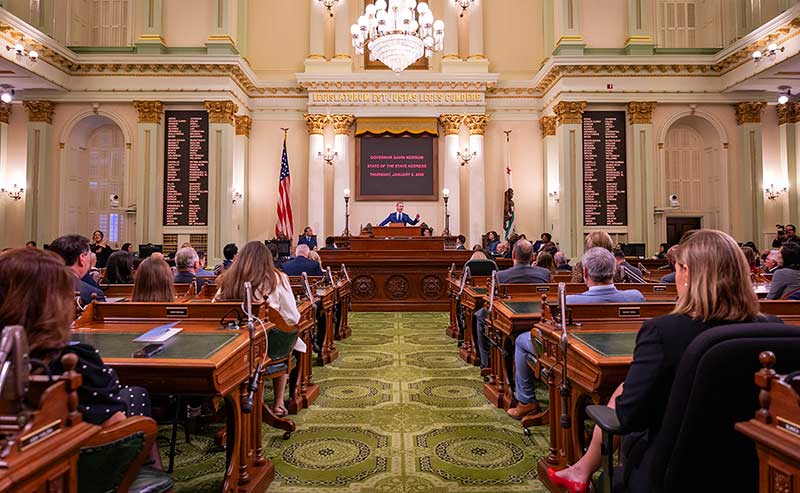
Final State of the State Address (Photo – gov.ca.gov)
Governor Gavin Newsom delivered his final State of the State address Thursday, casting California as a stabilizing force amid what he described as unprecedented federal dysfunction.
By John Boucher
Speaking before a joint session of the Legislature, Newsom highlighted the state’s economic strength, record education spending, climate leadership, and recent declines in crime and homelessness. He contrasted California’s policy direction with actions taken by the White House, accusing the federal government of “protecting the powerful at the expense of the vulnerable” and undermining democratic norms.
The governor pointed to 52 state-led lawsuits, largely filed over the past several years, that he said preserved billions of dollars in federal funding for schools, health care, and disaster response. He framed the legal battles as part of a broader effort to defend California’s policy priorities and institutional norms.
Newsom touted major investments in public education, including record per-pupil funding, universal transitional kindergarten, expanded after-school programs, and the continued growth of community schools. He also emphasized progress on housing reforms and mental health treatment expansion under Proposition 1, as well as statewide efforts that contributed to a reported 9% decline in unsheltered homelessness last year, according to state data.
On the economy, Newsom cited California’s continued dominance in technology, clean energy, and research, noting the addition of 600,000 apprenticeships and progress on major infrastructure projects, including high-speed rail and new water storage facilities. He also warned of intensifying global competition in clean energy manufacturing, particularly from China, and argued that California must continue investing to maintain its edge.
Turning to climate impacts at home, the governor marked the anniversary of the devastating Los Angeles wildfires, honoring the 31 lives lost. He pledged continued support for recovery efforts and renewed his call for insurance reforms aimed at stabilizing coverage in fire-prone regions.
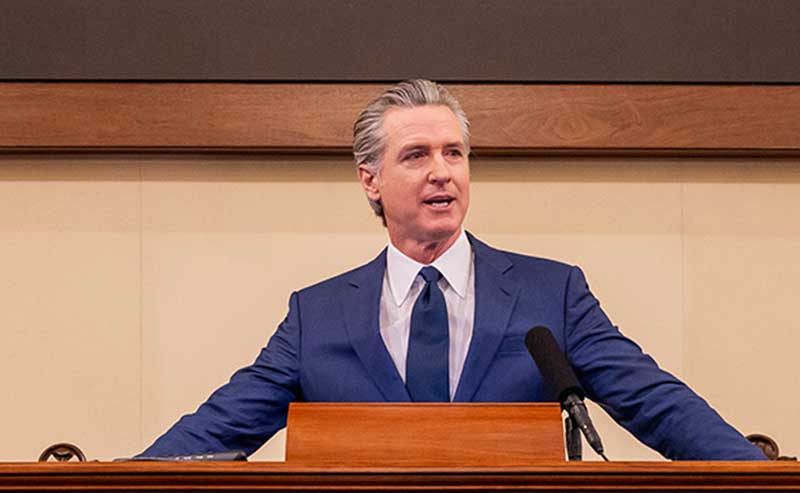
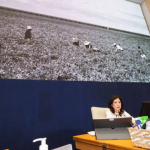
Governor Newsom delivers final State of the State Address (Photo – gov.ca.gov)








Leave a Reply