






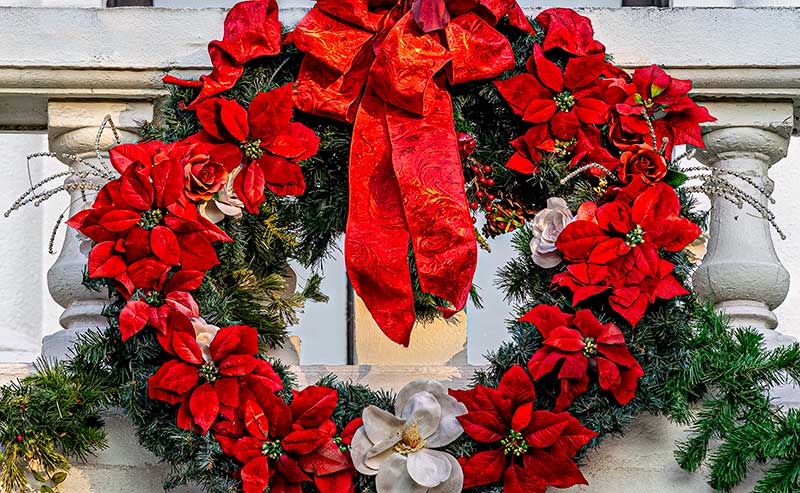
Poinsettias wreath at the Fenyes Mansion (Photo – Joanne Wilborn/Marlyn Woo)
In the Victorian Language of Flowers, Poinsettias symbolize good cheer and success, perfect sentiments for the holiday season. These brilliantly showy potted plants are seasonal favorites, adorning porches, balconies, and home interiors. Without a doubt, they are the botanical heralds of this festive season throughout America. But how did this exotic Mexican beauty so captivate its northern neighbors to become the country’s “Christmas Flower?”
By Jeannette Bovard
The plant originally flourished in the southern Mexican region of Taxco de Alarcón. The ancient Aztecs used its purplish bracts to extract a dye for textiles and cosmetics, while the milky white sap, now known as latex, was used in preparations to treat fevers. The legend surrounding the plant is rooted in Mexico, where it was traditional to place gifts on the altar for the baby Jesus on Christmas Eve. According to the story, a poor boy with no present to offer knelt outside a church window and prayed. In the spot where he knelt, a beautiful bush sprang up, its vibrant red leaves symbolizing a gift from the divine. In Mexico, the plant is called La Flor de Nochebuena—The Flower of the Holy Night.
Joel Roberts Poinsett (1779-1851), the first U.S. Ambassador to Mexico, was an avid botanist who maintained hothouses at his plantation in South Carolina. So enthralled by the plant, he brought specimens back to the United States to propagate and share with friends and botanical gardens. Bartram’s Garden in Philadelphia was the first to successfully grow the plant outside of its native Mexico, introducing it to the American public at the inaugural Philadelphia Flower Show on June 6, 1829. Pennsylvania nurseryman Robert Buist is credited with selling the plant commercially under its botanical name, Euphorbia pulcherrima (literally, “the most beautiful Euphorbia”). By 1836, the plant became popularly known as the Poinsettia.
These early Poinsettias were far from the potted beauties we buy today. They were large, aggressive bushes sought mainly by wealthy hobbyists and plant enthusiasts, including Albert Ecke, who started the Ecke family’s Poinsettia business in Los Angeles’ Eagle Rock neighborhood in 1909. For years, Poinsettias were field-grown and sold either as cut flowers or as bare roots for gardeners. It took the Eckes many years of genetic modification to develop the multi-branch, short-stemmed varieties we recognize today. In the 1960s, the Eckes moved their operations indoors to boost the success of their commercial breeding and launched a highly successful marketing campaign, positioning the potted Poinsettia as “the Christmas plant.”
The success story is remarkable; an estimated 70 million Poinsettia plants are sold each year in the United States. Yet, the tale is not without scandal and subversion. The Ecke family’s genetic modification techniques were leaked by an employee, leading to competition within the industry—not all of it committed to the same level of quality, as savvy shoppers can attest. In 2012, the Ecke family sold their business to a German company, citing an inability to compete with massive growers supplying large retailers like Walmart, Home Depot, Lowe’s, and Costco. As for Mr. Poinsett, the less said, the better. He was eventually expelled from Mexico for scandalous behavior and remains reviled to this day. What’s more, the plant that now bears his name didn’t even make an appearance in his official papers. Clearly, Poinsett’s affection for the plant may not have been as deep as history suggests.
*Poinsettias enhance the Edwardian-style holiday décor inside the Fényes Mansion at the Pasadena Museum of History. Only individual blooms and stems are used, as the potted plants had not yet been developed. (Note: Only artificial plants and fruit/nuts are used in the Mansion to minimize risks of spills, breaks, stains, and insect damage. However, “permanent botanicals” are also period-appropriate, as their popularity peaked during the Victorian era.)
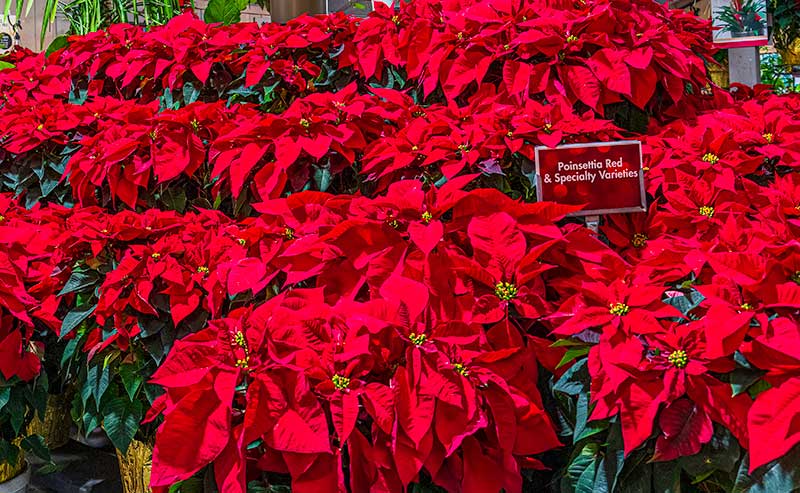
Poinsettias (Photo – Jeannette Bovard)
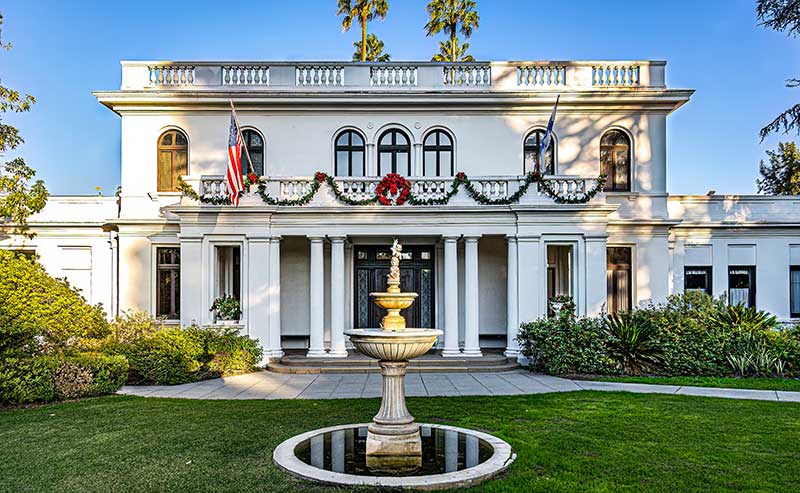
The Fenyes Mansion at Christmas time (Photo – Joanne Wilborn/Marlyn Woo)
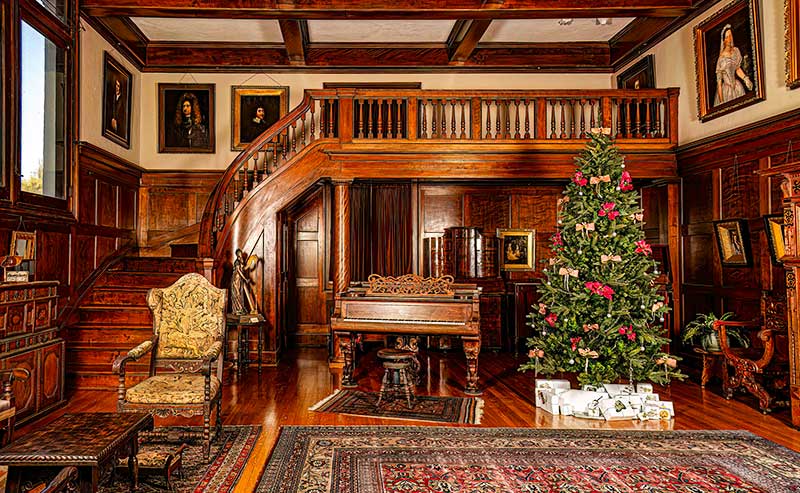
Inside the Fenyes Mansion (Photo – Joanne Wilborn/Marilyn Woo)
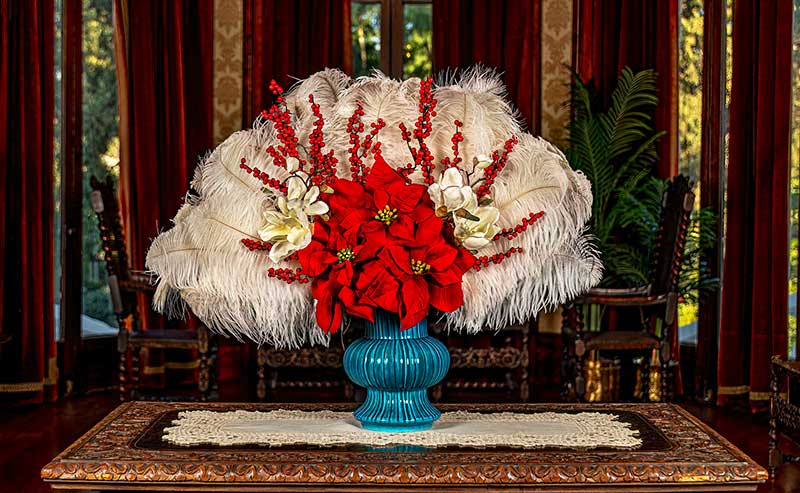
Christmas decorations at the Fenyes Mansion (Photo – Joanne Wilborn/Marilyn Woo)












Absolutely glorious coverage of Christmas this year at Pasadena Museum of History’s Fenyes Mansion! Thank you for your magnificent presentation, Ms. Bovard and extraordinary Colorado Boulevard, a major publication contributing so much to our Pasadena community !