





First photo: Exclusion Order posted to direct Japanese-Americans living in the U.S. to evacuate. Second photo: First graders of Japanese ancestry in S.F. (Photos -commons.wikimedia.org).
On January 30, California celebrates Fred Korematsu Day. If you’re like most Americans, you’re probably still wondering who this guy was, what he did to be recognized with an official day, or why he still matters today.
By Kent Matsuoka
Signed into law on September 23, 2010 by then Governor Arnold Schwarzenegger, January 30th has been recognized as the Fred Korematsu Day of Civil Liberties and the Constitution in California, and commemorates what would have been his 101st birthday this year. The full name alone should give you an indication that it’s bigger than just the man, but to recognize the injustices he faced and fought that went counter to the beliefs we hold in the Constitution. Fred Korematsu Day has since been recognized by Hawaii, Florida, and Virginia.
Unlikely Japanese-American civil rights activist
Fred Toyosaburo Korematsu was an unlikely Japanese-American civil rights activist, born in Oakland, CA, in 1919, he worked as a welder at the docks until he was fired due to growing tension with Japan, prior to the bombing of Pearl Harbor. That resulted in Executive Order 9066 signed by President Roosevelt, authorizing the removal of 120,000 people of Japanese descent to be detained at internment camps across the United States, hundreds of miles from their homes.
Korematsu chose to defy the orders, facing discrimination and scorn from both within the Japanese community and by the general population at large. Korematsu went against popular opinion within the Japanese-American community at the time and refused to cooperate with internment authorities. The government wanted Americans of Japanese descent to voluntarily turn themselves in to be registered as enemy aliens, despite the majority of the population being American citizens. Instead, Korematsu attempted to change his name and claimed to be Spanish-American until he was recognized as Japanese and arrested in San Leandro. He was then approached by the ACLU about using his case to test the legality of the exclusion orders, which they eventually took all the way to the Supreme Court.
The nail that sticks up gets hammered down?
Japanese believe in the concept of ‘出る杭は打たれる’ or “the nail that sticks up gets hammered down,” meaning that if you keep your head down, follow orders, and do your job, you’ll live a long and happy life. I was taught as a youth that as a minority in this country, I would need to work twice as hard and hold myself to a higher standard than the general population so not to bring shame to my family and the community. We celebrated the young Japanese men who volunteered to serve in the 442nd, essentially fighting for their captors in an effort to prove themselves as loyal Americans, sacrificing their lives as their families were incarcerated behind barbed wire and armed guards, in places such as Manzanar outside of Lone Pine, in the hopes of providing a better country for their children and grandchildren.
Chose to defy
the orders,
facing discrimination
and scorn
from both within
the Japanese community
and by the general
population at large
Even within my own family, I had never heard of Fred Korematsu and others such as Gordon Hirabayashi and Minoru Yasui, each who individually took their cases to the Supreme Court fighting the exclusion orders until after I had left home for college. It wasn’t until speaking with a cousin who had married into the family that I realized the absurdity of this old belief. Forty years after it had happened, I finally understood the rift between my uncles, simply because one had refused to enlist and was sent to the maximum security camp at Tule Lake as an enemy agitator.
The concept of being a useful and contributing cog in the machine is still a relevant and necessary lesson for society. It’s what motivates Japanese shopkeepers to sweep the sidewalk in front of their businesses every morning, and its citizens to dutifully line-up after an earthquake, taking only the allotted rations for their family instead of devolving into anarchy and taking whatever isn’t bolted down, but it does discourage individual protest and makes the prospect of speaking out when something feels wrong that much harder.
It’s what makes us believe that as individuals, that we are powerless to fight the system and that it’s better to simply keep our head down and follow the crowd instead of speaking out and drawing attention to ourselves, risking additional scrutiny or persecution ourselves.
Test the system and fight for what you know to be just
Fred Korematsu bucked the system and stuck his head out, facing persecution, prison, and a criminal conviction simply for what Justice Robert Jackson wrote in his dissent of the controversial Supreme Court decision, “[Korematsu] has been convicted of an act not commonly thought a crime. It consists merely of being present in the state whereof he is a citizen, near the place where he was born, and where all his life he has lived.”
In doing so, Korematsu laid the groundwork for a decades-long struggle in the courts to finally recognize the injustices against loyal American citizens: from President Gerald Ford’s revocation of Executive Order 9066 in 1976, stating “We now know what we should have known then – not only was that evacuation wrong, but Japanese-Americans were and are loyal Americans,” the eventual overturning of Korematsu’s conviction in 1983, to the Civil Liberties Act of 1988 signed by President Ronald Reagan that formally acknowledged and apologized for “the fundamental injustice of the evacuation, relocation, and internment of United States citizens and permanent resident aliens of Japanese ancestry during World War II.” The recognition of the injustices by the government was in large part due to Korematsu’s continued willingness to test the system and fight for what he knew to be just.

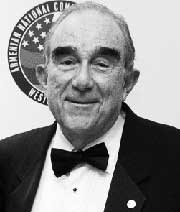
Fred Korematsu (Photo – en.wikipedia.org).
History repeats itself
It is especially poignant today as America now looks to again vilify vast swaths of the Muslim and Mexican-American populations of this country simply for their place of birth, beliefs, or ethnic origin.
Whether you express your frustration via #hashtag, petition, or protest, as Korematsu wrote in the San Francisco Chronicle in 2004:
Fears and prejudices directed against minority communities are too easy to evoke and exaggerate, often to serve the political agendas of those who promote those fears. I know what it is like to be at the other end of such scapegoating and how difficult it is to clear one’s name after unjustified suspicions are endorsed as fact by the government. If someone is a spy or terrorist they should be prosecuted for their actions. But no one should ever be locked away simply because they share the same race, ethnicity, or religion as a spy or terrorist. If that principle was not learned from the internment of Japanese Americans, then these are very dangerous times for our democracy.
It may take weeks, years, or a generation, and even if we have to take a couple steps backwards, I’m confident the values that have been imbued in the Constitution will ultimately prevail. But if lasting change is what we seek, it’s going to take the long process in the courts and the capital to make a difference.
Just as Korematsu, Hirabayashi, and Yasui’s lawsuits were necessary in conjunction with the sacrifices of the 442nd in order to help convince the general population of the loyalty of the Japanese-Americans and give the community something to rally around, so too are peaceful protests, in conjunction with individual actions by immigration lawyers behind the scenes fighting for those detained, lawsuits by the ACLU fighting against unconstitutional executive orders, and federal lawmakers in Washington, attempting to block legislation. These are not betrayals of the government nor treason, but our patriotic duty as Americans as enshrined within the Declaration of Independence, that “governments are instituted among men, deriving their just powers from the consent of the governed. That whenever any form of government becomes destructive to these ends, it is the right of the people to alter or to abolish it, and to institute new government.”
While democracy by its very nature is messy, slow, and will never go as far as we hope, it’s still the best and most inclusive form of government we know, so let’s hope it doesn’t take another forty years for the people to return to the lessons Reagan and Ford gained from Korematsu.
Kent Matsuoka is a Japanese-American living in Los Angeles whose family was forced from their home and interned at the Granada War Relocation Center during World War II. He works as a producer and location manager in Hollywood and writes in the hope that the injustices faced by his family are never experienced by American citizens again. For more information about Fred Korematsu and his lifelong advocacy for racial equity, social justice, and human rights for all, please visit the Korematsu Institute.








Leave a Reply