





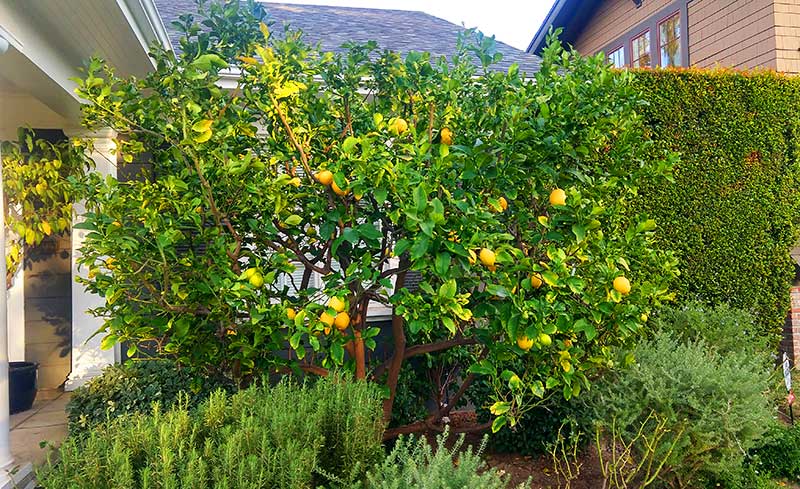
A lemon tree on Oakland Ave in Pasadena (Photo – ColoradoBlvd.net)
For the past decade, soil experts have been talking about soil degradation and warning us that there are now only about 50 years remaining of good topsoil for growing food and preventing desertification.
By Cheryl Auger
Lack of good topsoil and vegetation increases local temperatures, increases erosion, and reduces the amount of carbon our soil is sinking to help mitigate the climate crisis. This starts the cycle of less carbon, increased deforestation, increased local temperatures, and reduced food growth. Accordingly, there is a growing awareness of the need for local farmers and residents to use organic methods, and fewer chemicals and fertilizers, which ruin topsoil quality. Healthy soils also play a key role in filtering, absorbing, and storing rain water and make better use of irrigation water.
Pasadena
Pasadena is lucky to have 15 thousand acres of land that ranges from forests, parklands and parkways to our neighborhoods and urban corridors. So how are we improving our topsoils, preparing for the climate crisis, preventing erosion, improving our water filtration, and developing future opportunities for local farmers? I would say our efforts are mixed, and not enough is being done. We should be using our food scraps to improve local soils, which will enhance every one of these benefits. We can improve soil health, increase carbon sinks, reduce temperatures, help manage rainwater, and grow produce. All of these would make Pasadena an even nicer place to live.
Composting
If you can compost at home it’s the best thing to do. Pasadena has several parks you can bring compost to, and hopefully that number will grow. LA San takes food scraps at sites including Arlington Garden.
MakeSoil matches ‘Soil Makers’ (people who compost) with nearby ‘Soil Supporters’ (people who contribute scraps). MakeSoil hosts accept food waste at their facilities. We have decided to make our house a MakeSoil host, and we have room for your food scraps! That is the best way to nurture our local topsoil!













Leave a Reply