








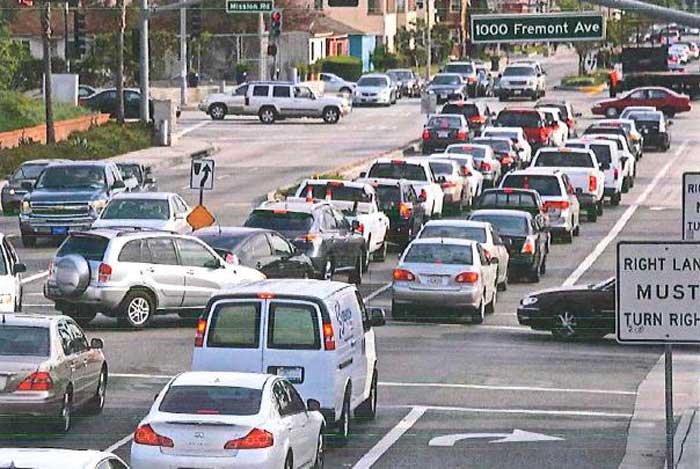
Traffic in Alhambra (File Photo – transportation.gov).
California and other jurisdictions have been moving to reduce vehicle miles traveled (VMT) as a climate solution.
By Ethan Elkind
Yet some pro-sprawl interests question whether this is necessary, given the advent of electric vehicles. It’s fair to ask: if all vehicles are “zero emission,” do we really need to care any more about how much driving we do, in terms of the climate impact?
The answer is unequivocally yes, and here are the top five reasons:
- Gas cars will be with us for a long time
As the California Air Resources Board noted in the 2022 scoping plan appendix, even if we achieve the goal of only zero-emission vehicles sold in the state by 2035, approximately 30 percent of light-duty vehicles on the road in 2045 will still burn fossil fuels. The less of that we burn through reduced driving, the better. - Clean electricity generation still has a carbon cost
Even if we move to 100% electric vehicles, that energy has to come from somewhere. And if it’s large-scale solar or wind facilities, they come with their own energy inputs to manufacture, as well as land use impacts to deploy. For example, some studies conservatively estimate it takes 10 acres of solar panels to generate one megawatt of electricity, an hour of which could potentially power about 3,500 driving miles collectively. Using that land for electricity and not food production, carbon sequestration, or open space comes with significant climate costs. - Low-VMT development patterns reduce carbon pollution from buildings
As CARB noted, infill development (as opposed to sprawl served by publicly-subsidized highways) uses an estimated 10 to 20 percent less residential energy, due to smaller unit types, sizes, and locations — not to mention reduced water use from less outdoor irrigation. - Reducing sprawl and VMT preserves open space and working lands as a carbon sink
To achieve carbon neutrality by mid century or sooner, we’re going to need to bury carbon. Natural and working lands are a key part of that equation, as they provide opportunities to bury carbon in soils through natural processes. Developing these lands instead for high VMT sprawl can permanently foreclose that opportunity. - Electric vehicles come with their own carbon footprint and pollution costs
While dramatically better for the environment than fossil fuel-powered cars, EVs still require significant energy to manufacture, and their use on the road can create particulate matter pollution through wear on the tires and brakes and by kicking up particulate matter from the road. Their batteries also require large-scale mining of lithium, graphite and other minerals, which creates local environmental and energy impacts.
I could also mention non-climate reasons for wanting to reduce Vehicle Miles Traveled, such as the equity benefits of building more housing closer to jobs and services in order to reduce transportation costs that disproportionately hurt low-income residents. But I’ll stick with the climate benefits for now.
Overall, we do need to electrify 100% of our transportation modes from a climate perspective. But we also need to simultaneously reduce the demand for transportation by building better and smarter communities in walkable, affordable, and transit-friendly areas.
Without that reduced driving, our climate goals will be much harder to achieve.













Leave a Reply