








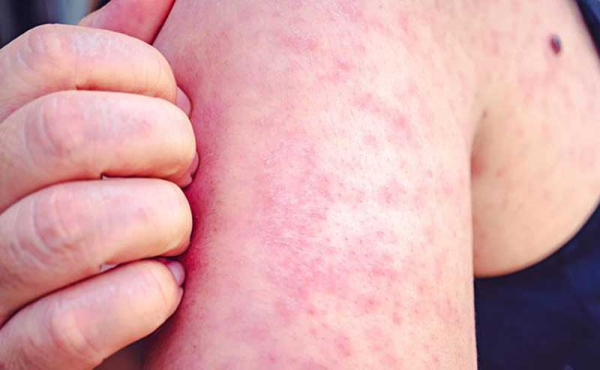
Clade I Mpox (Photo – CDC)
The Los Angeles County Department of Public Health (LACDPH) has confirmed the first case of clade I mpox in an adult resident with no known recent travel to regions where the virus is typically found. The individual, who was hospitalized, is now recovering at home. This marks the second case of clade I mpox in the county and the second in the nation involving a patient with no travel history to endemic areas.
By News Desk
The case, announced earlier this week, has triggered swift collaboration between local, state, and federal health agencies, including the California Department of Public Health (CDPH) and the U.S. Centers for Disease Control and Prevention (CDC), to investigate the source of the infection. Public health officials are ramping up surveillance efforts and initiating contact tracing to prevent further transmission and identify any additional cases.
“While the vast majority of cases of mpox in the U.S. have been associated with clade II, the identification of clade I is concerning given its potential for more severe illness,” said Dr. Muntu Davis, Los Angeles County Health Officer. “Mpox continues to spread primarily through intimate contact, especially sexual activity, but it can also spread through other forms of close personal contact such as massage or cuddling. Early detection, testing, and vaccination are crucial in controlling this virus.”
Earlier this week, the City of Long Beach, which has its own health department, also reported a separate case of clade I mpox. Local health authorities continue to monitor the situation closely.
Differences Between Clade I and Clade II Mpox
Mpox is caused by two primary strains, or “clades,” of the virus: clade I and clade II. Clade II, the more commonly circulating variant, generally causes mild to moderate illness and has been present in the U.S. at low levels since 2022. In contrast, clade I has been associated with more severe outbreaks, particularly in some African countries since 2024. There are concerns that clade I may be more contagious than clade II, with increased transmission potentially occurring through intimate, close-contact activities.
Both clades of mpox can present with flu-like symptoms, followed by a characteristic rash. Transmission occurs primarily through direct contact with an infected person, particularly during sexual activity, but can also spread through other forms of intimate contact or shared personal items. Laboratory testing of lesions is necessary to distinguish between clade I and clade II.
Ongoing Public Health Response
As of this year, 118 cases of clade II mpox have been reported in Los Angeles County. Public health officials continue to stress the importance of vaccination and early intervention to curb the virus’s spread. The JYNNEOS vaccine, which requires two doses, remains the best protection against mpox.
“We remain committed to working closely with our state and federal partners to investigate these cases and prevent further spread,” Dr. Davis added. “Everyone should take precautions, especially those who may be at higher risk, and ensure they are fully vaccinated.”
Residents are encouraged to stay informed through official health updates and seek medical advice if they experience symptoms consistent with mpox, such as fever, headache, muscle aches, and a rash.
For more information on mpox and how to get vaccinated, visit the Los Angeles County Department of Public Health website.












Leave a Reply