








HEALTH TALK
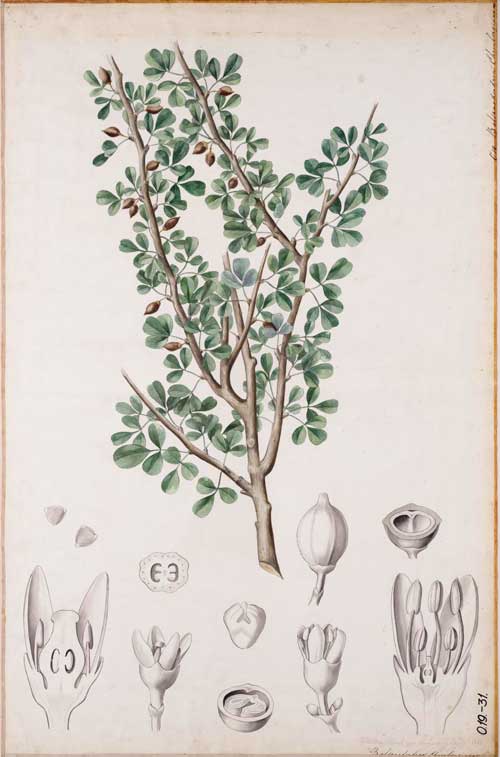
Arabian Myrrh – Balsamodendron ehrenbergianum (Photo – en.wikipedia.org).
Myrrh is a mixture of volatile oil, gum, and resin obtained from Commiphora species.
By H. S. Nemr
Source and chemical components
It is composed of volatile oils (mainly heerabolene pinene and m-cresol) resins (commiphoric acid), steroids, terpenoids, and gum.
Reported folk uses
The resin is applied to the breast to wean infants (gradually deprive them of their mother’s milk).
The resin is also applied to burns, wounds, fractured limbs and snake bites.
Myrrh is also used as an aphrodisiac in the form of a paste applied on the penis. It is used also as a mouthwash to treat ulcers or as a tea infusion (as a body tonic).
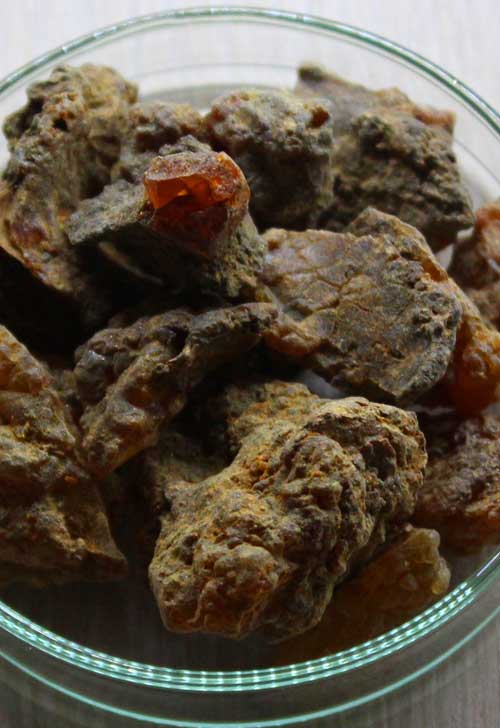
Myrrh (Photo – commons.wikimedia.org).
Dosage
Traditional use suggests the following dosages:
- Tea: 1-2 tsp of resin added to 1 cup of boiling water, allowed to steep for 15 min, taken TID.
- Tincture: Resin is dissolved in alcohol, 1to 4 ml of this tincture can be applied externally TID.
Adverse reactions and precautions
Dermatitis, diarrhea, hiccups, restlessness, should be avoided during pregnancy or breastfeeding.
Interactions
Hypoglycemic effect of insulin and sulfonylureas may increase when administered with Myrrh.
H.S. Nemr is a graduate of BAU pharmacy school. He is currently a medication safety officer at Johns Hopkins Aramco Healthcare system.
References
- Professional’s Handbook of Complementary Alternative Medicines, Springhouse, 2nd edition.\
- Handbook of Arabian Medicinal Plants.













Leave a Reply