






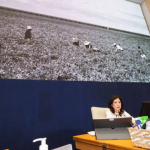


Tango dancing at Caltech (Photo – Melissa Michelson)
On March 15, from 10pm to 3am, Caltech will hold its monthly tango dance salon at Dabney Hall, called a milonga in Argentinian Spanish.
By Melissa Michelson
If you’ve seen stage tango, you may be surprised at how different classic dancefloor tango can be. If you come to observe, you should know about traditional protocol that is followed at a milonga.
First, while a tango costume is not a must, tango shoes are, especially for women. A heel of some kind is important to balance the weight on the balls of her feet while dancing.
Next, couples* always dance counter-clockwise. There may be a set of concentric circles on the floor. It often feels like a track, and it is considered rude for dance couples to pass others along the way. Each pair waits its turn before moving ahead.
Tango dance music can range from old-school from the 30s and 40s from composers like Juan D’Arienzo or Osvaldo Pugliese, or electronic “Tango Nuevo” from Gotan Project or Bajofondo, to tango waltz or a synchopated and fast-paced milonga-music, which in itself necessitates a different style of dance.
Tanda
Partners will dance three songs in a row together, which is called a tanda, then it is customary to change partners for the next set. That means the couples that you see dancing together may have never danced with each other, yet they will look like they have been dancing with each other for years. Unlike show tango, recreational salon tango is not choreographed. The dance is a language of give and take, with the follower allowing to be lead while the leader orchestrates the majority of the moves. Even without verbal discussion or negotiation of moves, which is a no-no, listening to the music and each other’s presence is how total strangers can dance together.
The protocol for asking someone to dance can seem nebulous to the untrained eye. Under no circumstances do leaders simply walk up to a potential dance partner and ask her to dance. Instead, when leaders are ready to dance, they navigate the room and catch the glimpse of someone who seems interested and ready to dance, gives a subtle nod of the head toward the dance floor, and if lucky, he gets an affirmative nod or smile back. At which point, he will approach the partner and lead her to the dance floor. This subtle propositioning can be untraceable to the untrained viewer. If a follower wants to find a dance partner, according to tradition, she must wait to be chosen by a partner, and keep a careful watch for his body language from across room.
I don’t recommend going to a milonga to dance if you’ve not danced tango before. After a few weeks of dance lessons at a local dance academy, leaders should be ready to navigate a tango dance floor, and followers will get used to the sensation of waiting for dance cues and following the leader.
Come to Dabney Hall this weekend to get a taste, enjoy the music, and observe these unspoken protocols in action.
*The majority of couples will be male-female couples, with the males dancing the leader’s steps. However, I’ve seen more and more female leaders dancing with female followers. It is rare for a female leader to dance with a male follower, and though not unheard of it, it is also rare to see two men dancing together.










Leave a Reply