




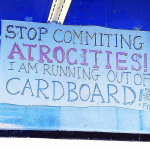

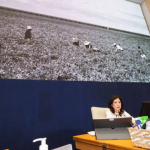

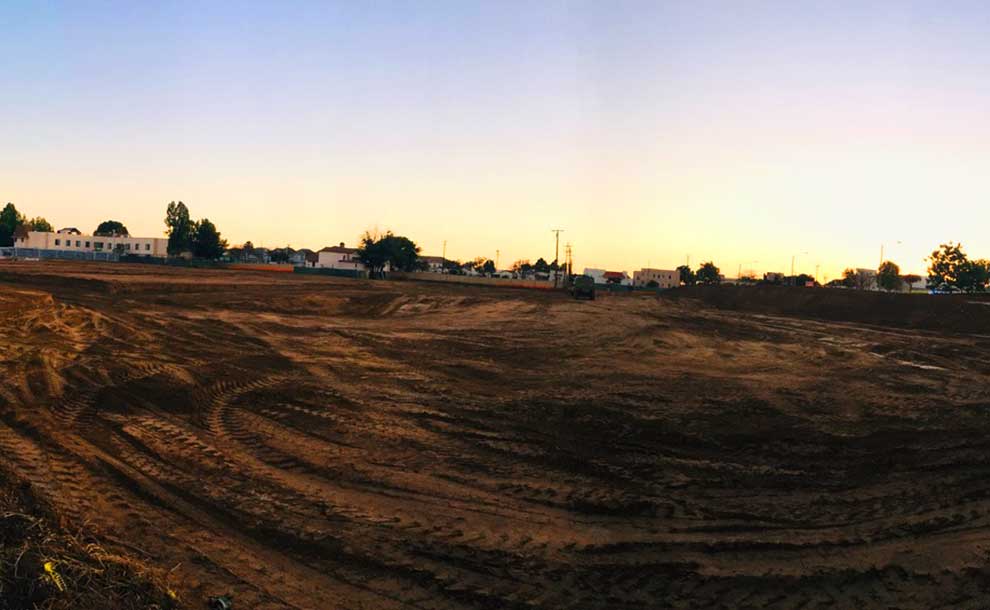
At least 189 mature trees have been destroyed in Alhambra (Photo – Melissa Melissa Michelson)
268 mature and shade-bearing trees once stood on 12 acres at the corner of Marengo and Valley. Only 19 remain.*
By Melissa Michelson
In October 2010, TAG 2 Medical Investments, LLC (TAG2), a group of doctors, bought the nearly 12 acres of land at the corner of Marengo and Valley in Alhambra. Where once had stood the Episcopal Home for the Aged, followed by the Scripps-Kensington independent living retirement community, TAG2 operated the remaining skilled nursing unit calling it Sunnyview Care Center, and used the 1923 Church of St. Simon and Jude designed by architect Reginald Davis Johnson (designer of All Saint’s Church in Pasadena), for storage.
In June 2018, the Alhambra community became aware that the Alhambra City Council had voted unanimously to allow demolition of 268 mature trees (80-100 years old according to an independent arborist) and the church, TAG2 and St. Clair Partners (the Developer) intended to build 126 market rate luxury townhouses and a new medical building, retaining only the nursing home.
Concerned residents formed a group called Marengo Avenue Water Brigade (the Brigade) and, along with Alhambra Preservation Group, opposed the demolition of the culturally relevant church. The City Council subsequently required removal of the church from the demolition plan, but the Council did little to preserve the trees. No comprehensive landscape plan has been submitted to the City Council.
After seven months of resident protests and attempts to meet with TAG2, the City Council voted unanimously on September 25, 2018 to permit demolition of 209 of the 268 trees, the remainder of the trees were to be retained in place (19) or transplanted (40).
 The Agreement, then a Change in Developer
After the City Council approved the development, Mark Paulson, a former City Council member and current realtor who was also the developer’s paid entitlement consultant and developer’s liaison to the City, contacted the Brigade out of fear of a California Environmental Quality Act (CEQA) lawsuit.
In an effort to ward off a CEQA lawsuit, [the developer] and I met with [the community group spokespeople] yesterday. I arranged the meeting with them for a focused discussion about the trees. I tried to make it clear, prior to the meeting, that the developer is not going to redesign the project. That was easier said than done. Bottom-line, [we] are meeting with [them] at the site next week to ‘walk’ all of the trees. [The developer] is willing to box and relocate more trees and provide a public open space around the chapel, if a settlement agreement can be signed, and no lawsuit filed.” – Mark Paulson, October 4, 2017 to City Manager Mark Yokoyama.
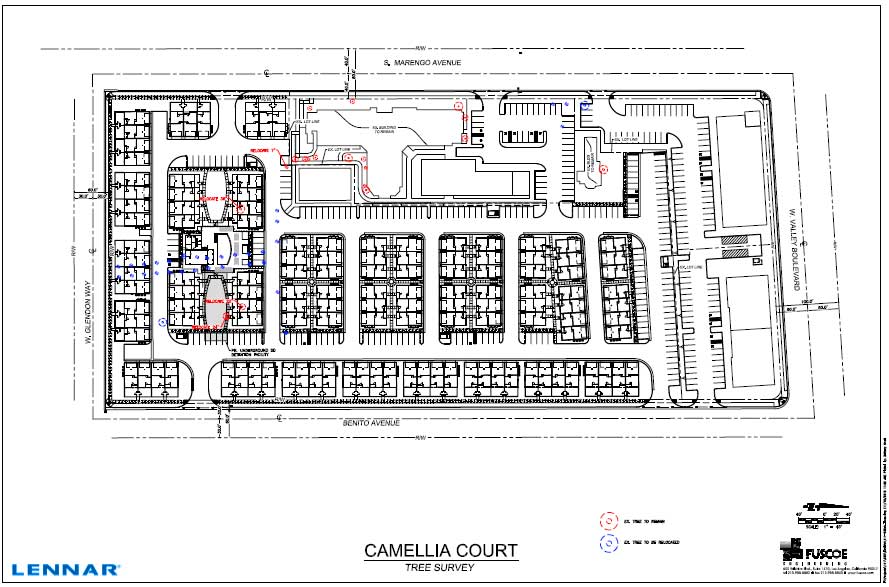
As a result of the tree walk, the Brigade was able to negotiate keeping seven more trees in place and transferring 19 more elsewhere in Alhambra, likely across the street, for a total of 26 in place saves and 59 transplants, reducing the tree demolition from 209 to 183. An agreement (the Agreement) dated October 25, 2017, between the Brigade, TAG2 and the Developer identified the trees to be saved and transplanted. (See Agreement).
In November 2018, Lennar Corporation, the largest home construction company in the U.S. (the New Developer), replaced the Developer. By then, the 12-acres had been sub-divided, with TAG2 owning the land for the medical facilities and the New Developer owning the land for the townhouses.
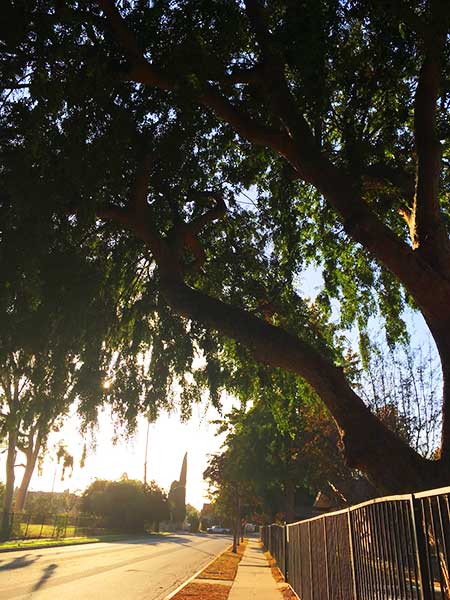
Photo taken on Glendon looking west, Oct. 2018 (Photo – Melissa Michelson)
Adhering to the Agreement, except…
New Developer Project Manager, Dan Hosseinzadeh, stated in a February 9, 2019 email to the Brigade that the New Developer would be adhering to the Agreement, except that three trees designated as being saved in place would need to be removed because they were on top of or very close to proposed building. The change was said by the New Developer to be a result of an error in scale in the exhibit to the Agreement. The three ficus trees to be removed had received maximum health points on the Horticulture Tree Report and had diameters of 36”, 19” and 21”, respectively. It is unknown whether permission was received from the City before destroying or transferring them off site.
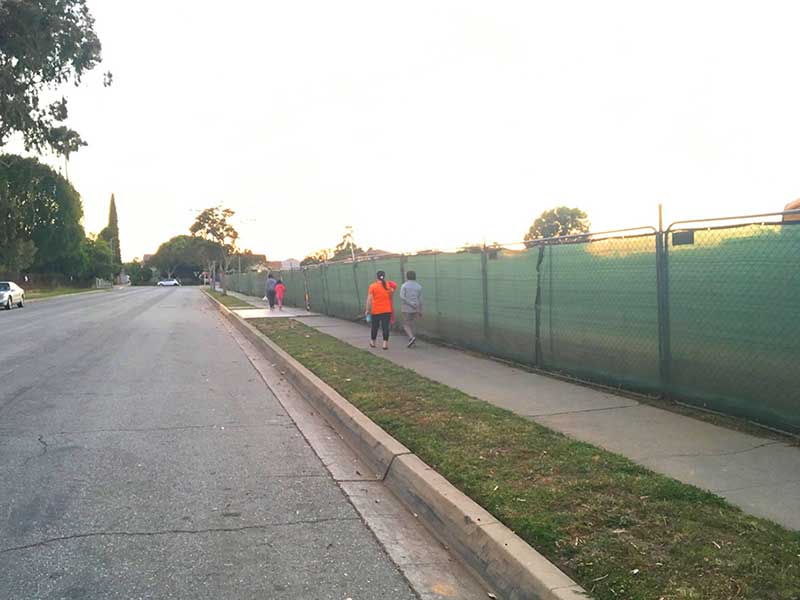
Photo taken on Glendon looking west, June 2019 (Photo – Melissa Michelson)
Not Adhering to Agreement
It soon became clear that neither the New Developer nor TAG2 was adhering to the Agreement with the Brigade as it pertained to the disposition of the listed trees.
On November 28, 2018 and March 18, 2019, the Brigade sent the agreed-upon list of trees to the New Developer’s project manager in an effort to confirm which list he was using.
We’re concerned about the discrepancy of the tree lists amongst us and that Exhibit A from the agreement is not being honored by Lennar. Attached is the original Tree Salvage Plan which is what you seem to be working off of, and the Oct. 12 list of trees Paulson and St. Clair agreed to add…
– March 18, 2019 email from Melissa Michelson to Dan Hosseinzadeh.
Both emails to the New Developer project manager went unanswered.
Considering what happened to the three healthy ficus trees, it is doubtful that the New Developer is adhering even to the City-approved list, which included fewer trees saved in place and fewer trees that required expensive boxing and transferring.
TAG2 also has ignored the Agreement with the Brigade. In addition to removal of the three trees preserved by the Agreement, at least three more trees that were to be left alone are no longer on the TAG2 property.
It is believed that at least 189 trees have been destroyed. The disposition of 59 trees designated for transplanting is unknown. Were they transferred or destroyed?
According to public inquiry, Councilman Ross Maza, who was elected to Alhambra City Council in November 2018, wrote to one of his constituents:
This Agreement spoke to the retention of on-site trees. The City and City Staff were not involved in any discussions for the Agreement, nor did City Staff ever review or issue any approvals for the Agreement. The Agreement has always been an agreement between two private parties. The City was never a party to the Agreement has no enforcement powers over the Agreement.
– Councilmember Ross Maza, June 17, 2019
What does the future hold?
Councilmen David Mejia and Jeffrey Koji Maloney, the two remaining City Council members who approved the project, face re-election in November 2020. Also on the 2020 ballot is an amendment to the City Charter to limit financial donations to City Council campaigns to $250, reducing the likelihood of corruption and quid pro quo arrangements with developers.
Unless residents are prepared to hire attorneys regularly to litigate on their behalves, as they did in 2018 to get a comprehensive traffic and environmental review for the Lowes project, they will have to come to terms with elected officials beholden to private real estate interests leaving residents to fend for themselves.
On the other hand, Alhambrans also can elect City Council members who are more likely to keep their campaign promises and be sensitive to the community’s needs instead of outside monied interests. Such elected officials would wholeheartedly support campaign finance reform in City elections and act on behalf of their constituents, not the donors that supported them in their runs for City Council.
*The City agreed to 19. The Brigade tried to negotiate for more.
> Click for or a full history, before and after photos, press clips, details of votes cast at city hall.












Pull their permits.
Council members Mejia and Maloney each received a campaign donation for $500 from Allied Pacific and Alhambra Hospital. Dr. Sim is a major player with this development and was on the board of directors at Alhambra Hospital and is chairman of the board of directors for Allied Pacific IPA. It is the usual practice for developers to give large donations through one of their many corporations. Dr. Sim is associated with over 14 corporations. David Mejia and Jeff Maloney have voted on several major projects where they took thousands of dollars from the developer and would not recuse themselves when asked during the hearings. It is sad to say that the pay-to-play has been going on so long that those who take the money think it is normal and the voters are indifferent to the corruption. The last election showed the voters are taking notice and there is a change taking place in Alhambra.Two candidates, Adele Stadler and Katherine Lee, were elected and did not take corporate/contractor money. Almost 9000 residents signed a petition to put the Alhambra 2020 campaign and finance reform initiative on the ballot. Passing this initiative will go a long ways to clean up this corruption.
Trees provide oxygen, shade, habitat for birds, also beauty… How can they do anything but ADD VALUE to a place!?!?
Fine them!!! Jail them!!!