






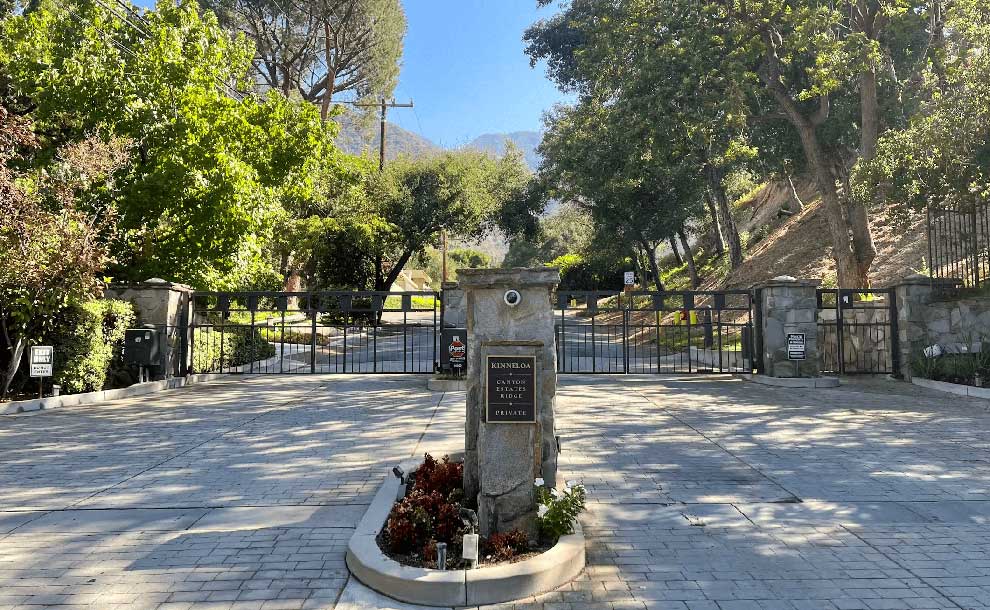
Kinneloa Irrigation District (Photo – kinneloairrigationdistrict)
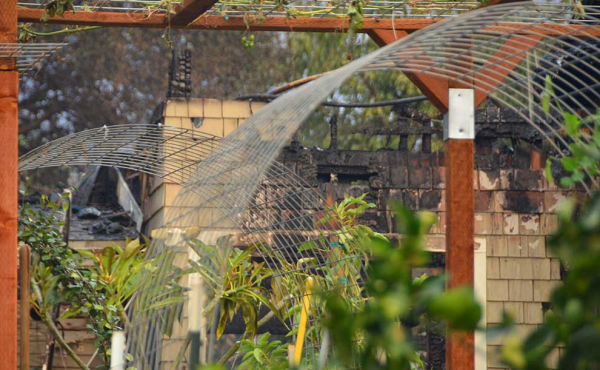
The devastation caused by the Eaton Fire revealed the fragility and disjointed nature of how our local water systems have been designed and maintained.
By Brian Biery
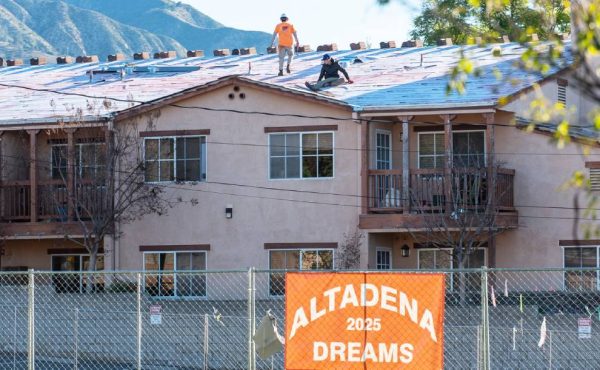
Beneath the foothills between Altadena and Sierra Madre, a patchwork of water and irrigation districts serves residents, commercial entities, and government facilities. Four such agencies provide water to the area. After the fire ravaged significant infrastructure and contaminated supplies, it took months for these districts to fully repair and restore their storage and distribution systems.
One example is the Kinneloa Irrigation District (KID), which serves nearly 600 metered customers in the areas of Kinneloa Mesa, Pasadena Glen, and properties adjacent to Eaton Canyon. These include institutions like a church and school, as well as the Dove Creek townhome complex, Los Angeles County Flood Control District, Los Angeles County Fire Station 66, and the Eaton Canyon Equestrian Center. During the Eaton Fire emergency, KID issued a “Do Not Drink Water” alert, which lasted nearly three weeks due to contamination of the water supply and damage to the distribution system.
As Pasadena grew during the late 1940s and early 1950s, new residents sought out the bucolic hillsides to build homes away from the urban core of the city. Land developers and building contractors were excited by the opportunities that the Kinneloa Mesa, Hastings Ranch, Pasadena Glen, and surrounding lands offered. These parcels often featured larger lots, breathtaking views of the Pacific Ocean 30 miles away, and proximity to nature. As a result, the area was subdivided, and roads were built in the 1950s. Recognizing the need for water supplies for these new homes, the County of Los Angeles authorized the formation of the Kinneloa Irrigation District in October 1953, which began serving customers in 1955.
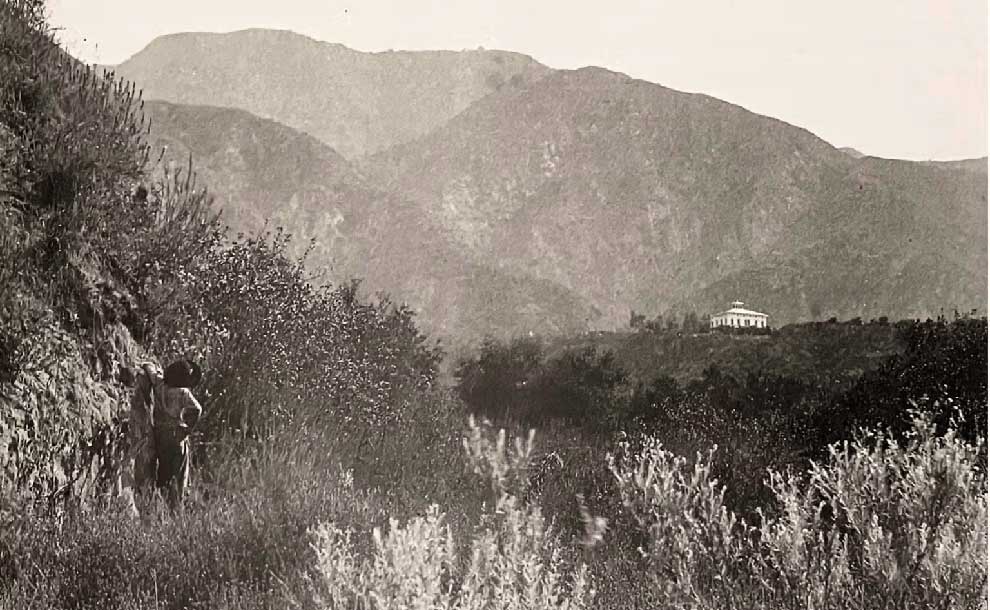
Abbott Kinney purchased 550 acres on the mesa in 1880, shortly after arriving in Los Angeles (Photo – kinneloairrigationdistrict)
Nearly three-quarters of a century before the formation of the KID, the land was already in use by one of the region’s most influential developers: Abbott Kinney. To better understand the circumstances leading up to the incorporation of the KID, Kinney’s legacy sheds light on the area’s need for reliable water supplies. Kinney purchased 550 acres on the mesa in 1880, shortly after arriving in Los Angeles from New Jersey. He immediately set to work transforming the landscape into a highly productive citrus farm and an expansive estate for his family. However, success required a steady water supply.
After building a road on the east side of Eaton Wash, Kinney oversaw the construction of a sophisticated irrigation system. Rather than tapping into the creek in Eaton Canyon, Kinney opted to dig a tunnel into the base of the mountain at the top of his property, ultimately reaching a significant water source. Using a network of pipes, he channeled that water into a 35-foot deep reservoir on his property, which—when filled—could hold 500,000 gallons. To ensure the farm had water year-round, even in dry years, Kinney also built a larger storage reservoir with a capacity of four million gallons. At its peak, this advanced water system supported 6,000 citrus trees, 1,500 deciduous trees, and over 20,000 grapevines. The fruit from the Kinney Farm, including dates and blood oranges, was well-known and popular throughout Los Angeles.
Before settling in Southern California, Kinney was a world traveler. Many of his ventures, including the design and development of the ‘Venice of America,’ were influenced by his travels. These journeys also inspired him to name his cherished mesa ‘Kinneloa,’ which, in Hawaiian, means “Kinney’s Hill.”
Today, KID uses two water wells, Wilcox and K-3, to pump water from the Raymond Basin aquifer to supply its customers. The District has a 516 acre-foot adjudicated pumping allowance. Interestingly, the primary water source for the City of Pasadena (about 40% of its water) also comes from the Raymond Basin aquifer. Additionally, KID augments its water resources through the operation of nine water supply tunnels, hand-dug in the late 1800s. Kinney’s tunnel may still be among the five that are currently active, serving the Kinneloa neighborhood 145 years after he referred to the mesa as “the mecca of all my hopes.”











I understand the purpose of this article is to give some historical background on the District but it includes a false statement related to public health that I request the author revise. Specifically that “During the Eaton Fire emergency, KID issued a ‘Do Not Drink Water’ alert, which lasted nearly three weeks due to contamination of the water supply and damage to the distribution system.”
This statement is incorrect, the Do Not Drink Order was issued as required by California law as a precaution. The statutorily required water sampling and testing was performed, confirmed that the water supply was never contaminated and the order was lifted promptly.
The official Order says “KINNELOA IRRIGATION DISTRICT experienced wildfire impacts and may have fire related contamination. As a precautionary measure, this notice is being issued until test data is available.” KID’s potable water storage and potable water distribution system were protected from the fire and the water was never contaminated.
First, I have to say that those of us in the KID District admire and respect the KID for being able to keep the water on in our District, unlike others in Altadena. They planned well and installed infrastructure and were successful. We thank them!
Here are more details on how the KID was formed: https://www.kinneloairrigationdistrict.info/history#docaccess-8f53e2895e7205c45652370763908b84ece81dc85c83e8cb64afa0d5ba28f510
Finally, some cabins in Pasadena Glen and some of the nearby farmhouses were built in the 1870’s when there was a hotel located near what is now the Eaton Canyon Golf Course. The cabins in the Glen were mostly hunting cabins. This blog has a lot of articles about the hotel and the area, here’s the basic one: https://eastofallen.com/2008/06/28/sierra-madre-villa/