








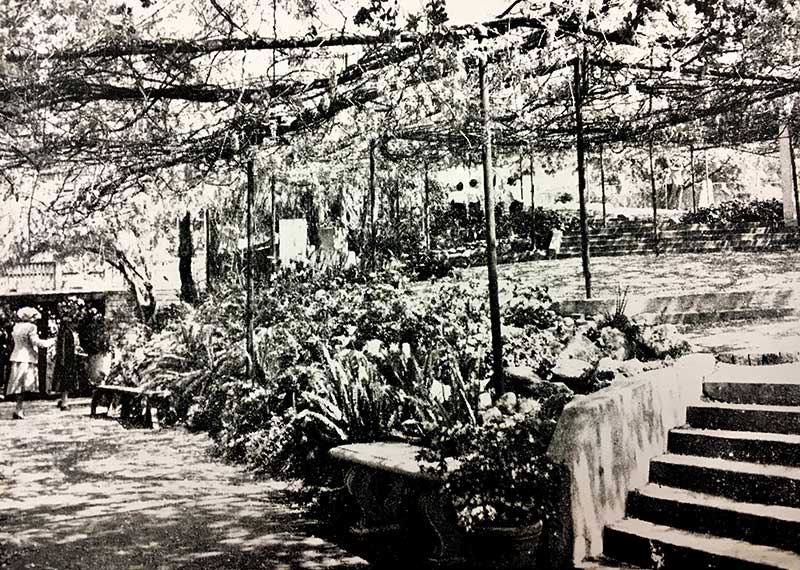
The Wistaria Festival, 1940’s (Photo – Pictorial Bicentennial Edition of Sierra Madre, 1976).
The Sierra Madre wisteria vine is one of the seven horticultural wonders of the world according to the Guinness Book of World Records, sharing honors with the California Sequoia National Park Redwood Forests, the Gardens of Buckingham Palace, Japan’s Yokohama Rock Gardens, Brazil’s Amazon Tropical Jungle, India’s Taj Mahal Gardens, and Mexico’s Xochimilco Floating Gardens.
By Jean Sudbury
The Sierra Madre wistaria vine weighs 250 tons with 1.5 million blossoms spreading across an acre between two houses.
The wistaria is a magical vine in the Fabaceae family, which includes ten species of climbing woody plants native to Korea, Japan and China. The Chinese wistaria was introduced in the United States in 1816. The vine’s fragrant purple flowers bloom in the Spring, and it climbs clockwise or counter clockwise up any available support, rising to about 66 feet in height and spreading to 33 feet laterally. In the Southeastern United States, the wistaria is considered invasive because it chokes out native species.
Wistaria or Wisteria?
This vine was named “wistaria” after botanist Caspar Wistar, (1761-1818), but the plant originated from seeds transported out of China by Marco Polo during his world travels in the 13th century. Although most often referred to as wisteria, its scientific name, the Sierra Madre Wistaria Festival and this article use the original name: wistaria.
The Famous Vine of Sierra Madre
In April of 1894, 13 years before Sierra Madre became an incorporated city, the new owners of the house on the corner at Carter Avenue drove their horse and buggy to the local nursery to purchase a ”Chinese Lavender” wistaria in a gallon container for 75 cents. The vine was planted near the front porch of the house and it grew hardily. Little attention was given to the plant until 1913, when new owners acquired the property.
The new owners wanted the vine to encompass the house, and it did just that. In 1916, the grounds were open for the public to view the amazing vine and its springtime flowers. By the 1920s, this monstrous plant destroyed the original house; the structure had rotted and eventually was torn down. Another house was built, and the vine stayed in place and continued to grow. Some locals throughout the years have given the wistaria vine pet names like “Jack’s Beanstock,” “Lavender Lady,” and “The Monster.”
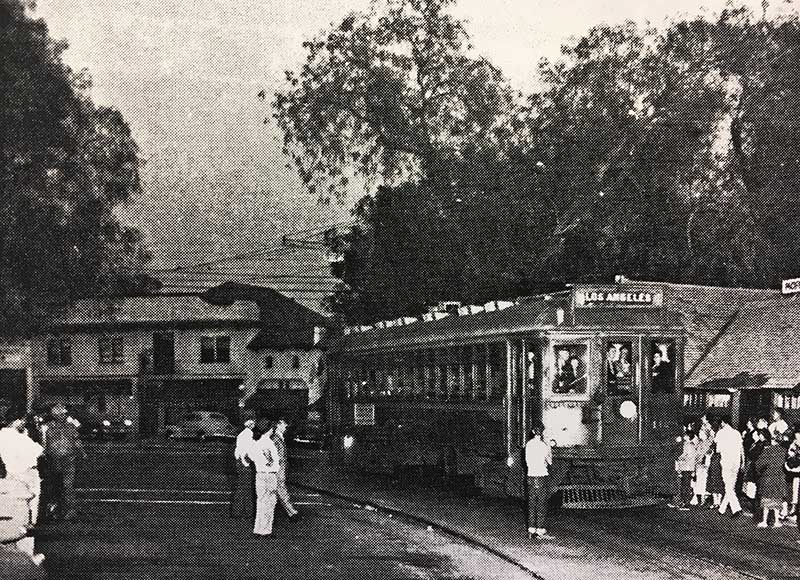
The Red Car (Photo – Pictorial Bicentennial Edition of Sierra Madre by the Sierra Madre Historical Society, 1976).
History of the Wistaria Festival
After two years of hosting the vine viewing events, the owners of the property realized it was too much for them to handle. In 1918, the Sierra Madre Chapter of the American Red Cross sponsored the Annual Wistaria Festival. Refreshments were served, and small potted wistaria seedlings and local arts and crafts were sold. After the Red Cross’s financial success, other local organizations took their turns to host the annual event: The Sierra Madre Woman’s Club, the Volunteer Firemen, the Masonic Lodge, the Eastern Star and the Board of Trade. Sometime between 1910 and 1917, a tea house and social gathering center was built on the north end of the lot. Artists from around the world gathered regularly at the tea house in the 1920s and the 1930s. The Red Car was in full service at the time, and it is said that there were about 30,000 visitors per year to see the vine and enjoy the indoor/outdoor atmosphere of the tea house.
The death of the woman who owned the tea house remains a mystery. One morning, she was found dead on the grounds. It appeared that she jumped off the roof of the house. The actual cause of death was never determined, but it is speculated that the heady aroma of the wistaria intoxicated her.
When the Sierra Madre Woman’s Club hosted the Wistaria Festival in 1931, a small admission fee was collected for the first time. The turnstile showed that 35,000 people were admitted to the fete during the three week Festival. The Woman’s Club used the profits to contribute to the war effort, pay off the mortgage for their Clubhouse, redecorate, and add a substantial balance to their treasury budget.
During the 1960s, the tea house became a family home. The matriarch of the family wanted to share the wondrous wistaria vine with neighbors and travelers who appreciated its beauty and magic. Responding to her wishes, the fee for seeing the wisteria vine during the Wistaria Festival was waived, and the annual Sierra Madre Wistaria Festival remains free to the public. As parking is limited, there is a fee for shuttle service to the vine for those who would rather not walk.
The Wistaria Vine today
The wistaria vine continues to live on a trellis between the two houses. Both houses existing on the original lot were built to accommodate the vine, and each family who has owned a piece of the property over the years has had deep respect and admiration for it. The aroma and delicate scent draws one in, and the gentle hum of the bees gathering nectar brings an observer to a state of bliss, if only for a short time in Spring.
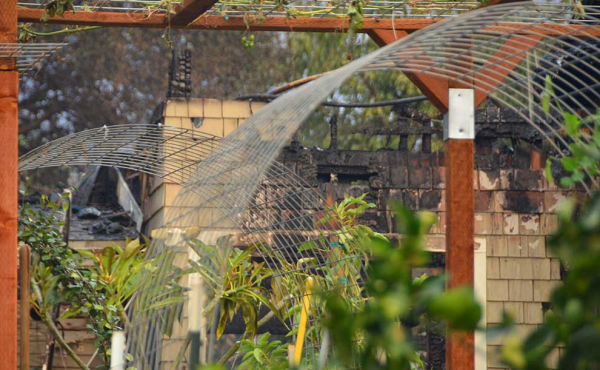













In 1960s there was an invasion of the violin spiders like 1967. They had to close the Sierra Madre park. They closed the building that they had women club. Then they had a statue of the spider. The hippie’s kept stealing the statues. The hippie’s lived in the foothills of Sierra Madre. All in Sierra Madre CA.